The Chicago Syndicate
The Mission Impossible Backpack

Tuesday, November 27, 2018

Trump Loyalists Reputedly Act Like Mafia Members to Manipulate and Gain Favor with The President

In mid-November, the New York Times published a report detailing cracks that are allegedly starting to show in Donald Trump’s relationship with Vice President Mike Pence. According to the report, Trump has alarmed some of his advisers by constantly asking whether they think Pence is loyal. Trump disputed the claims made in the report, but even those unfamiliar with White House matters have had the opportunity to observe that the president appears to put loyalty at the top of his priority list.

As recently detailed by the Inquisitr, some journalists claim that Trump is always seeking approval, talking to aides and collaborators who nod their heads in agreement, while rejecting any and all pushback, and firing those who dare disagree with him or his administration’s policies. In an interview, Pulitzer Prize-winning journalist and Donald Trump’s biographer Michael D’Antonio shed light on how Trump loyalists, like Corey Lewandowski and David Bossie, behave.

“[Corey] Lewandowski and [David] Bossie are not exactly heavyweights, either in politics or policy,” D’Antonio explained to Ana Cabrera on CNN Sunday, Raw Story reports. “They’re a couple of guys who got very lucky to be associated with a long-shot candidate who gained the Oval Office, despite losing the popular vote, and I think they’re trying to make themselves relevant.”

“They are people who have identified themselves as almost loyal captains. You know, in the mafia structure, they would be capos. And the way that they talk is sort of in a mafia style, talking about loyalty being the most important thing and when you signed on indicates how valuable you are.”

D’Antonio’s comments about Lewandowski and Bossie are in reference to their upcoming book, "Trump's Enemies: How the Deep State Is Undermining the Presidency". In the book, according to the Washington Post, the two Republican operatives portray Trump as a victim of an elaborate conspiracy. The president, they claim, is being attacked by disloyal members of the administration and Washington “swamp creatures.” According to Trump biographer Michael D’Antonio, the fact that Lewandowski and Bossie have decided to write a book essentially defending the president comes as no surprise since the two men are thought to be ardent supporters of the president and his agenda.

Trump loyalists, D’Antonio claims, talk and act like members of the mafia. In the Sicilian mafia, much like in the Trump administration, loyalty is appreciated and perceived as invaluable, according to the writer. And much like the infamous Sicilian mafia, the administration has a hierarchical structure.

D’Antonio concluded that Lewandowski and Bossie’s mafia-like behavior appears to be paying off, since the two Trump loyalists have managed to land an interview with the president, which means that he is likely to endorse and promote their book, the journalist claims.

Thanks to Damir Mujezinovic.

Tuesday, November 20, 2018

2 Gambino Crime Family Associates Charged with Extortion, Arson and Conspiracy

Two reputed associates of one of the most notorious organized crime families in New York have been charged with extorting a businessman and torching his Mercedes Benz in New York City.

Gambino family associates Peter Tuccio, 25, and Jonathan Gurino, 25, were arrested Friday and face federal counts of extortion, arson and conspiracy in the 2015 fire, according to court filings.

Both men were released on $700,000 bail at an afternoon court appearance, despite a request by federal prosecutors that they be jailed pending trial.

Assistant U.S. Attorney Nadia Moore noted that a witness to the 2015 fire found a dead rat placed on her car. Moore argued in court papers that Gurino and Tuccio have strong ties to the Gambino crime family. She said Tuccio attended the Manhattan court proceedings this year of Joseph “Skinny Joey” Merlino, a notorious Philadelphia mob boss sentenced to two years in prison for illegal betting.

“The defendants’ association with organized crime is significant not only because it demonstrates their proclivity for violence, but because it provides them with access to members of organized crime throughout the United States willing to harbor and assist them should they decide to flee or obstruct justice,” Moore wrote.

Gurino’s defense attorney, Todd Greenberg, called the charges “false” and said his client is “looking forward to his trial.” He said he could not comment on the discovery of the rat because he knew nothing about it.

A defense attorney for Tuccio did not immediately respond to an email seeking comment.

The FBI said a now deceased Gambino crime family captain had extorted the businessman for annual payments, but the businessman began dodging them.

On Dec. 3, 2015, Tuccio, Gurino and a third man, Gino Gabrielli Jr., tailed the businessman “at a high rate of speed” and confronted him outside a pizzeria in Queens, prosecutors said in court filings.

The businessman, who was not identified in court papers, told authorities he heard a loud noise later that night and looked outside his Howard Beach home to see his Mercedes ablaze.

Surveillance video captured Gabrielli pouring a liquid on the vehicle about 4 a.m. and running away with his right pant leg on fire, according to the complaint. New York police recovered a lighter and what appeared to be a burned gas can near the vehicle.

Gabrielli arrived at Jamaica Hospital Medical Center about 20 minutes later with third-degree burns and “clothing that reeked of gasoline,” the complaint says. He initially told police his injuries stemmed from a kitchen fire that erupted while he was cooking chicken and rice at his home. But fire marshals interviewed Gabrielli’s mother, the complaint says, who said “no one had cooked anything that evening, and that there were no dirty dishes in the sink.”

Gabrielli pleaded guilty to arson in 2016. He faces at least five years behind bars but has not yet been sentenced.

U.S. Attorney Richard Donoghue said in a statement that the defendants “delivered a frightening message in the form of fire to force a businessman to pay protection money to a high-ranking gangster.”

“Today’s charges against two alleged crime family associates demonstrate that whether you are a made member or a young associate looking to advance in a crime family, the end result is the same — prosecution and prison,” Donoghue said.

The Gambino crime family’s Mafia associates have for generations used violence, threats and intimidation to wield power and generate illegal profits.

Thanks to Jim Mustain.

Thursday, November 15, 2018

How "Handsome Johnny" Roselli Infiltrated Hollywood for the Mob, Pulled Off a Major Scam, and Got Whacked

On July 28, 1976, “Handsome Johnny” Rosselli, a mobster who rose up through the ranks with Al Capone, had brunch with his sister in Miami before borrowing her car and driving to the marina. There, he boarded a private boat with two men, one of them an old friend. But when they got out to sea, the third man—someone Rosselli didn't know from Chicago—strangled the 71-year-old gangster to death. He wasn’t even on the vessel an hour and he was dead, rubbed out by a Mafia hitman who sawed off his legs, stuffed his body into a 55-gallon oil drum, and threw the barrel overboard into Dumfoundling Bay.

The barrel didn’t sink, and fishermen found it ten days later lodged on a sand bar in a canal, as the New York Times reported the following February.

It was an ignoble end for Rosselli, a self-styled playboy who acted as the Mafia’s ambassador both in Los Angeles in the 1930s and Las Vegas in the 1950s. A charming racketeer who held company with infamous mafiosos, Hollywood moneymen, stars and starlets, Rosselli even had some encounters with members of Congress before it all unraveled for him in Miami.

In the new book, HANDSOME JOHNNY—The Life and Death of Johnny Rosselli: Gentleman Gangster, Hollywood Producer, CIA Assassin, Lee Server explores the life and times of the man who helped bridge the gap between the movies and the mob. VICE talked to Server to find out how Rosselli made it into the organized crime mold—and how he brought mafia muscle to bear in Hollywood, at least for a while.

VICE: Was there one moment that you suspect kind of set Johnny Rosselli on a course to organized crime?
Lee Server: Rosselli had been drifting across America as a young man. He’d settled in Los Angeles in the 1920s, become a bootlegger, then a gambler and racketeer. A fortuitous encounter brought him to the attention of Al Capone, whose eye for criminal talent was second to no one. He recognized something in Johnny at a time when Capone was in need of a liaison between Chicago and the West Coast. He became a kind of honorary consul for the Chicago Outfit in LA

I think we all had a vague sense that the mob might have been involved in Hollywood productions, but this wasn't just a question of peripheral dabbling—it went to the top.
Part of Rosselli’s "assignment" in Los Angeles was to cultivate relationships with the film industry hierarchy. He knew everybody, dated movie stars, played golf with studio heads. His closest industry friend was the boss of Columbia Pictures, Harry Cohn. They socialized together, and Johnny was often at the studio advising the mogul on his gangster pictures. When Cohn needed a large loan in a hurry it was Johnny who put him together with East Coast mobster [Abner Zwillman]. This had its own complications, as the mobster maintained his secret piece of Cohn’s studio for many years, until he died suddenly, tortured to death or by his own hand, depending whose story you believe.

Rosselli's meddling eventually spun out of control, right?
He collaborated with Frank Nitti—Capone’s successor in the Chicago mob—on a plot to take down the entire Hollywood movie business. They did this through gaining control of a labor union, and then demanding huge under-the-table payoffs from each studio, threatening to close down all movie production if they didn’t pay. The mobsters made millions. It came undone in the end, and many of the perpetrators ended up in prison.

He did actually co-produce films like He Walked By Night and Canon City later in the 1940s—so his wasn't just a criminal gig. Did you take that as a deliberate choice, to find traditional work?
When Rosselli got out of prison on parole, he had to find legit employment. Most ex-cons usually met this parole requirement by taking day-labor jobs, working as dishwashers or similar. Rosselli being Rosselli, he got a job as an associate producer at a movie studio. He formed a production company with Bryan Foy and produced two noir crime pictures in a row. My research revealed how important Rosselli’s contribution was to developing these two great films.

I was struck by just how many public friendships he had with such big names—it was pretty brazen stuff, even after his stints in prison.
Johnny met Marilyn Monroe through the producer (and felon) Joseph Schenck. They were close for a while, lovers according to some. I could not confirm it, but the rumor was that he helped get Monroe her first prominent part in Ladies of the Chorus at Columbia.

As the virtual godfather of Las Vegas in the 50s and 60s, Rosselli knew most of the big showbiz stars who played the showrooms. Frank Sinatra and Dean Martin were personal friends. They partied together. Frank and Dean sponsored Johnny’s membership in the Friar’s Club.

This guy clearly had a flair for the dramatic. Was there one episode you think captured that?
The Kefauver Hearings in the early 1950s was the first in-depth government investigation of nationwide organized crime. Few people in America knew just how far-reaching was the spread of what was known then as the Mob and the Syndicate, corrupting every area of the country. The Kefauver group from Washington hauled in every top gangster, including Johnny Rosselli. Unlike most of the mobsters, who tried to play it tough and not say anything (and some went to jail for it), Rosselli answered every question, but with a strategic skill that ultimately gave nothing away.

But what got him killed if not his (repeated) Senate testimony?
I’ll echo the words the homicide detective who found his body said to me: he had pissed off a lot of people.

Thanks to Seth Ferranti.

Wednesday, November 14, 2018

HANDSOME JOHNNY—The Life and Death of Johnny Rosselli: Gentleman Gangster, Hollywood Producer, CIA Assassin

A rich biography of the legendary figure at the center of the century’s darkest secrets: an untold story of golden age Hollywood, modern Las Vegas, JFK-era scandal and international intrigue from Lee Server, the New York Times bestselling author of Ava Gardner: Love is Nothing…

A singular figure in the annals of the American underworld, Johnny Rosselli’s career flourished for an extraordinary fifty years, from the bloody years of bootlegging in the Roaring Twenties--the last protégé of Al Capone—to the modern era of organized crime as a dominant corporate power. The Mob’s “Man in Hollywood,” Johnny Rosselli introduced big-time crime to the movie industry, corrupting unions and robbing moguls in the biggest extortion plot in history. A man of great allure and glamour, Rosselli befriended many of the biggest names in the movie capital—including studio boss Harry Cohn, helping him to fund Columbia Pictures--and seduced some of its greatest female stars, including Jean Harlow and Marilyn Monroe. In a remarkable turn of events, Johnny himself would become a Hollywood filmmaker—producing two of the best film noirs of the 1940s.

Following years in federal prison, Rosselli began a new venture, overseeing the birth and heyday of Las Vegas. Working for new Chicago boss Sam Giancana, he became the gambling mecca’s behind-the-scenes boss, running the town from his suites and poolside tables at the Tropicana and Desert Inn, enjoying the Rat Pack nightlife with pals Frank Sinatra and Dean Martin. In the 1960s, in the most unexpected chapter in an extraordinary life, Rosselli became the central figure in a bizarre plot involving the Kennedy White House, the CIA, and an attempt to assassinate Fidel Castro. Based upon years of research, written with compelling style and vivid detail, Handsome Johnny: The Life and Death of Johnny Rosselli: Gentleman Gangster, Hollywood Producer, CIA Assassin, is the great telling of an amazing tale.

Hollywood and the Mafia

Bollywood's connections with the underworld are common knowledge. There is a certain level of romanticism attached to the lives of the mafiosi and their molls. But, the fact remains that even Hollywood greats like ol' blue eyes Frank Sinatra and the original bombshell Marilyn Monroe were rumored to have underworld links. Here's a look at some of the folklore:

Frank Sinatra, actor-singer
Frank Sinatra

Special agents from the CIA and FBI had kept tabs him on the since 1947 when he took a four-day trip to Havana. He had painted the town red with a gaggle of powerful Cosa Nostra members. Sinatra's other rumored criminal associates included Joseph and Rocco Fischetti, who were cousins of Al Capone and reigning Chicago boss Sam Giancana. When Giancana had been arrested in 1958, the police found Sinatra's private telephone number in Giancana's wallet.

In the summer of 1959, Sinatra allegedly hosted a nine-day, round-the-clock party at the Claridge Hotel in Atlantic City where Chicago wise guys rubbed elbows with top East Coast mobsters, including Vito Genovese and Tommy Lucchese. Charges like these plagued Frank Sinatra throughout his life, and he repeatedly and vehemently denied having any association with the mafia.

Marilyn Monroe, actress:
Marilyn Monroe

The extensive influence the Chicago mafia had over Hollywood is best illustrated in 1948 when Chicago Mafia boss Tony Accardo had told John Rosselli to force powerful Columbia Pictures' president Harry Cohn into signing then-unknown actor Marilyn Monroe to a lucrative multi-year contract. The usually highly combative Cohn quickly complied without opposition, mainly because Cohn had obtained control of Columbia through mob funds and influence provided by both Accardo and Rosselli.

Bugsy Siegel, mobster


Bugsy Siegel had a number of mistresses, including actor Ketti Gallian and Wendy Barrie With the aid of DiFrasso and actor friend George Raft, Siegel gained entry into Hollywood's inner circle. He is alleged to have used his contacts to extort movie studios. He lived in extravagant fashion, as befitting his reputation. The highly fictionalized motion picture Bugsy was based on his life with Warren Beatty in the title role.


Lana Turner

Lana Turner, actress:

After acting in 'Johnny Eager', a mafia flick, Lana began her own involvement with a real life mobster, Johnny Stompenado, a crew member for the Hollywood mob organisation headed then by Mickey Cohen. Stompenado had confronted several of Turner's screen co-stars, including a celebrated tiff with Sean Connery.


Mickey Cohen, mobster

Mickey Cohen


Mickey Cohen began his mafia career as a thug for Vegas boss Ben Siegel before moving to Hollywood. Cohen inherited Siegel's racing interests and operated a small haberdashery in Los Angeles that served as a front for a book making enterprise. Always high profile, he dressed lavishly and flaunted his money and friendships with Hollywood heavy-weights.


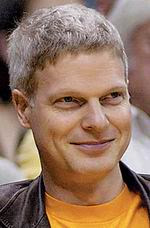
Steve Bing, producer
Steve Bing

Best know for being the father of Elizabeth Hurley's son Damian, Steve Bing's friends are said to include Dominic 'Donny Shacks' Montemarano, a felon and one time capo in the mafia.


Thursday, November 08, 2018

Change in Whitey Bulger's Medical Classification Led to Prison Transfer, #Conspiracy Grows

Boston gangster James “Whitey” Bulger’s medical classification was suddenly and inexplicably changed to suggest his health had improved, leading to his transfer to the West Virginia prison where he was murdered last week, US Bureau of Prisons records show.

Two organized crime figures from Massachusetts suspected of killing Bulger have been placed in isolation at the US Penitentiary Hazelton while federal investigators work to build a case against them. But investigators are also trying to figure out why Bulger, a frail 89-year-old who used a wheelchair, was transferred from the US Penitentiary Coleman II in Florida to a prison where he had access to more limited medical care despite his advancing age and declining health.

A Bureau of Prisons official who is familiar with Bulger’s treatment said the Florida prison considered Bulger a nuisance and wanted to transfer him.

“They lowered his care level to get rid of him,” said the official, speaking on the condition of anonymity because he was not authorized to speak about the case.

That official said he did not believe the intent was to get Bulger killed. But he acknowledged that sending Bulger to Hazelton and immediately placing him in the general population was negligent and amounted to “a death penalty.”

Sandy Parr, who works at a federal medical facility and is president of a union representing federal prison workers, said the Bureau of Prisons regularly changes medical classifications “even though they shouldn’t” to move troublesome inmates.

Prison records reviewed by the Globe show that prison authorities deemed Bulger’s medical treatment was complete. But, Parr said, “no one with his [medical] history would ever have medical care completed.”

A Bureau of Prisons spokesman on Tuesday declined to answer questions about why Bulger’s medical classification was changed, saying, “We are not releasing any information due to the ongoing investigation.” But beyond Bulger’s classification being changed to allow his transfer to Hazelton, questions remain about why officials at Hazelton allowed Bulger to be placed in the prison’s general population, which included several organized crime figures from Massachusetts who would have been familiar with Bulger and might pose a danger to him.

As the Boston Globe reported last week, two of those figures, Fotios “Freddy” Geas, a Mafia hit man from West Springfield serving life for two gangland murders, and Paul J. DeCologero, who was part of a Mafia-aligned group who murdered and dismembered a 19-year-old Medford woman, are now suspects in Bulger’s murder.

When Bulger was sentenced to life in prison in 2013 for 11 murders, he had already suffered several heart attacks and was sent to “medical care Level 3” prisons, first in Arizona, then in Florida, that offered specialized care for “fragile” inmates who require frequent treatment.

In April, Bulger could no longer walk when authorities at the Florida prison sought permission to transfer him to a federal medical center that provided round-the-clock care, according to prison records reviewed by the Globe.

After that request was denied, authorities renewed their request to transfer Bulger in October -- only this time they claimed that his health had dramatically improved, the records show. He was reclassified as a Level 2 inmate with minimal medical needs, making him eligible for his transfer to Hazelton, a Level 2 medical care prison, where he was beaten to death by fellow inmates hours after his arrival.

During his last eight months at the Florida prison, Bulger had been held in the Special Housing Unit, or solitary confinement, after he threatened a prison staffer, records show. The prison official who spoke on the condition of anonymity said Bulger told a female nurse, “Your day of reckoning is coming.”

According to the records, Bulger was originally given 30 days in solitary for the infraction in February, but that confinement was extended three more times, stretching out over eight months.

Parr, the union official, said she didn’t understand why Bulger was transferred for making a single threatening remark. “We don’t transfer inmates because of that. It’s common,” she said. “If there was an actual physical assault, we might do something. But for one verbal threat, and eight months in SHU, that doesn’t make sense.”

By his own account in letters sent from prison, Bulger despised being in isolation. Joe Rojas, president of Local 506, which represents prison workers at Coleman, said Bulger didn’t have any problem with fellow inmates while in general population at USP Coleman II.

Rojas said Bulger was assigned to the so-called “dropout unit,” made up of former gang members, informants, and other inmates who might face threats.

Bulger had “his own bodyguards,” Rojas said, and “some of the younger inmates would bring him his lunch and dinner.”

In a 2016 report, the District of Columbia Corrections Information Council found that Hazelton was overcrowded, understaffed, and employed a single physician, “which is not adequate to care for the medical needs of all inmates, especially those who require chronic care.”

The Bureau of Prisons uses a software system called Central Inmate Monitoring to warn prison officials if an inmate might be in danger from another prisoner, information that is crucial when inmates are initially placed or later transferred. In Bulger’s case, he fell under the system’s category of “broad publicity,” which the Bureau of Prisons lists as “inmates who have received widespread publicity as a result of their criminal activity or notoriety as public figures.” Bulger having been publicly identified as an FBI informant also placed him squarely in the CIM system, according to a Bureau of Prisons program statement on CIM.

What remains unclear, because the Bureau of Prisons refuses to comment, is whether CIM system protocols were followed in Bulger’s case. Bulger was found dead in his cell within 14 hours of his arrival at Hazelton on the night of Oct. 29.

Several law enforcement officials say they can’t understand why Bulger wasn’t initially placed in isolation at Hazelton until officials there could determine whether he would be safe in general population. Bulger’s lawyer, J.W. Carney Jr., said placing Bulger in the general population in Hazelton amounted to a “death penalty.”

Thanks to Shelley Murphy and Kevin Cullen.

Wednesday, October 31, 2018

6 Reputed Chad Brown Gangsters Charged with Running Organized Crime Enterprise #RICO

Six alleged Chad Brown gang members and associates are facing federal charges that they ran a criminal enterprise by engaging in drive-by shootings, drug trafficking and federal firearms offenses — all intended, authorities say, to protect their territory from rivals and preserve their reputation on the streets.

A federal grand jury last week indicted the six men, ages 22 to 30, for violating the Racketeer Influenced Criminal Organization (RICO) Act, a federal law created to combat organized crime and public corruption in the United States that is now being used in an effort to dismantle street gangs. The last time is was aimed at a street gang in Rhode Island was in the mid-1990s during the prosecution of the murderous Latin Kings.

Four of those indicted are alleged to have participated in drive-by shootings that came in retaliation for the shootings and murders of Chad Brown gang members and associates by East Side rivals, according to authorities.

“These groups have been going at it a very long time,” U.S. Attorney Stephen G. Dambruch said at a news conference announcing the indictments.

The Bureau of Alcohol, Tobacco, Firearms and Explosives linked one gun owned by the men and shared among the gang members to six shootings, Dambruch said. Three of the shootings charged in the indictment involved that gun, a .40 caliber Beretta, authorities said.

Kenneth Kwak, assistant special agent in charge of the ATF’s Boston field office, said investigators began focusing in when a pattern emerged indicating a “group or small group” of people was responsible for the shootings.

“That’s when the partnership really began,” Kwak said, referring to the joint investigation by federal and state prosecutors, the ATF and the Providence police. “They are the most violent we’ve seen ... and that’s why we targeted them,” Kwak said. The idea is to put as many resources as possible to taking down “the worst of the worst — trigger-pullers,” he said.

“It really takes out key players from Chad,” Providence Public Safety Commissioner Steven M. Paré said. He described those charges as very active, upper-ranking Chad Brown members.

The conflict began heating up in June 2013, with the shooting death of Chad Brown member José Sanchez, whose murder remains unsolved, according to the indictment. Sanchez’s family said at the time of his shooting that he was not involved in gangs.

Those facing charges and now in custody include:


  • Delacey Andrade, 24, of North Providence, is charged with violating RICO; four counts of committing violent crimes in aid of racketeering; two counts of being a felon in possession of a firearm; three counts of using a firearm to commit a federal crime of violence; and distribution of cocaine. Andrade is being held at the Adult Correctional Institutions after admitting to gun and drug charges in state court.
  • Keishon Johnson, 29, of Providence, is charged with violating RICO; three counts of committing violent crimes in aid of racketeering; three counts of being a felon in possession of a firearm; possession of a firearm in furtherance of a drug-trafficking crime; possession with intent to distribute marijuana; and conspiracy to distribute marijuana. He is being held at the ACI for violating the terms of his probation after being charged in April with firearms and drug offenses.
  • Montrel Johnson, 22, of Providence, is charged with violating RICO; two counts of committing violent crimes in aid of racketeering; use of a firearm to commit a federal crime of violence; four counts of obstruction for allegedly refusing to testify before a grand jury, despite being ordered by the judge; and criminal contempt of court.
  • Marcel Jones, 30, of West Warwick, is charged with committing violent crimes in aid of racketeering; being a felon in possession of a firearm; and use of a firearm to commit a federal crime of violence.
  • Kendrick Johnson, 27, of North Providence, is charged with violating RICO; committing violent crimes in aid of racketeering; being a felon in possession of a firearm; use of a firearm to commit a federal crime of violence; and six counts of distribution of cocaine.
  • Christopher Britto, 25, of Warwick, is charged with committing violent crimes in aid of racketeering and use of a firearm to commit a federal crime of violence.


Britto, Kendrick Johnson and Montrel Johnson are in federal custody. Kendrick and Keishon Johnson are brothers, while Montrel is a cousin, according to police.

“The case is in its infancy. I’ll wait to see what discovery the government produces,” Kendrick Johnson’s lawyer, Gary Pelletier, said.

Asked why the investigation targeted the Chad Brown gang instead of East Side rival gangs, Dambruch said, “This is just getting started. This is not the end of the story.”

Providence Police Detectives Theodore Michael, Jonathan Primiano and Timothy McGann assisted in the investigation along with Assistant Attorney General James Baum and Assistant U.S. Attorneys Gerard Sullivan and Sandra Hebert.

Thanks to Katie Mulvaney.

Tuesday, October 30, 2018

James #WhiteyBulger Killed in Federal Prison

James "Whitey" Bulger, who lived a double life as one of Boston's most notorious mobsters and as a secret FBI informant, was killed after being transferred to a federal prison in West Virginia, the Boston Globe reported on Tuesday, citing two unnamed officials. Bulger was 89 and serving a sentence of life in prison, and had recently been transferred to the high-security Hazelton penitentiary in West Virginia, according to NBC News, which also reported the death but did not specify the cause.

Henry Brennan, a defense lawyer for Bulger, said in an email he could not confirm or deny the reports.

Officials at the Federal Bureau of Prisons did not immediately respond to requests for comment.

Bulger was convicted in August 2013 of 11 murders, among other charges including racketeering, and sentenced to two consecutive life terms plus five years.

Prison had been something Bulger had gone to great lengths to avoid - killing potential witnesses, cultivating corrupt lawmen and living as a fugitive for 16 years. It all ended when a tip from a former Icelandic beauty queen led to his capture in June 2011 in Santa Monica, California, where he was living with a long-time girlfriend.

Bulger and his Winter Hill gang had operated for more than two decades in the insular Irish-dominated South Boston neighborhood, engaging in loan sharking, gambling, extortion, drug dealing and murder. They did so with the tacit approval of an FBI agent who looked the other way when it came to Bulger's crimes so that he would supply information on other gangsters.

Bulger, portrayed by Johnny Depp in a 2015 film "Black Mass," was feared for his short temper and brutality. Prosecutors said he strangled two women with his hands and tortured a man for hours before shooting him in the head with a machine gun.

"We took what we wanted," Kevin Weeks, a former Bulger lieutenant who would eventually testify against him, wrote in his memoir, "Brutal: The Untold Story of My Life Inside Whitey Bulger's Irish Mob." "We made millions through extortion and loansharking and protection. And if someone ratted us out, we killed him. We were not nice guys."

Bulger was born Sept. 3, 1929, and grew up in South Boston. He was called "Whitey" because of his light blond hair but was said to detest the nickname and preferred being called Jimmy. As a teenager he joined a gang known as The Shamrocks, compiled an arrest record for assault and armed robbery and ended up in a juvenile reformatory.

Bulger was in prison from 1956 to 1965 for robbing banks and upon his release he fell in with the Irish mob in South Boston. He worked his way through the ranks as a bookie and loanshark, survived a gang war between two Irish mobs and was a leading figure in Boston's underworld by the early 1970s.

His career was boosted by his relationship with rogue FBI agent John J. Connolly, who Bulger had known since they were boys. Connolly was supposed to be in charge of getting information out of him and Bulger did provide information that helped the FBI go after his main rival, New England's Italian Mafia, as well as local criminals.

In return, Connolly let Bulger know about working investigations while Bulger and close associate Steve "The Rifleman" Flemmi carried on with impunity. After he retired from the FBI, Connolly tipped off Bulger about a coming indictment, sending the mobster on the run in 1995.

Connolly was convicted in 2008 of racketeering, taking bribes and second-degree murder for his role in the slaying of an accountant who Bulger and Flemmi feared would testify against them.

Bulger's former associates turned on him while he was at large and their information led to a 2000 indictment that originally charged him with 19 murders.

"The guy is a sociopathic killer," Tom Foley, who worked on Bulger cases for the Massachusetts State Police, told CNN. "He loved that type of life. He's one of the hardest and cruelest individuals that operated in the Boston area. He's a bad, bad, bad guy."

When Bulger fled, he first took Teresa Stanley, his girlfriend of 30 years, with him. After a few weeks at large, however, Stanley wanted to go home so Bulger dropped her off in the Boston area. He picked up another of his girlfriends, Catherine Greig, and disappeared again.

Bulger spent his final years of freedom in No. 303 of the Princess Eugenia apartment complex in Santa Monica with Greig.

One of their neighbors, Anna Bjornsdottir, a former U.S. television actress and Miss Iceland of 1974, earned a $2 million reward for turning in Bulger. She was watching a television news report about the Bulger manhunt when she recognized the man she knew by the name Charlie Gasko and notified the FBI.

At first he denied his identity but eventually told authorities, "You know who I am. I'm Whitey Bulger." More than $800,000 in cash and a cache of weapons was found hidden in the walls of his apartment.

Greig was sentenced to eight years in prison and fined $150,000 for helping Bulger evade capture. She is scheduled for release in September 2020.

Bulger's two-month trial for murder, extortion and drug dealing in 2013 was sometimes raucous. A parade of former associates testified against him, giving brutal details about how Bulger would kill enemies and then take a nap.

Sometimes Bulger sat silently at the defendant's table and at other times he engaged in profane shouting matches with witnesses such as Flemmi.

Bulger, who denied ever being an FBI informant, refused to testify on the grounds that the trial was a sham.

The U.S. Justice Department paid more than $20 million in damages to families of people killed by Bulger on the grounds that he was operating under government supervision while killing.

While Bulger was robbing banks and killing people, his younger brother Billy was acquiring political notoriety and power.

Billy served in the Massachusetts legislature for 35 years, including several years as president of the Senate, and then was president of the University of Massachusetts. He was forced to resign the latter job in 2003 after it was learned that eight years earlier he had spoken by phone with Whitey, who was a fugitive at the time, and did not report it to authorities.

Monday, October 29, 2018

Reputed Mob Loan Shark Whacked

A 77-year-old loan shark with ties to organized crime was found dead in his Brooklyn home with a gunshot wound to the back of the head in an apparent mob-style execution, police sources said Saturday.

The body of Vincent Zito was found inside his three-story Emmons Ave. home near Batchelder St. in Sheepshead Bay about 3:15 p.m. Friday. His school-age grandson, who lives at the address with Zito and Zito’s son, Joseph, made the grisly discovery after he came home from school.

A pistol was recovered from the scene.

Initially, it was believed Zito may have taken his own life, but with the entry wound at the back of the head, that appeared less likely, sources with knowledge of the case said. Cops are awaiting the results of an autopsy before declaring Zito’s death a homicide.

Howard Stewart, 43, a handy-man who’s been renovating Zito’s basement, said Zito’s son told him the elderly man was shot twice in the head. “One shot kill him on the spot. Understand? Two shot to the head? Man. It’s a setup,” Stewart said. “I worked in police in Jamaica all my life. It’s a setup.”

Stewart said Zito, whom he affectionately called “Pop,” was retired and “never works.”

“Vinny is my best, best friend,” Stewart said. “When my father died, I didn’t cry like that. He’s like my father. He give me a job. He give me money in my pocket. He give me food on the table, a roof over my head. Who else would do that?

“I’m the black son he never had… he’s my Pop,” Stewart said. “I need the cops to find this person as soon as possible. This person is not supposed to be on the street. I don’t worry for myself. I’m worried for what they did to Pop. That’s all wrong.”

Stewart said he hoped video cameras focused on the back door of the home could help reveal the shooter.

According to police sources, Zito was arrested for loan sharking in the past and has been linked to the Luchese crime family. His older brother, Anthony, 82, also has ties to the Lucheses and was jailed in 1971 for extortion. There was no immediate reaction from the elder Zito.

Some neighbors described Vincent Zito as a “schemer” who once sold a resident a gallon of gas for $100 after Superstorm Sandy hit Sheepshead Bay. “I think he was like (a snake),” said one neighbor who didn’t want to be identified. “He was … not good.”

Thanks to Catherine Gioino and Thomas Tracy.

Saturday, October 27, 2018

Director of the @FBI, Christopher Wray, Press Conference Comments on #MAGABomber Cesar Sayoc

FBI Director Christopher Wray delivered the following remarks during a press conference at the Department of Justice in Washington, D.C.

As the attorney general has confirmed, we have arrested Cesar Sayoc in connection with this investigation. As our investigation is still ongoing, I may not be able to answer questions about his background or about his motive.
What I can say is that this was a nationwide investigation of enormous scope and of the greatest importance. Our investigation ranged from New York to Delaware to Maryland to the District of Columbia to Florida to California. As it always does, the FBI responded to this threat with every resource we’ve got, including our Joint Terrorism Task Forces, our Counterterrorism Division, and our world-renowned experts at the FBI Lab in Quantico.
But—and I really can’t underscore this enough—we didn’t act alone, as you can see from the agencies and departments represented here today. A threat of this scope and of this magnitude requires all of us working shoulder to shoulder. And today’s arrest is a testament to the strength of our partnerships and what we can do when we all work together.
I want to acknowledge the many partners who helped in recovering and transporting these IEDs to our lab in Quantico. This is dangerous and highly specialized work that requires great care, and we’re incredibly grateful to everyone who helped us in getting those to our lab from around the country.
We can confirm that 13 IEDs were sent to various individuals across the country. Each device consisted of roughly six inches of PVC pipe, a small clock, a battery, some wiring, and what is known as “energetic material,” which is essentially potential explosives and material that gives off heat and energy through a reaction to heat, shock, or friction. Though we’re still analyzing the devices in our Laboratory, these are not hoax devices.
I want to focus for a moment on the amazing work of the folks at our FBI Lab. Based on their initial analysis, they uncovered a latent fingerprint from one of the envelopes containing an IED that had been sent to Congresswoman Maxine Waters. We have confirmed this fingerprint is that of Cesar Sayoc. There is also a possible DNA connection between samples collected from pieces of two different IEDs, mailed in separate envelopes, and a sample previously collected from Sayoc in connection with an earlier arrest in Florida.
This is phenomenal work, with the greatest pressure, under an incredibly tight time frame. We see unbelievable work like this on TV shows and in Hollywood, but to see it up close, in reality, is something to behold, and we’re so proud of our team at the Lab for their work in keeping people safe and helping us to find the individual responsible.
Late last night, we also turned to our partners in the Florida Department of Law Enforcement for confirmation of this DNA connection, and we want to thank them in particular for their very quick work. I also want to thank the men and women of the FBI’s Counterterrorism Division, who remain on high alert every single day to keep the American people safe from harm, and who move quickly and efficiently into action every single time.
Today’s arrest does not mean we’re out of the woods. There may be other packages in transit now—other packages on the way. So we need the help of everyone out there—every citizen, every law enforcement partner, everyone we’ve got—to help with this investigation in the days to come.
If you’ve got any information, please call us on our hotline at 1-800-CALL-FBI or online at tips.fbi.gov. No piece of information is too small; every tip could be the one that leads to something very important. And of course, if you see any suspicious activity, please call your local authorities. We need all hands on deck. We need to stay vigilant.
Finally, I want to thank our partners—too many to name across the country—because we cannot do this work alone. Everyone here today understands that, and we take that to heart, every single day, as we do the hard work, together, of protecting 325 million Americans. Now I’d like to turn the podium over to Commissioner O’Neill of the NYPD.

Friday, October 26, 2018

The Insane Chicago Way - the Untold History of Local Latino Gangs

You wanna be a punk gang member or do you wanna be a gangster? This guy there has his pants hanging off his ass—the gang member standing on the street corner. This guy there has got tunnel vision, only sees so far. . . . This guy here—the gangster . . . is going to all the fine restaurants and nightclubs and going to political fundraisers, getting things done."

These are the words of Sal Martino, or at least the man called "Sal Martino" in criminologist and author John Hagedorn's most recent book, The Insane Chicago Way (University of Chicago). Concealing Sal's identity was paramount.

"We had to be careful not to be seen together by anyone from the world of organized crime, gangs, the media, or law enforcement," Hagedorn explained in a musty Lakeview home lined with books and potted plants, where academics, students, activists, and onetime major gang chiefs gathered together to celebrate the publication of The Insane Chicago Way: The Daring Plan by Chicago Gangs to Create a Spanish Mafia.

Sal and Hagedorn met in seedy hotels and dingy restaurants with few customers in places far from the west-side neighborhood known as the Patch, where members of the local Mafia are known to reside. "We also met in private locked cubicles in libraries across the city. I registered under my name and almost always gave the reason for the meeting 'Law Enforcement.'"

In the privacy of those locked cubicles, Sal told Hagedorn stories he had never heard before. "Now, I'd been doing gang research for almost 30 years," Hagedorn told me. "I doubted that anything some guy I'd never heard of could say was something I hadn't heard many times before. I was wrong." Hagedorn later corroborated the facts with his own gang contacts. What began to take shape was the daring plan of gang leaders incarcerated in Statesville—Fernando "Prince Fernie" Zayas from the Maniac Latin Disciples, Anibal "Tuffy C" Santiago from the Insane Spanish Cobras, and David Ayala from the Two Sixers—to create a local Latino Mafia.

In 1989 they established one of the most structured gang organizations in Chicago: the Spanish Growth and Development (SGD). With a strict set of rules, dispute-mediating mechanisms, and exclusively Latino membership, SGD was driven by the urgent need to control bloodshed on the streets.

By 1990, murders had hit dizzying heights, with more than 40 shot in Humboldt Park alone. "Killing people and doing drive-by shootings is bad for business," Sal said. "All it does is bring the attention of law enforcement. When law enforcement has all eyes on you, no one can make any money. And there is billions and billions of dollars out there to be made."

In an effort to overcome deadly rivalries between Hispanic gangs, SGD created an intergang structure modeled after the Chicago Mafia. "The agenda was power," Sal explained. The Insane Chicago Way posits that the Mafia exerts a larger influence on contemporary gangs than law enforcement believes, mostly through a complex network of "associates" who act as middlemen between the two criminal organizations.

SGD members also infiltrated and corrupted the police, either by paying "bones," a percentage of drug profits, to cops, or by entering the CPD as double agents. "Gang researchers have largely avoided investigating police misconduct and official corruption," Hagedorn contends in his book. His detailed account of the guisos ("robbery of drug dealers") carried out by crooked police officer Joseph Miedzianowski and later by the CPD Special Operations Section is merely a glimpse of police corruption and its profound impact on gangs. "Without the cops, none of this stuff could happen," cracks the Don, a Mafia elder.

Hagedorn confesses that the book is partly an attempt to understand why SGD could not stop the rampant violence on the west side. "Police, the press, and the public all saw the carnage as irrational and basically about turf, revenge, or drugs," he writes in The Insane Chicago Way. The collapse of the SGD left in its wake fractured gangs and a breakdown in gang leadership. "I'm doing these juvenile life-without-parole cases," Hagedorn told me. "I got 100 kids coming back to Cook County Jail waiting for resentencing. And they can't believe the disorganization of gang members today. It is all up in the air. The structure has been broken."

I asked Hagedorn how his book was received by the gangs. "It has been making the rounds," he laughed. "Word on the street is I got it right."

Thanks to Annette Elliot.

Thursday, October 25, 2018

Formal FBI Statement on the Investigation of Suspicious Packages, Plus Call for Help

Between October 22 and 24, 2018, suspicious packages were received at multiple locations in the New York and Washington, D.C., areas and Florida. The packages are being sent for analysis at the FBI Laboratory in Quantico, Virginia.

“This investigation is of the highest priority for the FBI. We have committed the full strength of the FBI’s resources and, together with our partners on our Joint Terrorism Task Forces, we will continue to work to identify and arrest whoever is responsible for sending these packages,” said FBI Director Christopher Wray. “We ask anyone who may have information to contact the FBI. Do not hesitate to call; no piece of information is too small to help us in this investigation.”

The packages are similar in appearance, as depicted in the below photograph, and contain potentially destructive devices.

The packages were mailed in manila envelopes with bubble wrap interior. The packages were affixed with computer-printed address labels and six Forever stamps. All packages had a return address of “DEBBIE WASSERMAN SHULTZ” [sic] in Florida. Packages identified to date were addressed to:


The package addressed to former Attorney General Holder did not reach its intended destination, but was rerouted to the return address in Florida.

The FBI will continue to work with our federal law enforcement partners at the United States Secret Service, United States Postal Inspection Service, and Bureau of Alcohol, Tobacco, Firearms and Explosives, as well as our state and local law enforcement partners, to identify and arrest the person or people responsible for sending these packages.

It is possible that additional packages were mailed to other locations. The FBI advises the public to remain vigilant and not touch, move or handle any suspicious or unknown packages.


  • Update #1: In addition to the five packages referenced in the above statement, the FBI has now confirmed two additional packages, both addressed to Rep. Maxine Waters, that are similar in appearance.
  • Update #2: The FBI has confirmed three additional packages, similar in appearance to the others—one in New York addressed to Robert DeNiro, and two in Delaware addressed to former Vice President Joseph Biden


If you have information about these packages, please contact the FBI at 1-800-CALL-FBI or tips.fbi.gov. If you observe any suspicious activity that requires an immediate response, please call 911 or contact your local law enforcement.

Wednesday, October 24, 2018

Mayor Candidate Files $2 Million Libel Suit After Referred to as Head of Tony Soprano Crime Family

North Miami Beach mayoral candidate Anthony DeFillipo is suing the American Federation of State, County and Municipal Employees union for a mailer that suggests the Italian-American commissioner is a Soprano-like mob boss who plays fast and loose with the law. The two-sided attack ad, riddled with spelling mistakes, describes other candidates in the City Commission race as “Tony ‘Soprano’ Defilippo’s crime family,” assigning vaguely offensive nicknames to each in turn.

“This is a hate crime. This is an ethnic slur. This is no different than if any other ethnicity was attacked,” said DeFillipo’s lawyer, Michael Pizzi. Pizzi filed the defamation suit in Miami-Dade court early Tuesday, seeking more than $2 million dollars in damages to his client’s reputation.

The union claims it had nothing to do with the mailer that went out to city residents last week. It says Hector Roos, a local political consultant, illegally used the union’s name on the ad and has moved forward with legal actions against the consultant. “We denounce these defamatory and offensive attacks against these candidates,” Jacqui Carmona, a union representative, told the Miami Herald last week.

DeFillipo’s father also held office in North Miami Beach in the past and both have been active in the local Italian-American community. DeFillipo believes the attack was aimed at both generations. Contrary to the numerous innuendos presented on the flyer, according to Pizzi, neither DeFillipo nor his father is a member of the Mafia nor has DeFillipo ever sold his vote or been involved in corruption.

“We are going to leave no stone unturned for the people responsible for this. They’ve attacked a culture. They’ve attacked an ethnicity. And they’ve attacked a family,” Pizzi said. Libel is a high bar when it comes to public officials, and Pizzi will have to prove the creators of the ad both printed something totally false and did it with malicious intent to do harm. Hyperbole is generally considered opinion, not libel.

Carmona said the union did not create or pay for the ad, which nonetheless listed the union’s PAC in its upper left corner as the financial backer. It is illegal to misrepresent the interests behind a campaign ad. Last week, prior to DeFillipo’s lawsuit, the union sent cease and desist letters to Roos, his company Thor Media, and G Print, the printer. The union also filed a police report, and a request for a legal injunction against what it said was the unauthorized and illegal use of its name on the flier. There is no mention of the union’s denial in DeFillipo’s lawsuit.

Pizzi said his client will continue to hold the union accountable until the courts determine it should be otherwise. “My view is their name is on it. I know they’ve endorsed his opponent in the election,” Pizzi said. “They’ve never apologized to him. They’ve never offered any well wishes to his family as a result of this horrible attack on his family.” (The union has denounced the contents of the ad in interviews with the Miami Herald and other media organizations.)

G Print’s owner, Gilbert Gutierrez, denied responsibility for the ad saying he only prints what is given to him. Roos called the union’s allegations “nuts.” Gutierrez told the Miami Herald Roos was the client behind the order, though he later denied it, telling the Herald that he had read Roos’ name on the news.

Thanks to Sarah Blaskey.

Saturday, October 20, 2018

Close Ally to Russian President Vladimir Putin Charged with Interfering in U.S. Political System #Conspiracy

A criminal complaint was unsealed in Alexandria, Virginia, charging a Russian national for her alleged role in a Russian conspiracy to interfere in the U.S. political system, including the 2018 midterm election. Assistant Attorney General for National Security John C. Demers, U.S. Attorney G. Zachary Terwilliger of the Eastern District of Virginia, and FBI Director Christopher Wray made the announcement after the charges were unsealed.

“Today’s charges allege that Russian national Elena Alekseevna Khusyaynova conspired with others who were part of a Russian influence campaign to interfere with U.S. democracy,” said Assistant Attorney General Demers. “Our nation is built upon a hard-fought and unwavering commitment to democracy. Americans disagree in good faith on all manner of issues, and we will protect their right to do so. Unlawful foreign interference with these debates debases their democratic integrity, and we will make every effort to disrupt it and hold those involved accountable.”

“The strategic goal of this alleged conspiracy, which continues to this day, is to sow discord in the U.S. political system and to undermine faith in our democratic institutions,” said U.S. Attorney Terwilliger. “This case demonstrates that federal law enforcement authorities will work aggressively to investigate and prosecute the perpetrators of unlawful foreign influence activities, and that we will not stand by idly while foreign actors obstruct the lawful functions of our government. I want to thank the agents and prosecutors for their determined work on this case.”

“This case serves as a stark reminder to all Americans: Our foreign adversaries continue their efforts to interfere in our democracy by creating social and political division, spreading distrust in our political system, and advocating for the support or defeat of particular political candidates,” said Director Wray. “We take all threats to our democracy very seriously, and we’re committed to working with our partners to identify and stop these unlawful influence operations. Together, we must remain diligent and determined to protect our democratic institutions and maintain trust in our electoral process.”

According to allegations in the criminal complaint, Elena Alekseevna Khusyaynova, 44, of St. Petersburg, Russia, served as the chief accountant of “Project Lakhta,” a Russian umbrella effort funded by Russian oligarch Yevgeniy Viktorovich Prigozhin and two companies he controls, Concord Management and Consulting LLC, and Concord Catering. Project Lakhta includes multiple components, some involving domestic audiences within the Russian Federation and others targeting foreign audiences in the United States, members of the European Union, and Ukraine, among others.

Khusyaynova allegedly managed the financing of Project Lakhta operations, including foreign influence activities directed at the United States. The financial documents she controlled include detailed expenses for activities in the United States, such as expenditures for activists, advertisements on social media platforms, registration of domain names, the purchase of proxy servers, and “promoting news postings on social networks.” Between January 2016 and June 2018, Project Lakhta’s proposed operating budget totaled more than $35 million, although only a portion of these funds were directed at the United States. Between January and June 2018 alone, Project Lakhta’s proposed operating budget totaled more than $10 million.

The alleged conspiracy, in which Khusyaynova is alleged to have played a central financial management role, sought to conduct what it called internally “information warfare against the United States.” This effort was not only designed to spread distrust towards candidates for U.S. political office and the U.S. political system in general, but also to defraud the United States by impeding the lawful functions of government agencies in administering relevant federal requirements.

The conspirators allegedly took extraordinary steps to make it appear that they were ordinary American political activists. This included the use of virtual private networks and other means to disguise their activities and to obfuscate their Russian origin. They used social media platforms to create thousands of social media and email accounts that appeared to be operated by U.S. persons, and used them to create and amplify divisive social and political content targeting U.S. audiences. These accounts also were used to advocate for the election or electoral defeat of particular candidates in the 2016 and 2018 U.S. elections. Some social media accounts posted tens of thousands of messages, and had tens of thousands of followers.

The conspiracy allegedly used social media and other internet platforms to address a wide variety of topics, including immigration, gun control and the Second Amendment, the Confederate flag, race relations, LGBT issues, the Women’s March, and the NFL national anthem debate. Members of the conspiracy took advantage of specific events in the United States to anchor their themes, including the shootings of church members in Charleston, South Carolina, and concert attendees in Las Vegas; the Charlottesville “Unite the Right” rally and associated violence; police shootings of African-American men; as well as the personnel and policy decisions of the current U.S. presidential administration.

The conspirators’ alleged activities did not exclusively adopt one ideological view; they wrote on topics from varied and sometimes opposing perspectives. Members of the conspiracy were directed, among other things, to create “political intensity through supporting radical groups” and to “aggravate the conflict between minorities and the rest of the population.” The actors also developed playbooks and strategic messaging documents that offered guidance on how to target particular social groups, including the timing of messages, the types of news outlets to use, and how to frame divisive messages.

The criminal complaint does not include any allegation that Khusyaynova or the broader conspiracy had any effect on the outcome of an election. The complaint also does not allege that any American knowingly participated in the Project Lakhta operation.

The investigative team received exceptional cooperation from private sector companies, such as Facebook and Twitter.

Assistant U.S. Attorney Jay V. Prabhu and Special Assistant U.S. Attorney Alex Iftimie are prosecuting the case, with assistance of Trial Attorneys Matthew Y. Chang and Patrick T. Murphy of the National Security Division’s Counterintelligence and Export Control Section.

Monday, October 15, 2018

Life + 99 Years - The Searing Story of Twisted and Amoral Minds

Nathan Leopold Jr. was half of the famed duo Leopold and Loeb, murderers of 14-year old Bobby Franks in 1924 on the south side of Chicago.

Life plus 99 Years, is an autobiographical work which commences with the day after Leopold's sentencing, and which was designed to ingratiate the author with the parole board. As such it is a fascinating multi-layered work - the reader has to work at keeping in mind that the writer was the perpetrator of a heinous crime made all the more horrendous by the fact that its only motivation was the thrill of the idea. A must read for anyone interested in the workings and effects of our criminal justice system.

Wednesday, October 10, 2018

Remembering Warner Saunders

Warner Saunders took an unconventional route to the top anchor chair at one of Chicago’s major network affiliate stations, spending his early career as a schoolteacher and then as the executive director of a nonprofit group aimed at improving opportunities for African-American children on the West Side.

He got into broadcasting full time as head of the community affairs department at WBBM-Ch. 2, where he hosted the station’s “Common Ground” public affairs show. He moved to WMAQ-Ch. 5 in 1980, already in his mid-40s, and worked his way up from weekend news anchor to become a sports anchor and then to co-anchor the 10 p.m. weekday news.

“Warner was a gentle giant,” said Channel 5 meteorologist Brant Miller. “He always carried himself with poise and he was the person you could turn to in the newsroom who always sat back, pondered the situation and had a sense of wisdom.”

SaundersWarner Saunders, 83, died Tuesday night after he collapsed and was taken to Illinois Masonic Hospital, according to a statement issued by NBC 5. He had been a Lincoln Park resident.

Saunders grew up in the South Side Bronzeville neighborhood and graduated in 1953 from Corpus Christi High School in Chicago, where he was the teen club president, ran on the track team and worked on the school’s yearbook. He earned a bachelor’s degree in health and physical education in 1957 from Xavier University in New Orleans, where he played football and basketball.

Saunders became a youth worker and a teacher in the Chicago Public Schools before being appointed executive director of the Better Boys Foundation in the West Side Lawndale neighborhood in 1963. The group had been organized in 1961 to encourage members of juvenile gangs to meet peacefully for recreational activities and counseling.

The job gave Saunders elevated visibility in Chicago, and he made a name for himself by fighting for jobs and better housing in the Lawndale community. In 1968, he was tapped to co-host “For Blacks Only,” a weekly series on WBKB-Ch. 7, which now is WLS-Ch. 7, alongside radio star Holmes “Daddy-O” Daylie. The show aired for about two years, and Saunders also began hosting monthly specials on Channel 5 as well.

In 1970, Saunders began anchoring a late-night, 30-minute newscast on fledgling WSNS-Ch. 44, where he was also the part-time urban affairs editor, while continuing his work for the Better Boys Foundation. He also found time to earn a master’s degree in 1972 from Northeastern Illinois University’s Center for Inner City Studies.

In 1974, Saunders joined Channel 2 and drew raves — and local Emmy awards — for his work hosting the station’s “Common Ground” program, where guests included civil rights luminaries including Andrew Young and Jesse Jackson, as well as Dick Gregory and Eartha Kitt.

“He had street cred,” said former Channel 2 news anchor Bill Kurtis, who worked alongside Saunders in the 1970s. “He had been there — he came up during the civil rights movement, had played some basketball and moved into broadcasting and fit like a glove. He had good integrity, and good talent, and (viewers) trusted him when he told stories about Chicago, especially. I had a great deal of respect for him.”

“(People) come to us for intellectual stimulation, and that’s what they get,” Saunders told the Tribune in 1977.

Saunders hosted a local Emmy-winning, one-hour documentary in 1979, “The End of the Line.” With producer Scott Craig and writer Clarence Page, now a Tribune columnist, Saunders concluded that problems like broken families and terrible schools had worsened in the previous decade, painting an even bleaker picture for youth in Chicago.

In 1980, Saunders jumped to Channel 5, where he began anchoring the news on weekends. He reprised his work on gangs with a special that he co-reported with Carol Marin, titled “Gangs: The New Chicago Mob?” which aired in 1981.

In November 1982, Saunders gave up his news anchor seat to shift to becoming Channel 5’s weekday early news sports anchor. In 1989, Saunders shifted back to anchoring the news, this time as the weekday early evening news co-anchor. In 1997, upon the departure of Ron Magers and Carol Marin from NBC 5, Saunders assumed the role of the 10 p.m. news co-anchor, alongside Allison Rosati.

“Warner was a giant in our newsroom,” the station's vice president of news, Frank Whittaker, said in a statement. “So many of us relied on his advice and counsel as we covered stories each day. Viewers trusted him. He was genuine Chicago. We’ve lost a big part of our history today.”

Saunders was off the air for a time in 2002 during a bout with cancer. He also had other health issues that kept him off the air for long stretches in the fall of 2008 and the spring of 2009. Veteran Chicago broadcaster Bob Sirott filled in for him during those stretches and briefly succeeded Saunders as Channel 5’s 10 p.m. anchor after Saunders retired.

“He was very wise about the business, and the reason that people felt close to him was not only would he give you great advice about work, but he was really a student of life and someone who was very good about advising people on the things that mattered most in life, and most of the time that was not work,” Sirott said. “He was a spiritual guy, and you could get on a level with him that was very sort of raw, and he was a good shrink for people. And with him, there was never any static — he was always supportive, always friendly and always helpful. He never got into a lot of the office craziness or gossip.”

Before retiring in 2009, Saunders had conducted diversity seminars part time. In retirement, he did more of that work.

“I am very anxious to pursue my passion — diversity education,” Saunders told the Tribune in 2008.

Survivors include Saunders’ wife, Sadako; and a son, Warner Jr.

Service information was not available.

Thanks to Bob Goldborough.

Monday, October 08, 2018

Frank Sinatra and the Mob

"Sinatra and the Mob"

Frank Sinatra always denied his ties to the Mafia, and neither government investigators nor the press could make the rumors stick- until now. In an excerpt from their book, Anthony Summers and Robbyn Swan uncover the full extent of the immortal crooner's connections with Lucky Luciano and other infamous Mob figures.

Sinatra: The Life, by Anthony Summers & Robbyn Swan


Debut March 18, 1939.

In a studio on West 46th Street in New York City, a band was playing Rimsky-Korsakov's "Flight of the Bumblebee." It was a simple place, a room with couches and lamps, hung with drapes to muffle the echo from the walls. This was a big day for the musicians, who were recording for the first time.

A skinny young man listened as they played. The previous night, at the Sicilian Club near his home in New Jersey, he had asked if he could tag along. Now, as the band finished playing, he stepped forward and spoke to the bandleader. "May I sing?" he asked.

The bandleader glanced at the studio clock to see if they had time left, then told the young man to go ahead. He chose "Our Love," a stock arrangement based on a melody from Tchaikovsky's Romeo and Juliet. Standing at the rudimentary microphone, he launched into a saccharine lyric:

Our love, I feel it everywhere Our love is like an evening prayer ... I see your face in stars above, As I dream on, in all the magic of Our love.

Unseasoned, a little reedy, the voice was transmitted through an amplifier to a recording device known as a lathe. The lathe drove the sound to a needle, and the needle carved a groove on a twelve-inch aluminum-based lacquer disc. The result was a record, to be played on a turntable at seventy-eight revolutions per minute.

The bandleader kept the record in a drawer for nearly sixty years. He would take it out from time to time, with delight and increasing nostalgia, to play for friends. The music on it sounds tinny, a relic of the infancy of recording technology. Yet the disc is kept in a locked safe. The attorney for the bandleader's widow, an octogenarian on Social Security, says the singer's heirs have demanded all rights and the lion's share of any potential income derived from it, thus obstructing its release.

The disc is a valuable piece of musical history. Its tattered adhesive label, typed with an old manual machine, shows the recording was made at Harry Smith Studios, "electrically recorded" for bandleader Frank Mane. Marked "#1 Orig.," it is the very first known studio recording of the thousand and more that were to make that skinny young man the most celebrated popular singer in history. For, under "Vocal chor. by," it bears the immaculately handwritten legend: Frank Sinatra

A year after making that first record, at twenty-five, Sinatra told a new acquaintance how he saw his future. "I'm going to be the best singer in the world," he said, "the best singer that ever was."

A Family from Sicily

Io sono Siciliano ..." I am Sicilian.

At the age of seventy-one, in the broiling heat of summer in 1987, Frank Sinatra was singing, not so well by that time, in the land of his fathers. "I want to say," he told a rapt audience at Palermo's Favorita Stadium, "that I love you dearly for coming tonight. I haven't been in Italy for a long time-I'm so thrilled. I'm very happy."

The crowd roared approval, especially when he said he was Sicilian, that his father was born in Sicily. Sinatra's voice cracked a little as he spoke, and he looked more reflective than happy. At another concert, in the northern Italian city of Genoa, he had a joke for his audience. "Two very important and wonderful people came from Genoa," he quipped. "One ... Uno: Christopher Columbus. Due: mia Mamma ..."

This second crowd cheered, too, though a little less enthusiastically when he mentioned that his father was Sicilian. "I don't think," he said wryly, "that they're too thrilled about Sicilia." It was a nod to northern Italians' feelings about the island off the southernmost tip of the country. They look down on its people as backward and slothful, and because, as all the world knows, it is synonymous with organized crime. It is the island of fire and paradox, the dismembered foot of the leg of Italy. Sicily: at ten thousand square miles the largest island in the Mediterranean, a cornucopia of history that remains more remote and mysterious than anywhere in Europe.

The island's story has been a saga of violence. Its ground heaved to earthquakes, and its volcanoes spat fire and lava, long before Christ. Its population carries the genes of Greeks and Romans, of Germanic Vandals and Arabs, of Normans and Spaniards, all of them invaders who wrote Sicily's history in blood.

"Sicily is ungovernable," Luigi Barzini wrote. "The inhabitants long ago learned to distrust and neutralize all written laws." Crime was endemic, so alarmingly so that a hundred years ago the island's crime rate was said to be the worst in Europe. By then, the outside world had already heard the spectral name that has become inseparable from that of the island-Mafia.

The origin of that word is as much a mystery as the criminal brotherhood itself, but in Sicily "mafia" has one meaning and "Mafia"-with an upper case "M"-another. For the islanders, in Barzini's view, the word "mafia" was originally used to refer to "a state of mind, a philosophy of life, a concept of society, a moral code." At its heart is marriage and the family, with strict parameters. Marriage is for life, divorce unacceptable and impossible.

A man with possessions or special skills was deemed to have authority, and known as a padrone. In "mafia" with a small "m," those who lived by the code and wielded power in the community were uomini rispettati, men of respect. They were supposed to behave chivalrously, to be good family men, and their word was their bond. They set an example, and they expected to be obeyed.

The corruption of the code and the descent to criminality was rapid. Well before the dawn of the twentieth century, the Mafia with a capital "M," though never exactly an organization, was levying tribute from farmers, controlling the minimal water supply, the builders and the businessmen, fixing prices and contracts.

Cooperation was enforced brutally. Those who spoke out in protest were killed, whatever their station in life. The Mafia made a mockery of the state, rigging elections, corrupting the politicians it favored, and terrorizing opponents. From 1860 to 1924, not a single politician from Sicily was elected to the Italian parliament without Mafia approval. The island and its people, as one early visitor wrote, were "not a dish for the timid."

Frank Sinatra's paternal grandfather grew up in Sicily in the years that followed the end of foreign rule, a time of social and political mayhem. His childhood and early adult years coincided with the collapse of civil authority, brutally suppressed uprisings, and the rise of the Mafia to fill the power vacuum.

Beyond that, very little has been known about the Sinatra family's background in Sicily. The grandfather's obituary, which appeared in the New York Times because of his famous grandson, merely had him born "in Italy" in 1884 (though his American death certificate indicates he was born much earlier, in 1866). Twice, in 1964 and in 1987, Frank Sinatra told audiences that his family had come from Catania, about as far east as one can go in Sicily. Yet he told one of his musicians, principal violist Ann Barak, that they came from Agrigento on the southwestern side of the island. His daughter Nancy, who consulted her father extensively while working on her two books about his life, wrote that her great-grandfather had been "born and brought up" in Agrigento. His name, according to her, was John.

In fact he came from neither Catania nor Agrigento, was born earlier than either of the dates previously reported, and his true name was Francesco-in the American rendering, Frank.

Sicilian baptismal and marriage records, United States immigration and census data, and interviews with surviving grandchildren establish that Francesco Sinatra was born in 1857 in the town of Lercara Friddi, in the hills of northwest Sicily. It had about ten thousand inhabitants and it was a place of some importance, referred to by some as piccolo Palermo, little Palermo.

The reason was sulfur, an essential commodity in the paper and pharmaceutical industries, in which Sicily was rich and Lercara especially so. Foreign companies reaped the profits, however, and most locals languished in poverty. The town was located, in the words of a prominent Italian editor, in "the core territory of the Mafia." The town lies fifteen miles from Corleone, a name made famous by The Godfather and in real life a community credited with breeding more future American mafiosi than any other place in Sicily. It is just twelve miles from the Mafia stronghold of Prizzi-as in Prizzi's Honor, the Richard Condon novel about the mob and the film based on it that starred Jack Nicholson.

It was Lercara Friddi, however, that produced the most notorious mafioso of the twentieth century. Francesco Sinatra's hometown spawned Lucky Luciano. Luciano was "without doubt the most important Italian-American gangster," according to one authority, and "head of the Italian underworld throughout the land," according to a longtime head of the Chicago Crime Commission. One of his own lawyers described him as having been, quite simply, "the founder of the modern Mafia."

Luciano, whose real name was Salvatore Lucania, was born in Lercara Friddi in 1897. Old marriage and baptismal registers show that his parents and Francesco Sinatra and his bride, Rosa Saglimbeni, were married at the church of Santa Maria della Neve within two years of each other. Luciano was baptized there, in the same font as Francesco's first two children.

In all the years of speculation about Frank Sinatra's Mafia links, this coincidence of origin has remained unknown. Other new information makes it very likely that the Sinatras and the Lucanias knew each other. The two families lived on the same short street, the Via Margherita di Savoia, at roughly the same time. Luciano's address book, seized by law enforcement authorities on his death in 1962 and available today in the files of the Federal Bureau of Narcotics, contains only two entries for individuals who lived in Lercara Friddi: one a member of his own family and the other a man named Saglimbeni, a relative of the woman Francesco Sinatra married. Even if the Sinatras and the Lucanias did not know each other, Luciano's later notoriety makes it certain that the Sinatra family eventually learned that they and the gangster shared the same town of origin. Kinship and origins are important in Italian-American culture, and were even more so in the first decades of the diaspora.

As a boy, Frank Sinatra could have learned from any of several older relatives that his people and Luciano came from the same Sicilian town. He certainly should have learned it from Francesco, who lived with Sinatra's family after his wife's death and often minded his grandson when the boy's parents were out.

Francesco, moreover, survived to the age of ninety-one, until long after Luciano had become an infamous household name and Frank Sinatra an internationally famous singer. Sinatra himself indicated, and a close contemporary confirmed, that he and his grandfather were "very close." Late in life, he said he had gone out of his way to "check back" on his Sicilian ties. And yet, as we have seen, he muddied the historical waters by suggesting that his forebears came from Sicilian towns far from Lercara Friddi.

That the Sinatra family came from the same town as a top mafioso was not in itself a cause for embarrassment. The reason for the obfuscation, though, may be found in the family involvement with bootlegging in Frank Sinatra's childhood and, above all, in his own longtime relationship with Luciano himself, the extent of which can now be documented for the first time.

* * *

There was only one school in Lercara Friddi, and few people there could read or write. Francesco Sinatra was no exception, but he did have a trade-he was a shoemaker. He married Rosa, a local woman his own age, when both were in their early twenties, and by the time they turned thirty, in 1887, the couple had two sons. As the century neared its close, thousands of Sicilians were going hungry, especially in the countryside. There were food riots, and crime was rampant.

In western Sicily, the Mafia's power had become absolute. Palermo, the island's capital, spawned the first capo di tutti capi, Don Vito, who would one day forge the first links between the Sicilian Mafia and the United States. His successor, Don Carlo, operated from a village just fourteen miles from Lercara Friddi. Some of the most notorious American mob bosses - Tony Accardo, Carlo Gambino, Sam Giancana, Santo Trafficante - were, like Luciano, of western Sicilian parentage.

By 1889 Francesco and Rosa had moved to a working-class suburb of Palermo. Two more sons were born there, but died in infancy, possibly victims of the cholera epidemic that ravaged the neighborhood in the early 1890s. One and a half million Sicilians were to leave the island in the next twenty-five years, many going to Argentina and Brazil and, increasingly, to the United States.

Francesco Sinatra joined the exodus in the summer of 1900. At the age of forty-three, he said goodbye to Rosa and their surviving children-there were by now three sons and two daughters-and boarded a ship for Naples. There he transferred to the British steamer Spartan Prince, carrying a steerage ticket to New York. At Ellis Island, on July 6, he told immigration officials he planned to stay with a relative living on Old Broadway in Manhattan. He had $30 in his pocket.

Francesco found work, and soon had enough confidence to start sending for his family. His eldest son, Isidor, joined him in America, and Salvatore, just fifteen and declaring himself a shoemaker like his father, arrived in 1902. Rosa arrived at Christmas the following year, accompanied by Antonino, age nine, and their two daughters, Angelina and Dorotea, who were younger. Antonino-Anthony Martin or Marty, as he would become in America-was to father the greatest popular singer of the century.

The Statue of Liberty smiled, Frank Sinatra would say in an emotional moment forty years later, when his father "took his first step on Liberty's soil." For many Italian newcomers, however, the smile proved illusory.

(Continues...)

Copyright 2005 Anthony Summers and Robbyn Swan
All right reserved.
ISBN: 0-375-41400-2


Wednesday, October 03, 2018

THE MAFIA: Mafia Wars, Mafia Gangs and the Origins of Organized Crime

THE MAFIA: Mafia Wars, Mafia Gangs and the Origins of Organized Crime.

If ever a comparison had to be made with the Mafia, it would be in the shape of the government who seek to dominate and control the human pullets who reside and fluctuate in rising and increasing numbers around the world: there is a separate system, way of living, rules to adhere, policies to be followed, allies that are fashioned, societies, political parties, education and more. The mafia’s around the globe, I’m talking California, Los Angeles, Mexico, Russia, Sicily, America, Europe, China, Japan, Columbia, Mexico, New York, Africa, Asia, and wherever - else gang affiliation may be present, is stocked in a box full of redemption for the prison like estates that leave the poor – poorer and the rich – richer. It’s like an urban act of political reverberation. The noise is to awaken the injustice and signal a message to those in their community perimeters. The map of Los Angeles has been marked in a color coded print to highlight the hundreds and thousands of gangs that inhabit its southern outskirts, and not just it’s outskirts, but farther east with places like Culver City and Santa Monica having small interferences with the Crips. This book looks at Mafia families and gangs across the world, their rise to power, and their ultimate criminal abuses and wicked deeds.

The Prisoner Wine Company Corkscrew with Leather Pouch

Flash Mafia Book Sales!