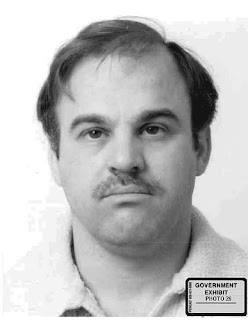
Mobster Tony "The Ant" Spilotro was pocketing money he made from side deals behind the mob's back and boasting that some day he would occupy the throne of organized crime in Chicago. Making things worse, Spilotro was having a romantic fling with the wife of a Las Vegas-based mob associate.
"Right then a nail went in the coffin," convicted loan shark Frank Calabrese is heard saying on a tape made secretly — by his own son — and played Tuesday at the trial of Calabrese and four others accused in a conspiracy that included 18 murders, including Spilotro's. "Right then, that was one nail," Calabrese repeats.
Spilotro was known as the Chicago mob's man in Las Vegas and inspired the Joe Pesci character in the movie "Casino." He and his brother, Michael, were murdered in June 1986 and buried in an Indiana cornfield.
Calabrese says on the tape that sex with the wife of a mob member violates a code. "That is a no-no, that is a no-no, that is a friend and that's a commandment," he tells his son, who secretly recorded the conversation to help the FBI gather evidence against his father.
In short order, Spilotro and his brother both were murdered — on orders from the big boss of the mob at the time, Joey Aiuppa, Calabrese says. "Joey Aiuppa had a meeting before they all went to jail and he told them he wanted him (Spilotro) knocked down," Calabrese says, then quotes Aiuppa as saying: "I don't care how you do it. Get him. I want him out."
Calabrese, 69, is on trial along with James Marcello, 65; Joseph (Joey the Clown) Lombardo, 78; convicted jewel thief Paul Schiro, 70; and retired Chicago police officer Anthony Doyle, 62. They are charged with taking part in a racketeering conspiracy that included the murders of the Spilotro brothers and 16 others.
Aiuppa was the top boss of the Chicago mob. He died in 1997 at age 89, shortly after his release from prison where he served time for a casino skimming conviction. Lombardo was convicted in the same case.
The tapes that have been played for three days now were made at the Milan, Mich., federal correctional center where Calabrese and his son, Frank Calabrese Jr., were serving time for a loan-sharking conviction.
Unknown to the elder Calabrese, his son was helping the FBI, saying he believed his father would never leave the mob and he wanted to "expose my father for what he is." Jurors also have seen videos made at the prison.
On one tape, Calabrese Sr. also says it was Aiuppa who got Edward Hanley a position with the Hotel Employees and Restaurant Employees International Union. Hanley rose to become international president of the union, which represented employees ranging from bartenders to room maids.
Hanley, a one-time member of the AFL-CIO executive board, was repeatedly investigated by federal prosecutors but never charged. But experts often cited the union as an example of mob influence in labor.
On the tape, both Calabreses refer to Hanley — who retired from the union in 1998 and died in a Wisconsin auto accident — as "Uncle Ed" and the father says Aiuppa got him his first union job. "He started him off in the Cicero local," Calabrese Sr. says.
The tapes are a catalog of Chicago mob murders.
Calabrese Jr. interprets some of his father's remarks as confirming that he was on hand, watching from a scout car, when former mob enforcer William Dauber and his wife, Charlotte, were murdered in Lake County July 2, 1980. And likewise for the Sept. 14, 1986, murder of mobster John Fecarotta, allegedly by Calabrese Sr. brother Nicholas Calabrese, who has pleaded guilty to racketeering and is expected to be a prosecution witness.
Calabrese Jr. also testified that his father once drove him past a South Side parking lot and "gave me a nudge."
"I understood there was a dead body there," the son testified.
He apparently referred to the last remains of Michael "Hambone" Albergo, a mob figure whose body has long been sought by the FBI. Agents dug up a parking lot near U.S. Cellular Field, home of the Chicago White Sox, several years ago but have not said exactly what they found there.
Calabrese Sr. attorney Joseph Lopez said in his opening statement that they found "thousands of bones" but none traceable to Hambone Albergo.
Mob Archive of Current and Historical Mafia, Organized Crime & Gangster News. Primary focus on Chicago, but will include some national, especially New York, as well as global reports, along with the evolution of organized crime throughout society today. Topics will also include impact on pop culture through book reviews, movies, games and general interest.
Wednesday, July 11, 2007
Mob Past Memories Are Dusted Off for Trial
In the biggest organized crime trial here in years, jurors scribbled dutifully in notebooks Monday as the son of a reputed mob leader offered a rare, almost surreal how-to lesson about growing up in the “Chicago Outfit.”
The witness, Frank Calabrese Jr., defined terms like “work cars” (untraceable cars for use in crimes), “juice loans” (“high interest loans,” he said, from “the Outfit”) and “underbosses” (akin, he explained, to “vice presidents of companies”).
Mr. Calabrese also told of hidden Uzis, shotguns and rifles in a wall of the home he once shared with his grandmother. And, in his nasal Chicago tone, he outlined essential mores of the Outfit, like, “You weren’t supposed to steal without permission.”
On trial here are five men, including Mr. Calabrese’s father, Frank Sr., who federal prosecutors say were powerful leaders in the city’s organized crime operations in decades gone by. The men are accused of taking part in a racketeering conspiracy that included gambling, loan sharking and 18 killings that, until now, had never led to charges.
Among those deaths: the fatal beatings in 1986 of Tony Spilotro, a chief enforcer in Las Vegas known as the Ant, and his brother, Michael, who were found buried in an Indiana cornfield.
Fourteen men, including some in their 70s, were indicted in the case when it began in 2005, but time and age, among other things, has thinned the numbers. Two of the initial defendants died. One is too sick to stand trial. Six others have pleaded guilty.
On Monday, five men — some balding and one, Joey Lombardo, known as the Clown, who was rolled into court in a wheelchair — listened intently as the younger Mr. Calabrese, 47, repeatedly broke another of what he described as the Outfit’s dos and don’ts: “A lot of things you weren’t supposed to talk about.”
Mr. Calabrese, whose testimony began last week and is expected to go on for days to come, told of discussions he said he had overheard about killings, including those of the Spilotro brothers. He said his father and an uncle, Nicholas, had once planned out a shooting by setting up two chairs in their office like the front seat of a car and practicing how it would come down. He said the same uncle had once asked him to fish a murder weapon out of a Chicago sewer; he was working for the city’s sewer department at the time, Mr. Calabrese said, and retrieved the gun while out on the job.
The elder Mr. Calabrese, 70, who has pleaded not guilty to the charges, said nothing aloud in court Monday, but he repeatedly whispered to his lawyer, Joseph Lopez, and sometimes smiled or smirked or shook his head as his son spoke. Mr. Lopez, in an opening statement when the trial began last month, suggested that his client and his son simply did not get along.
“It’s very difficult for any parent to see his child testify against him,” Mr. Lopez told reporters last week. But on the stand, the younger Mr. Calabrese (whose code name was Jr. on the elaborate handwritten spreadsheets for collecting “street taxes” and counting cuts in gambling operations that were flashed on a large screen before jurors) said he had sought his father’s promise a decade ago that he would “stop his ways” and “semi-retire from the Outfit.”
Total retirement, the son explained, was impossible. “Stepping back,” where people were called on only once in a while, was allowed. But while father and son were both in prison for loan sharking, the younger Mr. Calabrese testified, it became clear that the elder man was not planning to quit at all. That, the witness said, was when he wrote a letter to the F.B.I., offering all that he knew.
If the trial, which is expected to last much of the summer, seemed to some full of faded organized crime images — white-haired men in failing health and nicknames out of a forgotten book — it did not, apparently, to others.
Last week one witness, Joel Glickman, went to jail for refusing to testify against the defendants. He said he was afraid of what might happen to him if he talked.
On Monday, Mr. Glickman, 71, came to court — appearing grumpy but willing to talk about the hundreds of thousands in “street taxes” he said he had paid as a bookmaker since the 1960s. Mr. Glickman had nothing unpleasant to say, though, about Mr. Calabrese or the other men on trial. Under questioning by Mr. Lopez, he took pains to say that Mr. Calabrese had always been cordial and diplomatic and that he had never threatened him in the least.
Loyalty, Mr. Calabrese, the son, explained to the jury, was another of the dos and don’ts he had learned from his father.
He recalled that after the Spilotro deaths, he pledged he would avenge the death of his father and his uncle if they were ever similarly killed.
“One of the rules of the Outfit was that your Outfit family came before your blood family,” he said. He added, “It also came before God.”
But the trial has shown that family ties, whatever the family, don’t always hold. Later in the trial, Nicholas Calabrese, the uncle, is also scheduled to testify — for the prosecution.
Thanks to Monica Davey
The witness, Frank Calabrese Jr., defined terms like “work cars” (untraceable cars for use in crimes), “juice loans” (“high interest loans,” he said, from “the Outfit”) and “underbosses” (akin, he explained, to “vice presidents of companies”).
Mr. Calabrese also told of hidden Uzis, shotguns and rifles in a wall of the home he once shared with his grandmother. And, in his nasal Chicago tone, he outlined essential mores of the Outfit, like, “You weren’t supposed to steal without permission.”
On trial here are five men, including Mr. Calabrese’s father, Frank Sr., who federal prosecutors say were powerful leaders in the city’s organized crime operations in decades gone by. The men are accused of taking part in a racketeering conspiracy that included gambling, loan sharking and 18 killings that, until now, had never led to charges.
Among those deaths: the fatal beatings in 1986 of Tony Spilotro, a chief enforcer in Las Vegas known as the Ant, and his brother, Michael, who were found buried in an Indiana cornfield.
Fourteen men, including some in their 70s, were indicted in the case when it began in 2005, but time and age, among other things, has thinned the numbers. Two of the initial defendants died. One is too sick to stand trial. Six others have pleaded guilty.
On Monday, five men — some balding and one, Joey Lombardo, known as the Clown, who was rolled into court in a wheelchair — listened intently as the younger Mr. Calabrese, 47, repeatedly broke another of what he described as the Outfit’s dos and don’ts: “A lot of things you weren’t supposed to talk about.”
Mr. Calabrese, whose testimony began last week and is expected to go on for days to come, told of discussions he said he had overheard about killings, including those of the Spilotro brothers. He said his father and an uncle, Nicholas, had once planned out a shooting by setting up two chairs in their office like the front seat of a car and practicing how it would come down. He said the same uncle had once asked him to fish a murder weapon out of a Chicago sewer; he was working for the city’s sewer department at the time, Mr. Calabrese said, and retrieved the gun while out on the job.
The elder Mr. Calabrese, 70, who has pleaded not guilty to the charges, said nothing aloud in court Monday, but he repeatedly whispered to his lawyer, Joseph Lopez, and sometimes smiled or smirked or shook his head as his son spoke. Mr. Lopez, in an opening statement when the trial began last month, suggested that his client and his son simply did not get along.
“It’s very difficult for any parent to see his child testify against him,” Mr. Lopez told reporters last week. But on the stand, the younger Mr. Calabrese (whose code name was Jr. on the elaborate handwritten spreadsheets for collecting “street taxes” and counting cuts in gambling operations that were flashed on a large screen before jurors) said he had sought his father’s promise a decade ago that he would “stop his ways” and “semi-retire from the Outfit.”
Total retirement, the son explained, was impossible. “Stepping back,” where people were called on only once in a while, was allowed. But while father and son were both in prison for loan sharking, the younger Mr. Calabrese testified, it became clear that the elder man was not planning to quit at all. That, the witness said, was when he wrote a letter to the F.B.I., offering all that he knew.
If the trial, which is expected to last much of the summer, seemed to some full of faded organized crime images — white-haired men in failing health and nicknames out of a forgotten book — it did not, apparently, to others.
Last week one witness, Joel Glickman, went to jail for refusing to testify against the defendants. He said he was afraid of what might happen to him if he talked.
On Monday, Mr. Glickman, 71, came to court — appearing grumpy but willing to talk about the hundreds of thousands in “street taxes” he said he had paid as a bookmaker since the 1960s. Mr. Glickman had nothing unpleasant to say, though, about Mr. Calabrese or the other men on trial. Under questioning by Mr. Lopez, he took pains to say that Mr. Calabrese had always been cordial and diplomatic and that he had never threatened him in the least.
Loyalty, Mr. Calabrese, the son, explained to the jury, was another of the dos and don’ts he had learned from his father.
He recalled that after the Spilotro deaths, he pledged he would avenge the death of his father and his uncle if they were ever similarly killed.
“One of the rules of the Outfit was that your Outfit family came before your blood family,” he said. He added, “It also came before God.”
But the trial has shown that family ties, whatever the family, don’t always hold. Later in the trial, Nicholas Calabrese, the uncle, is also scheduled to testify — for the prosecution.
Thanks to Monica Davey
Tuesday, July 10, 2007
"Made" The Chicago Way - Mob Induction & A Son Turning on His Father
In one of the first undercover tapes played at the Family Secrets trial, a speaker identified as reputed mob boss Frank Calabrese Sr. recounted for his son the ceremony at which Outfit members become "made."
The underboss, the Outfit's second-in-command, and capos, who led the street crews, initiated new members one by one, cutting their fingers and then burning a holy picture in their hands, the elder Calabrese said in the 1999 conversation. The bosses checked out if anyone flinched in pain, according to the tape played Monday in court. Candidates had to have a murder under their belt.
"You know what I regret more than anything?" said Calabrese, accused by prosecutors in 13 gangland slayings. "Burning the holy pictures in my hand. That bothers me."
In his first full day on the witness stand, Calabrese's son, Frank Jr., who identified his father on the tape, testified about murder and intimidation as his father glowered at him from under furrowed brows, his chin jutting forward in defiance at times and amusement at other times.
The younger Calabrese, dressed in an unbuttoned blue, red and white polo shirt, largely avoided his father's gaze, looking straight ahead as he responded to the questions of a federal prosecutor, often pushing out his lower lip and knitting together his eyebrows in the same manner as his father.
For the first time, Calabrese told why he had turned his back on his father and wore a hidden recorder for the feds as the two talked in a federal prison.
When the younger Calabrese was about to go to prison in the loan-sharking case, he said, he had a meeting at his attorney's office that his father unexpectedly attended. Calabrese had violated his bond by taking drugs, and his father made him promise to go clean, he said. "Promise me you'll never do drugs again" and be "a good person," the older Calabrese told him, the son testified
At the same time, Calabrese asked his father to "semiretire" from the Outfit, and "he said he would," the son testified.
After he went to prison, the younger Calabrese said he felt as if a weight had been lifted from his shoulders, leading him to decide to indeed change his criminal ways. But Calabrese said he realized his father never intended to reform.
The younger Calabrese said he contacted federal authorities from prison and offered to cooperate. Now he is one of the government's star witnesses at the trial of the senior Calabrese, 70, reputed mob figures Joey "the Clown" Lombardo, James Marcello and Paul "the Indian" Schiro as well as Anthony Doyle, a former Chicago police officer. At the heart of the prosecution are 18 long-unsolved murders.
In an undercover tape played in court Monday, the elder Calabrese expressed some regrets at being made a full-fledged member of the Outfit in the secret ceremony years earlier. On the tape, the elder Calabrese said he told his sponsor, Angelo LaPietra, boss of the 26th Street crew in the early to mid-1980s, that "I didn't want it."
"I would be strapped down and if I wanted to do something else, I couldn't," Calabrese was heard on the tape telling his son.
The elder Calabrese told his son that to qualify, a made member had to have committed at least one murder, though the initiation could take place years later, the son said. But the elder Calabrese gave plaudits to Mario Puzo, author of the "Godfather," saying the book's depiction of the making ceremony was "very close" to the real thing, his son said.
Calabrese told jurors that his father and his uncle, Nicholas Calabrese, had confided to him years earlier the details of how brothers Anthony and Michael Spilotro had been killed in one of the Outfit's most infamous murders.
Nicholas Calabrese is expected to testify for the government, implicating his brother, Frank Sr. in as many as 13 murders. The cooperation of the elder Calabrese's brother and son led to the code name for the federal investigation, Operation Family Secrets.
In the mid-1980s, the Outfit was unhappy with Anthony Spilotro's handling of its interests in Nevada, and Nicholas Calabrese and John Fecarotta went out to Las Vegas to kill Anthony Spilotro and someone else, the younger Calabrese testified.
They were unsuccessful, but while they were there, Fecarotta won a lot of money while gambling. Casino records placed Nicholas Calabrese there for the Las Vegas trip. The two older Calabreses were furious when they learned of the records because Nicholas Calabrese and Fecarotta had killed another Outfit associate - - whose name Calabrese Jr. said he could not remember - - while they were in Las Vegas.
When the first attempt to kill Anthony Spilotro failed, members of the Outfit decided to bring the Spilotro brothers to Chicago, under the pretense of initiating Michael Spilotro as a "made" member, Calabrese Jr. said. The Spilotros were led to a Chicago-area home and to the basement, where "a whole bunch of guys" surrounded them, he testified.
The brothers were strangled, and beaten to death as some of the Outfit members held their legs, he said. The older Calabreses told him that "Michael didn't put up much of a struggle," but Anthony Spilotro struggled and warned those who were killing him, "You guys are going to get in trouble!" Calabrese Jr. testified.
Nicholas Calabrese later shot Fecarotta to death because Fecarotta was assigned to bury the Spilotros' bodies, which were discovered in an Indiana cornfield, but Nicholas himself was wounded in the hit, Calabrese Jr. testified. When his uncle recovered, he asked Calabrese Jr., at the time a supervisor at the Chicago Department of Sewers, to retrieve the gun used in the shooting from a sewer where Nicholas Calabrese had dumped it. The younger Calabrese said he arranged it so his work crew carried out repairs in the area where the gun was dumped. Under the pretense of cleaning the sewer, Calabrese found the gun and returned it to his uncle, he testified.
Jurors and defendants alike paid rapt attention to much of the testimony Monday, even when Calabrese Jr. detailed high-interest juice loans, street taxes on businesses and other Outfit operations.
The serious atmosphere of the courtroom was broken only a few times, including once when Calabrese Sr. decided to get up to leave the courtroom for a restroom in the middle of his son's testimony. The elder Calabrese, who is in custody, went to a bathroom in a lockup hidden from the view of jurors.
A few minutes later, outside the jury's presence, Judge James Zagel admonished the defendants that they were allowed to leave for a restroom break during testimony, but by doing so they waived their constitutional right to be present for testimony.
Lombardo, whose nickname of "the Clown" has long matched his history of colorful antics, piped up: "I go pretty often, judge!" drawing laughter from the packed courtroom.
Much of Calabrese's testimony Monday dealt with the minutiae of Outfit life, such as how he spoke in code with his father, how juice loans were calculated and his work with his uncle in enforcing bans on illegal activity in parts of the Chicago area without Outfit approval.
Calabrese Sr. also told his son, in one of their taped conversations played Monday, that federal authorities did not always know who were actual members of the Outfit. Asked by Assistant U.S. Atty. John Scully whether that meant that the Outfit had "sleepers" who worked almost exclusively behind the scenes, Calabrese said, "Yes."
The only other testimony Monday came from Joel Glickman, a former mob-connected sports bookmaker who previously had refused to testify, despite being given immunity from prosecution, and had been jailed for contempt. After a week in jail, Glickman decided to testify after all. He said he took out a juice loan for his boss at an insurance company from Calabrese Sr.
Thanks to Liam Ford
The underboss, the Outfit's second-in-command, and capos, who led the street crews, initiated new members one by one, cutting their fingers and then burning a holy picture in their hands, the elder Calabrese said in the 1999 conversation. The bosses checked out if anyone flinched in pain, according to the tape played Monday in court. Candidates had to have a murder under their belt.
"You know what I regret more than anything?" said Calabrese, accused by prosecutors in 13 gangland slayings. "Burning the holy pictures in my hand. That bothers me."
In his first full day on the witness stand, Calabrese's son, Frank Jr., who identified his father on the tape, testified about murder and intimidation as his father glowered at him from under furrowed brows, his chin jutting forward in defiance at times and amusement at other times.
The younger Calabrese, dressed in an unbuttoned blue, red and white polo shirt, largely avoided his father's gaze, looking straight ahead as he responded to the questions of a federal prosecutor, often pushing out his lower lip and knitting together his eyebrows in the same manner as his father.
For the first time, Calabrese told why he had turned his back on his father and wore a hidden recorder for the feds as the two talked in a federal prison.
When the younger Calabrese was about to go to prison in the loan-sharking case, he said, he had a meeting at his attorney's office that his father unexpectedly attended. Calabrese had violated his bond by taking drugs, and his father made him promise to go clean, he said. "Promise me you'll never do drugs again" and be "a good person," the older Calabrese told him, the son testified
At the same time, Calabrese asked his father to "semiretire" from the Outfit, and "he said he would," the son testified.
After he went to prison, the younger Calabrese said he felt as if a weight had been lifted from his shoulders, leading him to decide to indeed change his criminal ways. But Calabrese said he realized his father never intended to reform.
The younger Calabrese said he contacted federal authorities from prison and offered to cooperate. Now he is one of the government's star witnesses at the trial of the senior Calabrese, 70, reputed mob figures Joey "the Clown" Lombardo, James Marcello and Paul "the Indian" Schiro as well as Anthony Doyle, a former Chicago police officer. At the heart of the prosecution are 18 long-unsolved murders.
In an undercover tape played in court Monday, the elder Calabrese expressed some regrets at being made a full-fledged member of the Outfit in the secret ceremony years earlier. On the tape, the elder Calabrese said he told his sponsor, Angelo LaPietra, boss of the 26th Street crew in the early to mid-1980s, that "I didn't want it."
"I would be strapped down and if I wanted to do something else, I couldn't," Calabrese was heard on the tape telling his son.
The elder Calabrese told his son that to qualify, a made member had to have committed at least one murder, though the initiation could take place years later, the son said. But the elder Calabrese gave plaudits to Mario Puzo, author of the "Godfather," saying the book's depiction of the making ceremony was "very close" to the real thing, his son said.
Calabrese told jurors that his father and his uncle, Nicholas Calabrese, had confided to him years earlier the details of how brothers Anthony and Michael Spilotro had been killed in one of the Outfit's most infamous murders.
Nicholas Calabrese is expected to testify for the government, implicating his brother, Frank Sr. in as many as 13 murders. The cooperation of the elder Calabrese's brother and son led to the code name for the federal investigation, Operation Family Secrets.
In the mid-1980s, the Outfit was unhappy with Anthony Spilotro's handling of its interests in Nevada, and Nicholas Calabrese and John Fecarotta went out to Las Vegas to kill Anthony Spilotro and someone else, the younger Calabrese testified.
They were unsuccessful, but while they were there, Fecarotta won a lot of money while gambling. Casino records placed Nicholas Calabrese there for the Las Vegas trip. The two older Calabreses were furious when they learned of the records because Nicholas Calabrese and Fecarotta had killed another Outfit associate - - whose name Calabrese Jr. said he could not remember - - while they were in Las Vegas.
When the first attempt to kill Anthony Spilotro failed, members of the Outfit decided to bring the Spilotro brothers to Chicago, under the pretense of initiating Michael Spilotro as a "made" member, Calabrese Jr. said. The Spilotros were led to a Chicago-area home and to the basement, where "a whole bunch of guys" surrounded them, he testified.
The brothers were strangled, and beaten to death as some of the Outfit members held their legs, he said. The older Calabreses told him that "Michael didn't put up much of a struggle," but Anthony Spilotro struggled and warned those who were killing him, "You guys are going to get in trouble!" Calabrese Jr. testified.
Nicholas Calabrese later shot Fecarotta to death because Fecarotta was assigned to bury the Spilotros' bodies, which were discovered in an Indiana cornfield, but Nicholas himself was wounded in the hit, Calabrese Jr. testified. When his uncle recovered, he asked Calabrese Jr., at the time a supervisor at the Chicago Department of Sewers, to retrieve the gun used in the shooting from a sewer where Nicholas Calabrese had dumped it. The younger Calabrese said he arranged it so his work crew carried out repairs in the area where the gun was dumped. Under the pretense of cleaning the sewer, Calabrese found the gun and returned it to his uncle, he testified.
Jurors and defendants alike paid rapt attention to much of the testimony Monday, even when Calabrese Jr. detailed high-interest juice loans, street taxes on businesses and other Outfit operations.
The serious atmosphere of the courtroom was broken only a few times, including once when Calabrese Sr. decided to get up to leave the courtroom for a restroom in the middle of his son's testimony. The elder Calabrese, who is in custody, went to a bathroom in a lockup hidden from the view of jurors.
A few minutes later, outside the jury's presence, Judge James Zagel admonished the defendants that they were allowed to leave for a restroom break during testimony, but by doing so they waived their constitutional right to be present for testimony.
Lombardo, whose nickname of "the Clown" has long matched his history of colorful antics, piped up: "I go pretty often, judge!" drawing laughter from the packed courtroom.
Much of Calabrese's testimony Monday dealt with the minutiae of Outfit life, such as how he spoke in code with his father, how juice loans were calculated and his work with his uncle in enforcing bans on illegal activity in parts of the Chicago area without Outfit approval.
Calabrese Sr. also told his son, in one of their taped conversations played Monday, that federal authorities did not always know who were actual members of the Outfit. Asked by Assistant U.S. Atty. John Scully whether that meant that the Outfit had "sleepers" who worked almost exclusively behind the scenes, Calabrese said, "Yes."
The only other testimony Monday came from Joel Glickman, a former mob-connected sports bookmaker who previously had refused to testify, despite being given immunity from prosecution, and had been jailed for contempt. After a week in jail, Glickman decided to testify after all. He said he took out a juice loan for his boss at an insurance company from Calabrese Sr.
Thanks to Liam Ford
At The Mafia Hit " Everyone is Out to Kill You "
TheMafiaHit.com, the free Online Multi-player Game, which was launched, early this June, is proving to be popular. This game is for those who want to be real Mafia Dons and have all the little Mafioso's working for them. The game shows a number of aspects of what real mafia life is like in a fictitious role-playing scenario." It offers the members a chance to participate and interact with other people around the world who want to hold power, and be above the law. In The Mafia Hit Game, the goal is to become a Notorious Boss of a Crime Family composed of Under Bosses, Capos and Soldiers. Mafioso's have the choice to collect money from their Casinos, Strip Clubs, Loan Sharks and Gambling Dens. Like in the daily Mafia Life, they will produce drugs, liquor and counterfeit money. When necessary, Mafioso's will use bribes, and minor crimes during daily routine.
Other feature includes Mafia players fighting a family war to enable their placement at the top. They have the choice to join a Crime Family with a well structured hierarchy or even create their own Crime Family. The options are endless under the use of logic with extra scope for illegal businesses and use your legal businesses to clear out the money. TheMafiaHit offers a high quality of entertainment providing a large variety of graphics with the advantage of playing with thousands of gamers around the world.
The game is free and played in short rounds of 7 days that keep the players enthralled and captivated, they are also notified of any family attacks. Players start with 2,500 turns, weapons and units. Turns are given every 10 minutes along the game to keep everybody playing and building up their crew.
The game is receiving hundreds new members a day and offering cash jackpots for the winner of each round.
Other feature includes Mafia players fighting a family war to enable their placement at the top. They have the choice to join a Crime Family with a well structured hierarchy or even create their own Crime Family. The options are endless under the use of logic with extra scope for illegal businesses and use your legal businesses to clear out the money. TheMafiaHit offers a high quality of entertainment providing a large variety of graphics with the advantage of playing with thousands of gamers around the world.
The game is free and played in short rounds of 7 days that keep the players enthralled and captivated, they are also notified of any family attacks. Players start with 2,500 turns, weapons and units. Turns are given every 10 minutes along the game to keep everybody playing and building up their crew.
The game is receiving hundreds new members a day and offering cash jackpots for the winner of each round.
Monday, July 09, 2007
The Outfit Family, Your Blood Family, and God, in that Order
Friends of ours: Frank Calabrese Sr.,
Friends of mine: Frank Calabrese Jr., Joel Glickman
The eldest son of reputed mob boss Frank Calabrese Sr. testified today that his dad schooled him in the ways of the Outfit, making it understood that the Chicago crime syndicate was meant to be more important to its members than anything—even family and God.
Frank Calabrese Jr., 47, took the stand again today for a little more than an hour, before a break gave prosecutors the opportunity to call witness Joel Glickman, a former mob-connected sports bookmaker who went to jail a week ago rather than testify against Calabrese Sr.
Much of Calabrese's testimony this morning dealt with the minutiae of Outfit life, such as how he spoke in code with his father, how juice loans were calculated and his work with his uncle Nicholas Calabrese in enforcing bans on illegal activity in parts of the Chicago area without Outfit approval.
"We would use brothers, code them as sisters," Calabrese Jr. said.
His father, himself was known as "Frankie Breeze," would give nicknames to people, Calabrese Jr. said.
Sometimes, if they were around someone from whom they wanted to mask the true nature of their conversation, they would change how they referred to someone two or three times, so it would appear to an outsider that they were having conversations about three different people, he said.
Calabrese Jr. is one of the government's two star witnesses in the trial—code named Family Secrets because defendant Frank Calabrese Sr.'s son and brother had done the unthinkable, squealing on a reputed mob brother and blood relative.
The elder Calabrese, 70, and four other men are charged with running the Chicago Outfit for decades as a racketeering conspiracy.
Calabrese Jr. testified today that there were many rules of the Outfit that his father explained over the years—"dos and don'ts, mostly don'ts."
Chief among them was where members' loyalty should lie—to the Outfit above mother, father or other relatives. "He told me . . . your family, the Outfit family, came before your blood family. . . It also came before God," Calabrese Jr. said.
Members of the Outfit were expected to be members for life, and although they could withdraw from active duty, they were expected to respond if any bosses called on them, Calabrese Jr. said.
Members could, however, be frozen out of the Outfit if they engaged in illegal activity without prior approval from an Outfit leader, stole money from an Outfit crew or started taking drugs, he said.
Calabrese Jr. testified about how he, his father and his uncle spent a few hours a week, usually each Saturday, keeping the books for their street tax, juice loan and gambling operations. He was involved in the work from the late 1970s through the early 1990s, he said.
He also demonstrated how he and others kept track of bookmakers, gamblers and others who owed his father's 26th Street crew, using cards and notes with coded names—but real dollar amounts—regarding weekly debts and payments.
Thanks to Liam Ford
Friends of mine: Frank Calabrese Jr., Joel Glickman
The eldest son of reputed mob boss Frank Calabrese Sr. testified today that his dad schooled him in the ways of the Outfit, making it understood that the Chicago crime syndicate was meant to be more important to its members than anything—even family and God.
Frank Calabrese Jr., 47, took the stand again today for a little more than an hour, before a break gave prosecutors the opportunity to call witness Joel Glickman, a former mob-connected sports bookmaker who went to jail a week ago rather than testify against Calabrese Sr.Much of Calabrese's testimony this morning dealt with the minutiae of Outfit life, such as how he spoke in code with his father, how juice loans were calculated and his work with his uncle Nicholas Calabrese in enforcing bans on illegal activity in parts of the Chicago area without Outfit approval.
"We would use brothers, code them as sisters," Calabrese Jr. said.
His father, himself was known as "Frankie Breeze," would give nicknames to people, Calabrese Jr. said.
Sometimes, if they were around someone from whom they wanted to mask the true nature of their conversation, they would change how they referred to someone two or three times, so it would appear to an outsider that they were having conversations about three different people, he said.
Calabrese Jr. is one of the government's two star witnesses in the trial—code named Family Secrets because defendant Frank Calabrese Sr.'s son and brother had done the unthinkable, squealing on a reputed mob brother and blood relative.
The elder Calabrese, 70, and four other men are charged with running the Chicago Outfit for decades as a racketeering conspiracy.
Calabrese Jr. testified today that there were many rules of the Outfit that his father explained over the years—"dos and don'ts, mostly don'ts."
Chief among them was where members' loyalty should lie—to the Outfit above mother, father or other relatives. "He told me . . . your family, the Outfit family, came before your blood family. . . It also came before God," Calabrese Jr. said.
Members of the Outfit were expected to be members for life, and although they could withdraw from active duty, they were expected to respond if any bosses called on them, Calabrese Jr. said.
Members could, however, be frozen out of the Outfit if they engaged in illegal activity without prior approval from an Outfit leader, stole money from an Outfit crew or started taking drugs, he said.
Calabrese Jr. testified about how he, his father and his uncle spent a few hours a week, usually each Saturday, keeping the books for their street tax, juice loan and gambling operations. He was involved in the work from the late 1970s through the early 1990s, he said.
He also demonstrated how he and others kept track of bookmakers, gamblers and others who owed his father's 26th Street crew, using cards and notes with coded names—but real dollar amounts—regarding weekly debts and payments.
Thanks to Liam Ford
Mobster, Tony Spilotro, Fought Killers to Death
Friends of ours: Tony "the Ant" Spilotro, Frank Calabrese Sr., Nick Calabrese, James Marcello, Joseph "Joey the Clown" Lombardo, Paul "The Indian" Schiro, Anthony Doyle
Friends of mine: Michael Spilotro, Frank Calabrese Jr.
A mobster who inspired a movie character warned his attackers before they beat him to death that they would get in trouble, an organized crime insider testified Monday.
Tony "The Ant" Spilotro, and his brother, Michael, had been lured to a basement on the pretext that Michael would be initiated as a "made guy" into the mob, Frank Calabrese Jr. said.
"He came into the basement and there were a whole bunch of guys who grabbed him and strangled him and beat him to death," Calabrese said at Chicago's biggest mob trial in years. "Tony put up a fight. He kept saying, 'You guys are going to get in trouble, you guys are going to get in trouble,'" the prosecution witness said.
Five defendants, including Calabrese's father, reputed mob boss Frank Calabrese Sr., are charged with taking part in a racketeering conspiracy that included 18 killings, gambling, loan sharking and extortion. The slayings of the Spilotro brothers - Michael was killed the same night - were among the murder charges.
Despite his graphic narrative, Calabrese was not a witness to the June 1986 death of Tony Spilotro, known as the Chicago Outfit's man in Las Vegas and inspiration for the Joe Pesci character in "Casino."
Calabrese testified that he heard what happened from his uncle, Nicholas Calabrese, who has pleaded guilty and also is expected to testify at the trial. The younger Calabrese testified he was told Tony Spilotro would be killed because he was engaging in unauthorized activities in Las Vegas.
Calabrese Sr., 69, is on trial along with James Marcello, 65; Joseph "Joey the Clown" Lombardo, 78; convicted jewel thief Paul Schiro, 70; and former police officer Anthony Doyle, 62.
Prosecutors on Monday began playing tapes made secretly by Calabrese Jr. in talks with his father when they both were imprisoned for loan sharking. Calabrese Jr. said he wrote to an FBI agent volunteering to make the tapes because he wanted to change his life and get away from his father, whom he described as manipulative and unwilling to give up crime. The father sat expressionless as his son, who now runs a carry-out near Phoenix, said he wanted to "expose my father for what he was."
Also Monday, convicted bookie Joel Glickman, who went to jail rather than testify against Calabrese Sr., told jurors he paid thousands in "street tax" to the mob and once got a "juice loan" from Calabrese.
Glickman, looking haggard after spending a week behind bars for contempt because of his earlier refusal to testify, said he paid as much as $400,000 in "street tax" over 25 years of working as a bookmaker.
If he hadn't paid the mob for permission to do business, he would have lived in a state of fear, he said.
"Fear of what?" asked Assistant U.S. Attorney Markus Funk. "Fear of getting hurt," Glickman said.
Glickman said that he stopped working as a bookie for six years in the 1970s and went into the insurance business, but that while doing so he got a $20,000 loan for his boss from Calabrese.
"A juice loan?" Funk asked, using a mob term for usury.
"I'd say so," said Glickman, testifying under immunity from prosecution.
Calabrese attorney Joseph Lopez tried to soften the impact of that testimony, asking Glickman whether "Calabrese ever threatened you."
"Never," Glickman said. He agreed with Lopez that Calabrese had always been polite and diplomatic with him.
Thanks to Mike Robinson
Friends of mine: Michael Spilotro, Frank Calabrese Jr.
A mobster who inspired a movie character warned his attackers before they beat him to death that they would get in trouble, an organized crime insider testified Monday.
Tony "The Ant" Spilotro, and his brother, Michael, had been lured to a basement on the pretext that Michael would be initiated as a "made guy" into the mob, Frank Calabrese Jr. said.
"He came into the basement and there were a whole bunch of guys who grabbed him and strangled him and beat him to death," Calabrese said at Chicago's biggest mob trial in years. "Tony put up a fight. He kept saying, 'You guys are going to get in trouble, you guys are going to get in trouble,'" the prosecution witness said.
Five defendants, including Calabrese's father, reputed mob boss Frank Calabrese Sr., are charged with taking part in a racketeering conspiracy that included 18 killings, gambling, loan sharking and extortion. The slayings of the Spilotro brothers - Michael was killed the same night - were among the murder charges.
Despite his graphic narrative, Calabrese was not a witness to the June 1986 death of Tony Spilotro, known as the Chicago Outfit's man in Las Vegas and inspiration for the Joe Pesci character in "Casino."
Calabrese testified that he heard what happened from his uncle, Nicholas Calabrese, who has pleaded guilty and also is expected to testify at the trial. The younger Calabrese testified he was told Tony Spilotro would be killed because he was engaging in unauthorized activities in Las Vegas.
Calabrese Sr., 69, is on trial along with James Marcello, 65; Joseph "Joey the Clown" Lombardo, 78; convicted jewel thief Paul Schiro, 70; and former police officer Anthony Doyle, 62.
Prosecutors on Monday began playing tapes made secretly by Calabrese Jr. in talks with his father when they both were imprisoned for loan sharking. Calabrese Jr. said he wrote to an FBI agent volunteering to make the tapes because he wanted to change his life and get away from his father, whom he described as manipulative and unwilling to give up crime. The father sat expressionless as his son, who now runs a carry-out near Phoenix, said he wanted to "expose my father for what he was."
Also Monday, convicted bookie Joel Glickman, who went to jail rather than testify against Calabrese Sr., told jurors he paid thousands in "street tax" to the mob and once got a "juice loan" from Calabrese.
Glickman, looking haggard after spending a week behind bars for contempt because of his earlier refusal to testify, said he paid as much as $400,000 in "street tax" over 25 years of working as a bookmaker.
If he hadn't paid the mob for permission to do business, he would have lived in a state of fear, he said.
"Fear of what?" asked Assistant U.S. Attorney Markus Funk. "Fear of getting hurt," Glickman said.
Glickman said that he stopped working as a bookie for six years in the 1970s and went into the insurance business, but that while doing so he got a $20,000 loan for his boss from Calabrese.
"A juice loan?" Funk asked, using a mob term for usury.
"I'd say so," said Glickman, testifying under immunity from prosecution.
Calabrese attorney Joseph Lopez tried to soften the impact of that testimony, asking Glickman whether "Calabrese ever threatened you."
"Never," Glickman said. He agreed with Lopez that Calabrese had always been polite and diplomatic with him.
Thanks to Mike Robinson
on
7/09/2007
| Reactions: |
Analyzing Crime Scene Clues
Imagine the heartbreak of having your young child mysteriously disappear from a holiday party…as happened to a northern Virginia family some years ago.
Now imagine you’re the FBI agent trying desperately to solve the case, but with no sign of the missing 5-year-old and little evidence to go on. Your prime suspect is the maintenance man at the apartment complex where the child lived. In his car you find tiny bits of hair and clothing fibers. Will this evidence be your link to the missing child, the break you need to solve the investigation?
In this case…as in many cases like it before and since…the answer was yes—thanks to the work of forensic experts in our FBI Laboratory. After careful analysis, our scientists found that the hairs were highly similar to the missing girl’s and that the fibers were no different from those on a rabbit hair coat worn by the child’s mother. Even though the 5-year-old was never found, this trace evidence—as we call it because it’s small and easily transferred—played a key role in putting the killer behind bars.
Each year, some 10,000 bits of this kind of evidence—shards of glass, strands of hair and fur, paint chips, soil clods, feathers, rocks and minerals, building materials of all kinds, you name it—come pouring into what we call our Trace Evidence Unit on the third floor of our FBI Lab in rural Virginia, courtesy of not just FBI investigators but also any law enforcement agency nationwide looking for help in a case.
There, it is compared, contrasted, and analyzed every which way for whatever clues may lie hidden, usually invisible to the naked eye. A lot can be learned in the process.
Just a few examples: We can tell if a strand of hair is dyed or burned; whether it’s from an animal or human being; what part of the body it’s from; and whether it was shed or pulled out. When glass is fractured, we can determine the direction of the blow and what did the damage. We can take the smallest pieces of building materials and figure out if they are insulation, fiber glass, building tile, bricks, cement blocks, etc.
“It’s amazing how the smallest clues can end up yielding so much information and making such a big difference in cases,” says Cary Oien, chief of the unit.
Here are some more details about the work of the unit:
The people. Highly professional and well-schooled. Along with Oien, the 18-person staff includes: forensic examiners who do the evidence comparisons, write reports, and testify in court … physical scientists who prepare and process the evidence … and a geologist who specializes in mineralogy and soil comparisons.
Tools and techniques. For soil, a technique called “x-ray diffraction” is used. For glass, it’s the glass refractive index measurement (yes, “GRIM” for short). For fiber, we use tools like the microspectrophotometer and infrared spectrophotometer to discriminate between colors and types of polymers (polyester vs. wool, for example). And of course, there are plenty of powerful microscopes on hand.
Cases. More than we can name. But including: 9/11, the D.C. snipers, the ’01 anthrax attacks, O.J. Simpson, and plenty of violent crimes and kidnappings.
Final words. “We’re all about using science to solve crimes,” says Oien. “But there is a very personal side to what we do. Some of the cases we’re involved in—whether it’s a missing child or a brutal murder—are heart wrenching. It’s a great feeling when our analysis helps take a dangerous criminal off the streets. That’s what makes every day here interesting and worthwhile.”
Thanks to the FBI
Now imagine you’re the FBI agent trying desperately to solve the case, but with no sign of the missing 5-year-old and little evidence to go on. Your prime suspect is the maintenance man at the apartment complex where the child lived. In his car you find tiny bits of hair and clothing fibers. Will this evidence be your link to the missing child, the break you need to solve the investigation?
In this case…as in many cases like it before and since…the answer was yes—thanks to the work of forensic experts in our FBI Laboratory. After careful analysis, our scientists found that the hairs were highly similar to the missing girl’s and that the fibers were no different from those on a rabbit hair coat worn by the child’s mother. Even though the 5-year-old was never found, this trace evidence—as we call it because it’s small and easily transferred—played a key role in putting the killer behind bars.
Each year, some 10,000 bits of this kind of evidence—shards of glass, strands of hair and fur, paint chips, soil clods, feathers, rocks and minerals, building materials of all kinds, you name it—come pouring into what we call our Trace Evidence Unit on the third floor of our FBI Lab in rural Virginia, courtesy of not just FBI investigators but also any law enforcement agency nationwide looking for help in a case.
There, it is compared, contrasted, and analyzed every which way for whatever clues may lie hidden, usually invisible to the naked eye. A lot can be learned in the process.
Just a few examples: We can tell if a strand of hair is dyed or burned; whether it’s from an animal or human being; what part of the body it’s from; and whether it was shed or pulled out. When glass is fractured, we can determine the direction of the blow and what did the damage. We can take the smallest pieces of building materials and figure out if they are insulation, fiber glass, building tile, bricks, cement blocks, etc.
“It’s amazing how the smallest clues can end up yielding so much information and making such a big difference in cases,” says Cary Oien, chief of the unit.
Here are some more details about the work of the unit:
The people. Highly professional and well-schooled. Along with Oien, the 18-person staff includes: forensic examiners who do the evidence comparisons, write reports, and testify in court … physical scientists who prepare and process the evidence … and a geologist who specializes in mineralogy and soil comparisons.
Tools and techniques. For soil, a technique called “x-ray diffraction” is used. For glass, it’s the glass refractive index measurement (yes, “GRIM” for short). For fiber, we use tools like the microspectrophotometer and infrared spectrophotometer to discriminate between colors and types of polymers (polyester vs. wool, for example). And of course, there are plenty of powerful microscopes on hand.
Cases. More than we can name. But including: 9/11, the D.C. snipers, the ’01 anthrax attacks, O.J. Simpson, and plenty of violent crimes and kidnappings.
Final words. “We’re all about using science to solve crimes,” says Oien. “But there is a very personal side to what we do. Some of the cases we’re involved in—whether it’s a missing child or a brutal murder—are heart wrenching. It’s a great feeling when our analysis helps take a dangerous criminal off the streets. That’s what makes every day here interesting and worthwhile.”
Thanks to the FBI
Searching for Carmie Guido
I had a reader ask me for some information on a relative of theirs that has passed on that they thought might have a mob association. The terms of the association are unclear. The gentleman's name in question is Carmie Guido. Carmie ran a restaurant on Taylor Street called Guido's. Apparently, you had to place your order through an intercom system.
If anybody has any information that they can share, please pass it along.
Thanks!
If anybody has any information that they can share, please pass it along.
Thanks!
Yes Your Honor
As readers first learned on Sunday, The Shark Attacks segment was going to be curtailed so as to not be too specific or as spicy as it had been since the start of the Family Secrets Mob Trial. The reason is that the author of those posts, Joseph Lopez, who represents Frank Calabrese Sr. in court, had been ordered by Judge Zagel to temper his comments. It is my understanding that the government had made that request to the judge in closed chambers last week. Although, I give them an open invitation to share with me their observations on the proceedings as well. Who knew that anybody even read this site? ;-)
Since that post on Sunday, I have had a handful of attorneys contact me to express their concern on the ruling as matter of First Amendment rights. A few sites that they shared with me that I will pass along include the First Amendment Center and a trial transcript regarding a case in which the judge had a similar reaction. As long time readers will know, if you have something to share, I am glad to pass it along to all of the readers that stop by here. In fact, the majority of my links are ones suggested to me by those in law enforcement and the media.
In terms of coverage of the trial, when I spoke with Shark over the weekend, we have both been impressed with in depth reporting from The Tribune and the Sun Times. In particular, Jeff Coen and Steve Warmbir. If you have been visiting my site for anytime, you will know that I have been a fan of both men for a while. Personally, I also love that Steve has even created a blog himself that has an abundance of additional information that does not make into the regular newspaper. It is an excellent marriage of using the new media to support and expand upon the established media. There is no doubt that we are in good hands with both papers to keep us informed all summer long. If my schedule permits, I hope to even attend the trial one day myself to give a first hand account.
Since that post on Sunday, I have had a handful of attorneys contact me to express their concern on the ruling as matter of First Amendment rights. A few sites that they shared with me that I will pass along include the First Amendment Center and a trial transcript regarding a case in which the judge had a similar reaction. As long time readers will know, if you have something to share, I am glad to pass it along to all of the readers that stop by here. In fact, the majority of my links are ones suggested to me by those in law enforcement and the media.
In terms of coverage of the trial, when I spoke with Shark over the weekend, we have both been impressed with in depth reporting from The Tribune and the Sun Times. In particular, Jeff Coen and Steve Warmbir. If you have been visiting my site for anytime, you will know that I have been a fan of both men for a while. Personally, I also love that Steve has even created a blog himself that has an abundance of additional information that does not make into the regular newspaper. It is an excellent marriage of using the new media to support and expand upon the established media. There is no doubt that we are in good hands with both papers to keep us informed all summer long. If my schedule permits, I hope to even attend the trial one day myself to give a first hand account.
Has "The Shark" had his teeth pulled?
The federal judge presiding over the Family Secrets mob case in Chicago has privately told Joseph "The Shark" Lopez -- the defense lawyer for reputed Outfit hit man Frank Calabrese Sr. -- to stop allowing his critiques of the trial to be posted on an Internet blog.
Lopez, among the more colorful defense attorneys at the trial, called a witness in one blog posting "boring," a doofus and -- using Italian slang -- an ass.
U.S. District Judge James Zagel was not amused and ordered Lopez to stop e-mailing his entries to the blog, chicagosyndicate.blogspot.com. The judge recently took the action behind closed doors, according to sources familiar with the matter.
Friday, Lopez, among the more media-friendly lawyers in the case, took the uncharacteristic step of having no comment. "I can't talk about it because it's under seal," Lopez said.
In general, attorneys are prohibited during trial from making statements outside of court that could have a prejudicial effect on the case.
Last Tuesday, Lopez went to great lengths -- before telling the news media about his client's reaction to the day's testimony -- to say he would not comment on specific witnesses. Not that Lopez's short-lived blog had only negative things to say.
Lopez noted the judge was "doing an excellent job of moving [the] trial along at a good pace."
He gave kudos to one of the prosecutors on the government team, noting tangentially, "he is quite a sailor." He criticized another as "monotone and dry with no emotion."
And Lopez was kind to a fellow defense attorney, Rick Halprin, who represents reputed top mobster Joseph "Joey the Clown" Lombardo. In one cross-examination, "Halprin was great as usual," Lopez wrote.
When asked about the compliment on the blog, Halprin said, "While I agreed with the sentiment, it's still inappropriate."
"The only opinion that counts is the jury's," Halprin said. Thanks to Steve Warmbir
FBI Director Meets with Privacy and Civil Liberties Groups
FBI Director Robert S. Mueller, III, met today with representatives of several privacy and civil liberties groups in a continuation of discussions surrounding the Bureau’s use of National Security Letters.
The leaders and representatives of advocacy groups had a chance to discuss with Director Mueller and the FBI’s General Counsel, Valerie Caproni, the Bureau’s continuing initiatives to strengthen internal controls designed to protect privacy and civil liberties.
Today’s meeting is part of a continuing dialogue aimed at reaching out to subject matter experts, including critics, who may give added value to the development of internal processes. The FBI’s goal is to maintain compliance with rules and law while effectively carrying out the FBI’s mission to deter and prevent terrorism. At the initial meeting in March, Bureau officials discussed the findings released by the Department of Justice Inspector General regarding the FBI’s use of National Security Letters and the actions taken by the FBI based on the Inspector General’s recommendations. At a follow up meeting, privacy groups were provided the draft proposal for improved internal guidelines. The advocacy groups provided valuable suggestions, many of which were incorporated into the final product.
“These are complex issues, and it’s important that we have an open and ongoing dialogue,” said Director Mueller. “We have worked hard to develop more transparency around our development of policy where privacy and civil liberties are concerned. We may not agree with the advocacy groups on every point, but the dialogue is valuable and their advice is important to us.”
The leaders and representatives of advocacy groups had a chance to discuss with Director Mueller and the FBI’s General Counsel, Valerie Caproni, the Bureau’s continuing initiatives to strengthen internal controls designed to protect privacy and civil liberties.
Today’s meeting is part of a continuing dialogue aimed at reaching out to subject matter experts, including critics, who may give added value to the development of internal processes. The FBI’s goal is to maintain compliance with rules and law while effectively carrying out the FBI’s mission to deter and prevent terrorism. At the initial meeting in March, Bureau officials discussed the findings released by the Department of Justice Inspector General regarding the FBI’s use of National Security Letters and the actions taken by the FBI based on the Inspector General’s recommendations. At a follow up meeting, privacy groups were provided the draft proposal for improved internal guidelines. The advocacy groups provided valuable suggestions, many of which were incorporated into the final product.
“These are complex issues, and it’s important that we have an open and ongoing dialogue,” said Director Mueller. “We have worked hard to develop more transparency around our development of policy where privacy and civil liberties are concerned. We may not agree with the advocacy groups on every point, but the dialogue is valuable and their advice is important to us.”
Sunday, July 08, 2007
Judge Muzzling Attorneys at Mob Trial?
Attorney Joseph "The Shark" Lopez, who is representing Frank Calabrese Sr. in the Chicago Family Secrets Mob Trial, has agreed to provide us with updates on his observations and thoughts regarding the various court proceedings.
Today, Shark indicates that Judge Zagel has ordered him to tone down his comments to the media.

Today, Shark indicates that Judge Zagel has ordered him to tone down his comments to the media.

"Local court rules do not allow me to comment on the witnesses in this case. Somehow my first amendment got lost in the fray. Frank (Calabrese) Jr. is on stand, as Jeff Coen wrote, he made all kinds of allegations. The tapes will be played next week. It should be an intersting week. I can't wait until cross examination. At least three lawyers will ask him questions. It's sure to be a great week. Judge Zagel is moving the trial along and the prosecutors are moving witnesses in and out. As usual, I asked a gazillion questions last week. This week should be the same. Stay Tuned." - Shark
Subscribe to:
Posts (Atom)