The feds' knockout of the Gambino crime family looks more like a phantom punch.
Reputed boss John (Jackie Nose) D'Amico and reputed underboss Domenico (The Greaseball) Cefalu took a plea deal Wednesday, admitting to a single extortion count, and could end up spending less than two years in prison.
In the last two weeks - and with a June 7 trial date looming - prosecutors dropped their demand that D'Amico plead guilty to racketeering, which carried a more serious penalty, defense lawyer Elizabeth Macedonio said.
D'Amico and Cefalu admitted extorting a $100,000 payment from businessman-turned rat Joseph Vollaro in exchange for permission to sell his Staten Island cement company. Prosecutors did not object when D'Amico said Vollaro would suffer "economic harm" if he didn't pay up, rather than violence.
Despite great fanfare accompanying last February's indictment of 62 Gambinos, there was no new defection of a high-ranking turncoat, and Vollaro was unable to record conversations with D'Amico, Cefalu or reputed consigliere Joseph (JoJo) Corozzo, a government source acknowledged.
Corozzo is scheduled to plead guilty to a new complaint that drops a drug trafficking charge against him. "Plea [deals] are based on lack of evidence and quality of evidence," Macedonio said.
For aging mobsters like D'Amico, 71; Cefalu, 61, and Corozzo, 66, convictions after trial would have resulted in virtual life sentences. None of the 52 defendants cutting deals faces more than three years in prison.
Thanks to John Marzulli
Friday, May 30, 2008
Thursday, May 29, 2008
"Little Nick" Corozzo Turns Himself into the NY FBI
On the run for nearly four months and featured on "America's Most Wanted," a reputed Mafia capo strolled up to the FBI's New York City office on Thursday and surrendered on charges he ordered a decades-old gangland hit that took an innocent bystander's life.
 Nicholas "Little Nick" Corozzo _ according to authorities, a one-time crony of notorious mob boss John Gotti _ was ordered held without bail after pleading not guilty to racketeering, extortion and murder charges _ part of a sprawling federal case against the once-mighty Gambino organized crime family.
So where had the balding 5-foot-5, 68-year-old fugitive been hiding out?
"I really don't know," defense attorney Diarmuid White told reporters outside court. Prosecutors claimed they didn't know either.
White said Corozzo contacted him two weeks ago about arranging a surrender _ around the time his case was featured on the popular television show. On Thursday morning, Corozzo donned a blue sweat suit-white sneaker ensemble, met the lawyer on a street corner in lower Manhattan and walked two blocks to the FBI office, where they were greeted outside by four agents.
"He knew what he was doing," White said.
Corozzo had fled his Long Island home in early February amid a massive pre-dawn roundup of 62 reputed mobsters named in an indictment unsealed in Brooklyn.
Authorities say Corozzo was a soldier in the Gambino family from the mid-1970s until 1992 when he was promoted to capo, or captain. They say he was part of a three-man committee of capos formed in 1994 to help John "Junior" Gotti run New York's Gambino family while his father was in prison, serving a life sentence for murder and racketeering; the elder Gotti died behind bars in 2002.
Corozzo, also known as "the Little Guy," was consider a candidate to take over the crime family, but racketeering convictions in the late 1990s in Florida and New York took him out of the running, prosecutors say.
The Gambinos have been crippled by a steady stream of government indictments and prosecutions since the 1990s. Authorities brought the new charges against Corozzo as part of a case aimed at delivering a knock-out blow, with charges accusing reputed mobsters with offenses stretching back three decades.
The indictment alleges Corozzo ordered the Jan. 26, 1996, the murder of a rival mobster, resulting in the death of the intended target and the bystander. So far, about 30 of his co-defendants have pleaded guilty.
Thanks to Tom Hays
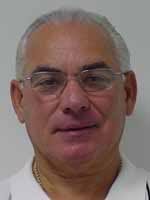 Nicholas "Little Nick" Corozzo _ according to authorities, a one-time crony of notorious mob boss John Gotti _ was ordered held without bail after pleading not guilty to racketeering, extortion and murder charges _ part of a sprawling federal case against the once-mighty Gambino organized crime family.
So where had the balding 5-foot-5, 68-year-old fugitive been hiding out?
"I really don't know," defense attorney Diarmuid White told reporters outside court. Prosecutors claimed they didn't know either.
White said Corozzo contacted him two weeks ago about arranging a surrender _ around the time his case was featured on the popular television show. On Thursday morning, Corozzo donned a blue sweat suit-white sneaker ensemble, met the lawyer on a street corner in lower Manhattan and walked two blocks to the FBI office, where they were greeted outside by four agents.
"He knew what he was doing," White said.
Corozzo had fled his Long Island home in early February amid a massive pre-dawn roundup of 62 reputed mobsters named in an indictment unsealed in Brooklyn.
Authorities say Corozzo was a soldier in the Gambino family from the mid-1970s until 1992 when he was promoted to capo, or captain. They say he was part of a three-man committee of capos formed in 1994 to help John "Junior" Gotti run New York's Gambino family while his father was in prison, serving a life sentence for murder and racketeering; the elder Gotti died behind bars in 2002.
Corozzo, also known as "the Little Guy," was consider a candidate to take over the crime family, but racketeering convictions in the late 1990s in Florida and New York took him out of the running, prosecutors say.
The Gambinos have been crippled by a steady stream of government indictments and prosecutions since the 1990s. Authorities brought the new charges against Corozzo as part of a case aimed at delivering a knock-out blow, with charges accusing reputed mobsters with offenses stretching back three decades.
The indictment alleges Corozzo ordered the Jan. 26, 1996, the murder of a rival mobster, resulting in the death of the intended target and the bystander. So far, about 30 of his co-defendants have pleaded guilty.
Thanks to Tom Hays
Tuesday, May 27, 2008
SOPRANOS COSTUMES LEAD CHRISTIE’S POP CULTURE AUCTION
James Gandolfini’s Personal Collection Of Costumes Worn During Filming of The Sopranos Will Benefit Wounded Warrior Project
 Christie’s Pop Culture auction on June 25 in New York will be highlighted by a collection of costumes from the critically acclaimed and Emmy-award-winning HBO drama series, The Sopranos. James Gandolfini will sell his personal costume wardrobe worn as the series star, Tony Soprano, to benefit Wounded Warrior Project, a non-profit organization whose mission is to honor and empower wounded warriors. Among the twenty-four lots of Tony Soprano costumes are complete costumes of suits with shoes, leisure shirts, bathrobes, track suits, and bloody costumes, with estimates starting at $500. The sale will also include a selection of men’s costumes from The Sopranos worn by various characters such as Junior Soprano, Paulie Walnuts, Christopher Moltisanti and A.J. Soprano.
“Wounded Warrior Project is thankful for James Gandolfini’s commitment to our organization,” stated Wounded Warrior Project Executive Director and Founder, John Melia. “His public support and generous donation gives a world-wide voice to the severely wounded men and women WWP assists. Our motto is ‘The Greatest Casualty is Being Forgotten’ and with Mr. Gandolfini’s support, we will ensure that doesn’t happen.”
Tony Soprano Wardrobe
Hailed by critics as a landmark series, The Sopranos riveted audiences for six seasons and drew an international base of dedicated fans. The cast’s wardrobe played a significant part in establishing the look and tone of the series, and no small detail was overlooked, down to the actors’ socks. The series costume designer, Juliet Polsca, earned two Emmy nominations and a Costume Designers Guild award.
Many of the lots are accompanied with the original production tags attached and all of the lots include a letter of authenticity by James Gandolfini. Highlights among the Tony Soprano wardrobe recall the character’s most recognizable styles, as demonstrated by the short sleeve button down blue shirt worn in the opening credits of every show (estimate: $2,000-3,000). A tan cotton bathrobe with lavender trim and an embroidered letter ‘S’ on the breast pocket, which was worn in the pilot episode when Tony is fetching the morning paper and feeding ducks in the pool (estimate: $1,000-1,500). A signature costume worn in numerous episodes throughout the entire series run is a striped short robe by Guy Laroche, a white tank top, light blue striped boxers, and a pair of leather Bostonian scuffs (estimate: $1,000-1,500).
A complete costume worn in the episode “Rat Pack” (season 5, episode 2) and displayed at an exhibition of “Outstanding Art of Television Costume Design” at The Academy of Television Arts & Sciences and the Fashion Institute of Design & Merchandising, consists of a multicolored geometric Burma Bibas short sleeve shirt, a white athletic tank top, dark brown pleated Slates pants, Gold Toe Socks, and a pair of Allen Edmonds brown loafers (estimate: $800-1,200). A bloody costume worn in a pivotal scene during “Members Only” (season 6, episode 1), when Uncle Junior shoots Tony in a fit of dementia, comprises of a white Jockey tank top, a black and beige short sleeve polo shirt by George Foreman, and black pants by Zanella (estimate: $2,000-3,000).
Various Characters Wardrobe
Approximately 37 men’s costumes from other lead characters in The Sopranos are available from The Golden Closet. They include costumes worn by characters Junior Soprano, Paulie Walnuts, Christopher Moltisanti, A.J. Soprano, Bobby Balcala, Burt Gervasi, Johnny Sack and others. From the character Junior Soprano is a plaid cap by Bert Pulitzer (estimate: $300-500), and a black wool overcoat (estimate: $500-700). Several costumes worn by the character Paulie Walnuts are offered, including a navy double breasted two-piece suit by Marcello Toscani and white Jos A. Bank shirt, a short sleeve Tuscan knit shirt and tan Sansabelt pants, and two complete track suits (each estimate: $500-700).
Christie’s Pop Culture auction on June 25 in New York will be highlighted by a collection of costumes from the critically acclaimed and Emmy-award-winning HBO drama series, The Sopranos. James Gandolfini will sell his personal costume wardrobe worn as the series star, Tony Soprano, to benefit Wounded Warrior Project, a non-profit organization whose mission is to honor and empower wounded warriors. Among the twenty-four lots of Tony Soprano costumes are complete costumes of suits with shoes, leisure shirts, bathrobes, track suits, and bloody costumes, with estimates starting at $500. The sale will also include a selection of men’s costumes from The Sopranos worn by various characters such as Junior Soprano, Paulie Walnuts, Christopher Moltisanti and A.J. Soprano.“Wounded Warrior Project is thankful for James Gandolfini’s commitment to our organization,” stated Wounded Warrior Project Executive Director and Founder, John Melia. “His public support and generous donation gives a world-wide voice to the severely wounded men and women WWP assists. Our motto is ‘The Greatest Casualty is Being Forgotten’ and with Mr. Gandolfini’s support, we will ensure that doesn’t happen.”
Tony Soprano Wardrobe
Hailed by critics as a landmark series, The Sopranos riveted audiences for six seasons and drew an international base of dedicated fans. The cast’s wardrobe played a significant part in establishing the look and tone of the series, and no small detail was overlooked, down to the actors’ socks. The series costume designer, Juliet Polsca, earned two Emmy nominations and a Costume Designers Guild award.
Many of the lots are accompanied with the original production tags attached and all of the lots include a letter of authenticity by James Gandolfini. Highlights among the Tony Soprano wardrobe recall the character’s most recognizable styles, as demonstrated by the short sleeve button down blue shirt worn in the opening credits of every show (estimate: $2,000-3,000). A tan cotton bathrobe with lavender trim and an embroidered letter ‘S’ on the breast pocket, which was worn in the pilot episode when Tony is fetching the morning paper and feeding ducks in the pool (estimate: $1,000-1,500). A signature costume worn in numerous episodes throughout the entire series run is a striped short robe by Guy Laroche, a white tank top, light blue striped boxers, and a pair of leather Bostonian scuffs (estimate: $1,000-1,500).
A complete costume worn in the episode “Rat Pack” (season 5, episode 2) and displayed at an exhibition of “Outstanding Art of Television Costume Design” at The Academy of Television Arts & Sciences and the Fashion Institute of Design & Merchandising, consists of a multicolored geometric Burma Bibas short sleeve shirt, a white athletic tank top, dark brown pleated Slates pants, Gold Toe Socks, and a pair of Allen Edmonds brown loafers (estimate: $800-1,200). A bloody costume worn in a pivotal scene during “Members Only” (season 6, episode 1), when Uncle Junior shoots Tony in a fit of dementia, comprises of a white Jockey tank top, a black and beige short sleeve polo shirt by George Foreman, and black pants by Zanella (estimate: $2,000-3,000).
Various Characters Wardrobe
Approximately 37 men’s costumes from other lead characters in The Sopranos are available from The Golden Closet. They include costumes worn by characters Junior Soprano, Paulie Walnuts, Christopher Moltisanti, A.J. Soprano, Bobby Balcala, Burt Gervasi, Johnny Sack and others. From the character Junior Soprano is a plaid cap by Bert Pulitzer (estimate: $300-500), and a black wool overcoat (estimate: $500-700). Several costumes worn by the character Paulie Walnuts are offered, including a navy double breasted two-piece suit by Marcello Toscani and white Jos A. Bank shirt, a short sleeve Tuscan knit shirt and tan Sansabelt pants, and two complete track suits (each estimate: $500-700).
Rumors Tie Mobsters to Stained Glass Church Windows North of Chicago
 Amid the monks and saints depicted in a stained glass window at St. Peter Catholic Church in Antioch appears a car wheel, headlight and a wrench that have baffled parishioners.
For years they have speculated that the three-panel windows were somehow tied to Chicago mobsters who spent summers in northeastern Lake County around the time the church was dedicated in 1930. The gangsters were proud of their cars, had money and may have wanted to atone for some of their sins by donating to a church.
Mary Leonard, director of religious education for the parish, looked through church archives and even contacted the company that created the windows, but she hasn't found anything that proves a mob connection. "But it makes a really good story," she said.
What we do know about the windows is that they were made by Rambusch Studios of New York, according to Leonard. The company sketched out the glass iconography with the Rev. Francis Morgan Flaherty. The windows were then crafted by a stained-glass studio in Munich, Germany.
Church records don't indicate who paid for the windows. But painted at the bottom of the three-panels above the choir loft, it reads: "In memory of Harry Martin, Patrick Quilty and Margaret Quilty." It's unclear who they were or if they had a say in the window design.
Antioch and its lakes used to attract Chicago residents and tourists. During the summer, church attendance swelled at the first one-room Catholic church built in 1897 on Victoria Street in Antioch. A tent was needed to accommodate the faithful during summer Masses, Leonard said. Out-of-towners likely contributed to the $250,000 needed in 1930 to build the stone St. Peter Catholic Church on Lake Street.
Could Chicago Prohibition-era gangsters have attended Mass and cut a big check? There's no evidence of it, but reportedly Al Capone hung out in Fox Lake, and gangster Bugs Moran played golf in Antioch.
Adding another layer of mystery to the windows is that the central figure is clearly St. Patrick, not St. Peter, the parish's patron saint. The figure is holding a staff with a shamrock and is standing on a snake. (Pious legend credits Patrick with banishing snakes from Ireland, though post-glacial Ireland never had snakes.)
The St. Patrick iconography could be a tribute to the church's past. The one-room Catholic church in Antioch was a mission church of St. Patrick in Wadsworth until 1909.
We'll probably never know for sure if mobsters paid for the windows, or if the car references were the result of artistic license by the pastor or a German window builder.
"I see some parishioners pointing it out to their grandchildren, and they tell other children," Leonard said. "If nothing else, it interests them in the church."
-- not that we want them to be looking at the back of windows while Mass is going on."
Thanks to Ryan Pagelow
Tuesday, May 20, 2008
Chicago Outfit Bank Robber Captured After 14 Years of Fooling the FBI
How do you duck the FBI? Carmine Jannece did so since the early 1990s by staying close to home.
Jannece was part of the biggest bank robbery in Michigan history, right across the lake in Saugatuck, a favorite vacation retreat for many Chicagoans.
Jannece is now 80 years old, on the lam since he was in his 60s, might still be living off the proceeds of one very lucrative bank robbery.
Story continues below
Advertisement
In July 1991. a movie, " Point Break," was playing at Chicago-area theatres about a gang of robbers who stick up banks while wearing rubber masks of ex-U.S. presidents.
Late that summer, inspired by the film, federal agents say a four-man Outfit burglary crew from Chicago arrived in the quaint town of Saugatuck. The mob holdup men were led by veteran Chicago burglar Bobby "The Beak" Siegel, a cousin of the infamous founder of Las Vegas' Bugsy Siegel.
Saugatuck businessman Larry Phillips was driving by the bank. "I went around the one corner and I met a car, and there were three guys in it and they all had face masks on," he said.
The crime syndicate crew had come to hit the only bank in town and pulled it off by diverting the city's only squad car with a 911 call about a phony car accident across town.
One woman was working as a bank teller that day. "Three men came dashing through the front door and pushed me onto the floor, and the other two men grabbed the other bank officer and took him into the vault," said Patricia Diepenhorst, teller.
They ran out with nearly $360,000 in cash with Carmine Jannece driving the getaway car back to Chicago. In 1994, Jannece, Bobby "The Beak" Siegel and their two cohorts were indicted for that robbery and a string of stickups in Florida.
All but Jannece were arrested and convicted.
Jannece became a fugitive, wanted by the FBI here in Chicago; in Michigan and in Florida.
He managed to throw FBI agents off his trail by changing him name from Jannece to Senese and, according to family members, for the last 14 years, lived right out in the open on the Northwest Side, ironically between two banks above a strip mall with his alias right there on the mailbox with bills arriving every day for him and his car parked out back, registered in the slightly altered name.
Jannece outlasted the fugitive run of his boss, Joey "The Clown" Lombardo, who managed only nine months before the FBI found him. Jannece's son says his father told him he was exposed when he tried to renew his driver's license.
"I've been wondering about that for years and years, if they'd ever find him," said Diepenhorst.
Surprisingly, the FBI made no announcement of the February arrest. At first, a spokesman denied knowing anything about Jannece. When pressed, they declined to discuss with the I-Team why it took 14 years to bring him in.
Jannece last month pleaded guilty to having stolen a car in Holland, Michigan to use as the getaway car, acting as a lookout and agreed to cooperate with the government. He is free on bond.
Jannece's lawyer told the I-Team he was sorry but had no comment. Neither did the U.S. Attorney.
The aging bank robber is scheduled to be sentenced in July. He could help his situation if he told authorities the whereabouts of stolen bank funds or jewelry or testified against mob bosses who are expected to face indictment later this year in the second leg of the operation family secrets trial.
Reported by Chuck Goudie
Jannece was part of the biggest bank robbery in Michigan history, right across the lake in Saugatuck, a favorite vacation retreat for many Chicagoans.
Jannece is now 80 years old, on the lam since he was in his 60s, might still be living off the proceeds of one very lucrative bank robbery.
Story continues below
Advertisement
In July 1991. a movie, " Point Break," was playing at Chicago-area theatres about a gang of robbers who stick up banks while wearing rubber masks of ex-U.S. presidents.
Late that summer, inspired by the film, federal agents say a four-man Outfit burglary crew from Chicago arrived in the quaint town of Saugatuck. The mob holdup men were led by veteran Chicago burglar Bobby "The Beak" Siegel, a cousin of the infamous founder of Las Vegas' Bugsy Siegel.
Saugatuck businessman Larry Phillips was driving by the bank. "I went around the one corner and I met a car, and there were three guys in it and they all had face masks on," he said.
The crime syndicate crew had come to hit the only bank in town and pulled it off by diverting the city's only squad car with a 911 call about a phony car accident across town.
One woman was working as a bank teller that day. "Three men came dashing through the front door and pushed me onto the floor, and the other two men grabbed the other bank officer and took him into the vault," said Patricia Diepenhorst, teller.
They ran out with nearly $360,000 in cash with Carmine Jannece driving the getaway car back to Chicago. In 1994, Jannece, Bobby "The Beak" Siegel and their two cohorts were indicted for that robbery and a string of stickups in Florida.
All but Jannece were arrested and convicted.
Jannece became a fugitive, wanted by the FBI here in Chicago; in Michigan and in Florida.
He managed to throw FBI agents off his trail by changing him name from Jannece to Senese and, according to family members, for the last 14 years, lived right out in the open on the Northwest Side, ironically between two banks above a strip mall with his alias right there on the mailbox with bills arriving every day for him and his car parked out back, registered in the slightly altered name.
Jannece outlasted the fugitive run of his boss, Joey "The Clown" Lombardo, who managed only nine months before the FBI found him. Jannece's son says his father told him he was exposed when he tried to renew his driver's license.
"I've been wondering about that for years and years, if they'd ever find him," said Diepenhorst.
Surprisingly, the FBI made no announcement of the February arrest. At first, a spokesman denied knowing anything about Jannece. When pressed, they declined to discuss with the I-Team why it took 14 years to bring him in.
Jannece last month pleaded guilty to having stolen a car in Holland, Michigan to use as the getaway car, acting as a lookout and agreed to cooperate with the government. He is free on bond.
Jannece's lawyer told the I-Team he was sorry but had no comment. Neither did the U.S. Attorney.
The aging bank robber is scheduled to be sentenced in July. He could help his situation if he told authorities the whereabouts of stolen bank funds or jewelry or testified against mob bosses who are expected to face indictment later this year in the second leg of the operation family secrets trial.
Reported by Chuck Goudie
Sunday, May 18, 2008
Honoring Fallen Agents Who Fought Crime Plus the Mob
The sun was blinding in a dry sky over Chicago, reflecting hard against the new Chicago FBI headquarters, and against the several hundred people gathered for an outdoor memorial service to remember those who died in the performance of their duty.
The low-key and tasteful ceremony, an annual memorial service instituted a few years ago by Robert Grant, the special agent in charge who runs the FBI's Chicago office. So there were bagpipes and drums, a color guard, the families of the dead, wives, daughters, sons, and the names read of the 50 special agents across the country who've died, beginning with the first.
The first of the FBI's dead was named Edwin G. Shanahan. He was killed in Chicago, on Oct. 11, 1925, by a car thief with an automatic pistol.
The FBI had asked me to say a few words, so I stood up at the lectern Friday, looked out over the crowd, and I heard my own voice. I realized how puny and foolish words are, how thin they are, how inadequate to measure such sacrifice. I realized the only words that counted were the words of the survivors, the spouses and the children of slain FBI personnel. That hard sun bounced off the starched shirt collars of hundreds of FBI agents and support personnel, and against their sunglasses, the American flag.
It bounced especially hard off the cellophane-wrapped flowers, held loosely by Jane Lynch. Her husband, Special Agent Michael James Lynch, was one of four FBI special agents killed in a 1982 plane crash while working a bank fraud case in Ohio. Agent Lynch left a son and three daughters.
"President Reagan called the day after my husband was killed," Lynch told me at the reception after the ceremony. "My son wasn't there. He was 9 years old then, and I was so distraught, and I asked the president if he would call back to speak to my son.
"The president called back the very next day. And he told my son how important his father had been to this country. How important the bureau was to the country. I wanted my son to have that," Lynch told me. "I wanted him to have that understanding."
During the ceremony, there was another speaker: Tom Bourgeois.
He's been out of FBI for a few years now. Those of you who follow cases may know him as the retired boss of the FBI's organized crime section. Bourgeois began the case that took down the Chicago mob, that case against the Outfit called "Operation Family Secrets."
And those of you who understand the reach of the Outfit know that it infects politics and local law enforcement, and that FBI agents like Bourgeois and those who followed him are often the only shield between decrepit warlords and the rest of us.
Bourgeois' father was one of the FBI agents killed in the line of duty, in a 1953 shootout with a murder suspect in Baltimore.
"He was 35 years old, had been in the FBI for 13 years. Among the offices he served was Chicago," Bourgeois said. Bourgeois was 2 years old. One brother was 4, another was 6 months old when their father died.
During that shootout, Bourgeois' father mortally wounded the fugitive suspect. In the hospital, he was told that the suspect had been killed.
"May God have mercy on his soul," Bourgeois recounted his father as saying. "And those were my father's last words. Last words of compassion and forgiveness . . .
"Out of necessity, my brothers and I grew up learning about our father from stories that others told," Bourgeois said. "I learned that he loved his family. He loved his country. He wanted to make a difference. There were a few family photos, ones where my mother looked happier than I had ever seen her." His father's name was Brady Murphy.
Years later, his mother remarried, a woman alone with three boys to raise, and she found a good man named Henry Bourgeois, a decorated fighter pilot who had flown with the Black Sheep Squadron in World War II. He adopted those little boys and gave them his name and raised them as his own.
"For the families of these fallen heroes, the 50 we honor were our parent, our spouse, our brother, our sister and our good friend. For all of us, they gave their lives while performing their duty and are forever part of the brick and mortar of the FBI," Bourgeois said.
"Many of us have come and gone. We've had fine careers in law enforcement and made great contributions to the bureau. But these good people—the 50 we honor today, have never left."
I've spent years studying government, watching politicians pretend that public service is about using government to make themselves rich. They're the takers. There are so many of them. They take everything, and pay media mouthpieces to convince the rest of us that taking is part of the natural order. But there are those in law enforcement, like the FBI, who don't enter public service to take. They make a career to give. Sometimes, they give more than they can afford to give. And we should never forget it.
Thanks to John Kass
The low-key and tasteful ceremony, an annual memorial service instituted a few years ago by Robert Grant, the special agent in charge who runs the FBI's Chicago office. So there were bagpipes and drums, a color guard, the families of the dead, wives, daughters, sons, and the names read of the 50 special agents across the country who've died, beginning with the first.
The first of the FBI's dead was named Edwin G. Shanahan. He was killed in Chicago, on Oct. 11, 1925, by a car thief with an automatic pistol.
The FBI had asked me to say a few words, so I stood up at the lectern Friday, looked out over the crowd, and I heard my own voice. I realized how puny and foolish words are, how thin they are, how inadequate to measure such sacrifice. I realized the only words that counted were the words of the survivors, the spouses and the children of slain FBI personnel. That hard sun bounced off the starched shirt collars of hundreds of FBI agents and support personnel, and against their sunglasses, the American flag.
It bounced especially hard off the cellophane-wrapped flowers, held loosely by Jane Lynch. Her husband, Special Agent Michael James Lynch, was one of four FBI special agents killed in a 1982 plane crash while working a bank fraud case in Ohio. Agent Lynch left a son and three daughters.
"President Reagan called the day after my husband was killed," Lynch told me at the reception after the ceremony. "My son wasn't there. He was 9 years old then, and I was so distraught, and I asked the president if he would call back to speak to my son.
"The president called back the very next day. And he told my son how important his father had been to this country. How important the bureau was to the country. I wanted my son to have that," Lynch told me. "I wanted him to have that understanding."
During the ceremony, there was another speaker: Tom Bourgeois.
He's been out of FBI for a few years now. Those of you who follow cases may know him as the retired boss of the FBI's organized crime section. Bourgeois began the case that took down the Chicago mob, that case against the Outfit called "Operation Family Secrets."
And those of you who understand the reach of the Outfit know that it infects politics and local law enforcement, and that FBI agents like Bourgeois and those who followed him are often the only shield between decrepit warlords and the rest of us.
Bourgeois' father was one of the FBI agents killed in the line of duty, in a 1953 shootout with a murder suspect in Baltimore.
"He was 35 years old, had been in the FBI for 13 years. Among the offices he served was Chicago," Bourgeois said. Bourgeois was 2 years old. One brother was 4, another was 6 months old when their father died.
During that shootout, Bourgeois' father mortally wounded the fugitive suspect. In the hospital, he was told that the suspect had been killed.
"May God have mercy on his soul," Bourgeois recounted his father as saying. "And those were my father's last words. Last words of compassion and forgiveness . . .
"Out of necessity, my brothers and I grew up learning about our father from stories that others told," Bourgeois said. "I learned that he loved his family. He loved his country. He wanted to make a difference. There were a few family photos, ones where my mother looked happier than I had ever seen her." His father's name was Brady Murphy.
Years later, his mother remarried, a woman alone with three boys to raise, and she found a good man named Henry Bourgeois, a decorated fighter pilot who had flown with the Black Sheep Squadron in World War II. He adopted those little boys and gave them his name and raised them as his own.
"For the families of these fallen heroes, the 50 we honor were our parent, our spouse, our brother, our sister and our good friend. For all of us, they gave their lives while performing their duty and are forever part of the brick and mortar of the FBI," Bourgeois said.
"Many of us have come and gone. We've had fine careers in law enforcement and made great contributions to the bureau. But these good people—the 50 we honor today, have never left."
I've spent years studying government, watching politicians pretend that public service is about using government to make themselves rich. They're the takers. There are so many of them. They take everything, and pay media mouthpieces to convince the rest of us that taking is part of the natural order. But there are those in law enforcement, like the FBI, who don't enter public service to take. They make a career to give. Sometimes, they give more than they can afford to give. And we should never forget it.
Thanks to John Kass
Friday, May 16, 2008
Rule 53
Andy Austin has dedicated the past 40 years to a life in crime.
Neither notorious suspect nor mob mole, she has played her part in the era’s highest profile cases—John Wayne Gacy’s among them—as Channel 7’s courtroom artist, with her sketches appearing on the nightly news. Her new book, Rule 53, takes its title from the federal statute that prohibits photography or the broadcasting of courtroom proceedings, and in it, Austin trades in the colored-pencil portraits for a captivating blend of trial transcripts, reporting and personal musings on the war waged daily between right and wrong.
An artist during the helter-skelter ’60s, Austin felt the action was not in painting “rotten oranges and apples in a makeshift [dining room] studio,” she says, but in the streets where momentous political, racial and sexual upheavals were under way. She wanted to exchange her still-life existence for the allure of trials.
When the artist assigned to the Chicago 8 conspiracy trial had another assignment, the young, normally shy Austin sensed her breakout moment and announced her talent to Channel 7 reporter Hugh Hill. She was hired on the spot and learned on the job. She nearly walked away from it, though, after a string of politically charged, occasionally violent cases left her rattled. But an ABC colleague, the late Jim Gibbons, lured her back. It was during one of the biggest cases of her career, the 1980 trial of serial killer Gacy, that she began keeping her courthouse journals.
“What I heard every day was so gruesome,” says Austin, “that I started writing just to preserve my sanity and keep my head together.”
Rule 53 spotlights ten trials and several posttrial proceedings, including the Chicago 8 fiasco, two Chicago mob prosecutions, the gangland El Rukns, corrupt judge Thomas Maloney and infamous mob hit man Harry Aleman. When we spoke with her, she was neck deep, sketching the most notorious case in recent memory: the Tony Rezko trial. While Austin sees courtroom drama as “the great bazaar of American life,” the book reads most clearly as a morality play, with the court holding center stage and hosting a fascinating cast of lawyers, low-lifes and once-high-fliers.
Occasionally, Austin herself plays a role in the show. She drew the attention of several defendants, including Abbie Hoffman, who slipped her a note wondering, “What’s a good-looking girl like you doing in a corrupt society like this?” A henchman of the El Rukns once warned her while she sketched a defendant, “You draw his wife, he breaks your legs.” (She wisely refrained.)
The transcripts’ cinema-verité style makes for a gripping portrayal of courtroom drama. The El Rukns and Maloney trials are particularly vivid page-turners and incisive feats of distillation and narrative drive. Austin continually creates riveting personality portraits of defendants, judges and prosecutors. A dead-on sketch of 1970s style reads: “Those were the days of roaring bad taste…when politicians wore enormous pinky rings and cufflinks, mobsters wore black silk shirts under white ties and a well-known Irish-American defense lawyer sported a bright Kelly green suit.” Austin also has razor-sharp hearing, ever on the snoop for telltale clues, like the repartee between lawyers: “What are you here for?” and the reply, “Just shit, what else?”
True to Austin’s calling, Rule 53 provides a balanced reenactment of a tumultuous period in Chicago’s legal life that seems more faithful to the issues and players involved than the episodic take of daily journalism.
“I don’t feel much moral outrage,” says Austin, of her time spent next to criminals. “I must say that political corruption is beginning to disgust me after having covered the Ryan and now the Rezko case.”
Thanks to Tom Mullaney
Neither notorious suspect nor mob mole, she has played her part in the era’s highest profile cases—John Wayne Gacy’s among them—as Channel 7’s courtroom artist, with her sketches appearing on the nightly news. Her new book, Rule 53, takes its title from the federal statute that prohibits photography or the broadcasting of courtroom proceedings, and in it, Austin trades in the colored-pencil portraits for a captivating blend of trial transcripts, reporting and personal musings on the war waged daily between right and wrong.
An artist during the helter-skelter ’60s, Austin felt the action was not in painting “rotten oranges and apples in a makeshift [dining room] studio,” she says, but in the streets where momentous political, racial and sexual upheavals were under way. She wanted to exchange her still-life existence for the allure of trials.
When the artist assigned to the Chicago 8 conspiracy trial had another assignment, the young, normally shy Austin sensed her breakout moment and announced her talent to Channel 7 reporter Hugh Hill. She was hired on the spot and learned on the job. She nearly walked away from it, though, after a string of politically charged, occasionally violent cases left her rattled. But an ABC colleague, the late Jim Gibbons, lured her back. It was during one of the biggest cases of her career, the 1980 trial of serial killer Gacy, that she began keeping her courthouse journals.
“What I heard every day was so gruesome,” says Austin, “that I started writing just to preserve my sanity and keep my head together.”
Rule 53 spotlights ten trials and several posttrial proceedings, including the Chicago 8 fiasco, two Chicago mob prosecutions, the gangland El Rukns, corrupt judge Thomas Maloney and infamous mob hit man Harry Aleman. When we spoke with her, she was neck deep, sketching the most notorious case in recent memory: the Tony Rezko trial. While Austin sees courtroom drama as “the great bazaar of American life,” the book reads most clearly as a morality play, with the court holding center stage and hosting a fascinating cast of lawyers, low-lifes and once-high-fliers.
Occasionally, Austin herself plays a role in the show. She drew the attention of several defendants, including Abbie Hoffman, who slipped her a note wondering, “What’s a good-looking girl like you doing in a corrupt society like this?” A henchman of the El Rukns once warned her while she sketched a defendant, “You draw his wife, he breaks your legs.” (She wisely refrained.)
The transcripts’ cinema-verité style makes for a gripping portrayal of courtroom drama. The El Rukns and Maloney trials are particularly vivid page-turners and incisive feats of distillation and narrative drive. Austin continually creates riveting personality portraits of defendants, judges and prosecutors. A dead-on sketch of 1970s style reads: “Those were the days of roaring bad taste…when politicians wore enormous pinky rings and cufflinks, mobsters wore black silk shirts under white ties and a well-known Irish-American defense lawyer sported a bright Kelly green suit.” Austin also has razor-sharp hearing, ever on the snoop for telltale clues, like the repartee between lawyers: “What are you here for?” and the reply, “Just shit, what else?”
True to Austin’s calling, Rule 53 provides a balanced reenactment of a tumultuous period in Chicago’s legal life that seems more faithful to the issues and players involved than the episodic take of daily journalism.
“I don’t feel much moral outrage,” says Austin, of her time spent next to criminals. “I must say that political corruption is beginning to disgust me after having covered the Ryan and now the Rezko case.”
Thanks to Tom Mullaney
Thursday, May 15, 2008
Gambino Mafia Boss Featured on America's Most Wanted
Nick Corozzo: Little Nicky Corozzo was arguably the Gambino crime family's most powerful chieftain -- and perhaps its craftiest. Cops say Corozzo is responsible for at least two murders, as well as extortion schemes, money laundering and illegal gambling operations. But when a phalanx of law enforcement officers converged on dozens of accused mobsters' homes in February 2008, the most coveted target was the one who got away.
 Dwight Smith/1000th Capture: After 21 seasons of television crime fighting, America's Most Wanted has announced that accused killer Dwight Smith -- a NYC real estate agent who cops say killed his friend over a deal -- has become the show's 1,000th direct result capture.
Paul Eischeid: The A.T.F. and police in Tempe , Ariz. have charged outlaw biker Paul Eischeid with an act of savagery in the desert. He's one of the U.S. Marshals' Top 15, and John Walsh has added him to his Dirty Dozen list -- the notorious group of fugitives he wants to see taken off the streets the most.
David James Roberts: When AMW aired for the first time in 1988 no one was sure if it would work. The very first fugitive was a big fish -- one of the FBI's Ten Most Wanted. He turned out be one of the easiest captures.
John List: John Emil List, one of the most famous captures in the history of America 's Most Wanted, made headlines in 1971 when he brutally and methodically murdered five of his family members. List's 17-year run from the law run ended on June 1, 1989 when he became AMW's 50th direct-result capture; he died on March 21, 2008 at a hospital in New Jersey.
Tempe Bank Heist: It sounds like a scene from a Hollywood movie: three savvy bank robbers scheme to hold a bank manager and his wife hostage the night before their big heist. The FBI says the men responsible for the biggest bank robbery payday in Arizona history not only terrorized one Tempe area couple, they tried and failed to do the same thing to a family the night before in Chandler . Now, a manhunt is underway for the cash-rich culprits who got away with nearly $400,000.
Devon Russell: Smuggling of drugs, weapons and illegal aliens is big business along the U.S. shores. In South Florida , federal, state and local law enforcement are taking on smugglers, and their fight is serious business. Since 2005, more than 30 innocent men and women have died at sea near Florida 's coastline as a result of smuggling. Cops are searching for a key player in the ring, Devon Russell.
Jeffrey Stone: Police say on March 24, 2008, 15-year-old Jeffrey Stone left his home on foot and vanished. He was last seen leaving his home on Littleton Cutoff Road in Attalla , Ala.
Dwight Smith/1000th Capture: After 21 seasons of television crime fighting, America's Most Wanted has announced that accused killer Dwight Smith -- a NYC real estate agent who cops say killed his friend over a deal -- has become the show's 1,000th direct result capture.Paul Eischeid: The A.T.F. and police in Tempe , Ariz. have charged outlaw biker Paul Eischeid with an act of savagery in the desert. He's one of the U.S. Marshals' Top 15, and John Walsh has added him to his Dirty Dozen list -- the notorious group of fugitives he wants to see taken off the streets the most.
David James Roberts: When AMW aired for the first time in 1988 no one was sure if it would work. The very first fugitive was a big fish -- one of the FBI's Ten Most Wanted. He turned out be one of the easiest captures.
John List: John Emil List, one of the most famous captures in the history of America 's Most Wanted, made headlines in 1971 when he brutally and methodically murdered five of his family members. List's 17-year run from the law run ended on June 1, 1989 when he became AMW's 50th direct-result capture; he died on March 21, 2008 at a hospital in New Jersey.
Tempe Bank Heist: It sounds like a scene from a Hollywood movie: three savvy bank robbers scheme to hold a bank manager and his wife hostage the night before their big heist. The FBI says the men responsible for the biggest bank robbery payday in Arizona history not only terrorized one Tempe area couple, they tried and failed to do the same thing to a family the night before in Chandler . Now, a manhunt is underway for the cash-rich culprits who got away with nearly $400,000.
Devon Russell: Smuggling of drugs, weapons and illegal aliens is big business along the U.S. shores. In South Florida , federal, state and local law enforcement are taking on smugglers, and their fight is serious business. Since 2005, more than 30 innocent men and women have died at sea near Florida 's coastline as a result of smuggling. Cops are searching for a key player in the ring, Devon Russell.
Jeffrey Stone: Police say on March 24, 2008, 15-year-old Jeffrey Stone left his home on foot and vanished. He was last seen leaving his home on Littleton Cutoff Road in Attalla , Ala.
Monday, May 12, 2008
Gangster Film "Chicago Overcoat" Wraps 2nd Unit Photography Around the City
The indie gangster film “Chicago Overcoat” just finished shooting 2nd unit photography from the end of April though the first week of May. The production flew stars Frank Vincent ("Raging Bull," “Casino,” “The Sopranos”) and Mike Starr (“Goodfellas,” “Dumb and Dumber,” "Ed Wood") back for some scenes. In addition, Chicago actor Danny Goldring (“The Fugitive,” “Batman: The Dark Knight”) came back for one more day of filming.
 FRANK VINCENT plays Lou Marazano, an aging hit man who takes on one last job for the Chicago Outfit to secure his retirement and get a piece of the glory days.
MIKE STARR plays Lorenzo Galante, a loud-mouthed, street boss who will do
whatever it takes to seize power in the family.
DANNY GOLDRING plays Chicago homicide detective Ralph Maloney, a bitter, cantankerous old alcoholic, obsessed with solving a case that's haunted him for 20 years.
The production shot all over Chicago, filming the skyline, establishing shots, and some other extra shots for the film. Some notable locations include: The Italian Village, Franco's Ristorante, Emmett's Irish Pub, and Al Capone's old hang out, The Green Mill. The production also shot in many of Chicago's diverse neighborhoods, including The Loop, Pilsen, Bridgeport, and Logan Square.
Also starring are Armand Assante ("Gotti," "American Gangster"), Stacy Keach ("American History X," "Prison Break") and Kathrine Narducci ("A Bronx Tale," "The Sopranos"). Beverly Ridge Pictures is aiming for a Sundance world premiere for “Chicago Overcoat,” then bringing the film back to Chicago for a local premiere. For more information go to: Beverly Ridge Pictures.
FRANK VINCENT plays Lou Marazano, an aging hit man who takes on one last job for the Chicago Outfit to secure his retirement and get a piece of the glory days.MIKE STARR plays Lorenzo Galante, a loud-mouthed, street boss who will do
whatever it takes to seize power in the family.
DANNY GOLDRING plays Chicago homicide detective Ralph Maloney, a bitter, cantankerous old alcoholic, obsessed with solving a case that's haunted him for 20 years.
The production shot all over Chicago, filming the skyline, establishing shots, and some other extra shots for the film. Some notable locations include: The Italian Village, Franco's Ristorante, Emmett's Irish Pub, and Al Capone's old hang out, The Green Mill. The production also shot in many of Chicago's diverse neighborhoods, including The Loop, Pilsen, Bridgeport, and Logan Square.
Also starring are Armand Assante ("Gotti," "American Gangster"), Stacy Keach ("American History X," "Prison Break") and Kathrine Narducci ("A Bronx Tale," "The Sopranos"). Beverly Ridge Pictures is aiming for a Sundance world premiere for “Chicago Overcoat,” then bringing the film back to Chicago for a local premiere. For more information go to: Beverly Ridge Pictures.
Martin Scorsese Biopic on Frank Sinatra to Dismiss Mob Rumors
Martin Scorsese will direct a major biopic about the life of Frank Sinatra, according to film producer Tina Sinatra, Sinatra's youngest daughter. But it will not be a Sinatra version of GoodFellas, Scorsese's gangster classic.
Instead, the combative singer-actor, who did socialize with crime figures, will be shown as innocent of any true involvement with the Mafia or other gangsters.
"Marty has always wanted to do this," Sinatra told Sun Media during a phone interview from Los Angeles.
Sinatra, who also produced the 1992 mini-series, Sinatra, said Scorsese is in a reflective period and is willing to present the truth about her father, who died on May 14, 1998.
That means dismissing scurrilous rumours that Sinatra was a stooge for the Mafia, Tina Sinatra said. Borrowing a metaphor from her father's own words, Sinatra said, "He never drove the getaway car." So, in the forthcoming Universal Pictures film, "I don't want him to be driving the getaway car. That would not be fair. But I trust him (Scorsese) implicitly."
Sinatra admitted it is premature to officially announce Scorsese for the biopic. Initially, she referred to the director as "the most prominent Italian-American filmmaker" working today in Hollywood.
When Sun Media guessed Francis Ford Coppola, she said: "We adore him but he didn't step up to it."
When Scorsese's name followed, Sinatra offered this: "I can't tell you yet but you're warmer."
Laughing, Sinatra later confirmed it was Scorsese. "You'll be reading about it very soon ... oh, go ahead and print it, I don't care!"
Thanks to Bruce Kirkland
Instead, the combative singer-actor, who did socialize with crime figures, will be shown as innocent of any true involvement with the Mafia or other gangsters.
"Marty has always wanted to do this," Sinatra told Sun Media during a phone interview from Los Angeles.
Sinatra, who also produced the 1992 mini-series, Sinatra, said Scorsese is in a reflective period and is willing to present the truth about her father, who died on May 14, 1998.
That means dismissing scurrilous rumours that Sinatra was a stooge for the Mafia, Tina Sinatra said. Borrowing a metaphor from her father's own words, Sinatra said, "He never drove the getaway car." So, in the forthcoming Universal Pictures film, "I don't want him to be driving the getaway car. That would not be fair. But I trust him (Scorsese) implicitly."
Sinatra admitted it is premature to officially announce Scorsese for the biopic. Initially, she referred to the director as "the most prominent Italian-American filmmaker" working today in Hollywood.
When Sun Media guessed Francis Ford Coppola, she said: "We adore him but he didn't step up to it."
When Scorsese's name followed, Sinatra offered this: "I can't tell you yet but you're warmer."
Laughing, Sinatra later confirmed it was Scorsese. "You'll be reading about it very soon ... oh, go ahead and print it, I don't care!"
Thanks to Bruce Kirkland
Academic Conference - The Sopranos: A Wake
The Sopranos, the hit television series starring James Gandolfini that chronicled the lives of mafia members in New Jersey, is to be the subject of an academic conference for the first time.
Many viewers felt bereft when the last of the six series finished last year, but academics at Brunel University in west London and Fordham University in New York have found a way to commiserate. They will jointly host The Sopranos: A Wake in Manhattan from 22-24 May. Titles of the sessions include: 'Carmela Soprano as Emma Bovary' and 'Body of Evidence: Tony Soprano's Corporeal Struggle'.
The Observer's television critic Kate Flett said the series 'held a mirror up to America. It was not about the mafia, it was about the family and, in fact, it was not really about the family either, it was about America.'
Many viewers felt bereft when the last of the six series finished last year, but academics at Brunel University in west London and Fordham University in New York have found a way to commiserate. They will jointly host The Sopranos: A Wake in Manhattan from 22-24 May. Titles of the sessions include: 'Carmela Soprano as Emma Bovary' and 'Body of Evidence: Tony Soprano's Corporeal Struggle'.
The Observer's television critic Kate Flett said the series 'held a mirror up to America. It was not about the mafia, it was about the family and, in fact, it was not really about the family either, it was about America.'
Friday, May 09, 2008
Part 2 of the Chicago Mob's Family Secrets Trial to Start by the End of the Year
Alleged mobster Frank "The German" Schweihs has eluded law enforcement officials twice but prosecutors said Thursday they are not through trying to bring him to trial.
Schweihs went on the run three years ago when prosecutors unveiled their sweeping Operation Family Secrets indictment against the top echelon of the Chicago mob.
He was missing for eight months before FBI agents swooped down on his hideaway nestled deep in the Kentucky hills.
Then he missed the Family Secrets trial due to a battle with cancer.
Federal prosecutors now say Schweihs is healthy enough to face trial. They have blocked out an early September date for his trial which they said could last as long as two months.
Assistant U.S. Attorney Markus Funk told U.S. District Judge James B. Zagel Thursday that the government could call as many as 110 witnesses.
Zagel said he didn't know if the September date would hold but added he would try to have the trial by the end of the year or soon after.
Schweihs is accused of a June 1986 murder in Arizona and squeezing "street tax" payments out of a suburban strip joint and an Indiana porn shop by threatening the owners with violence.
He's also accused of going on the run to avoid prosecution.
The Family Secrets trial ended in September with the conviction of five alleged mobsters in a racketeering conspiracy involving decades of extortion, loan sharking and murder.
One of the five Family Secrets defendants convicted in September, loan shark and hit man Frank Calabrese Sr., was in court Thursday to complain that he isn't getting enough time to study his case while locked up in the federal government's Metropolitan Correctional Center.
Calabrese, who according to witnesses strangled a number of victims and then slashed their throats to make sure they were dead, appeared before Zagel wearing orange prison coveralls and leg irons.
Federal officials said they had allotted extra time for Calabrese to have access to a computer and CD ROMs to study his case. But his attorney, Joseph Lopez, said the correctional officers on the floor where his cell is located haven't been honoring that order.
Zagel scheduled a hearing for next week and said he hoped the problem would be straightened out by then.
Thanks to Mike Robinson
Schweihs went on the run three years ago when prosecutors unveiled their sweeping Operation Family Secrets indictment against the top echelon of the Chicago mob.
He was missing for eight months before FBI agents swooped down on his hideaway nestled deep in the Kentucky hills.
Then he missed the Family Secrets trial due to a battle with cancer.
Federal prosecutors now say Schweihs is healthy enough to face trial. They have blocked out an early September date for his trial which they said could last as long as two months.
Assistant U.S. Attorney Markus Funk told U.S. District Judge James B. Zagel Thursday that the government could call as many as 110 witnesses.
Zagel said he didn't know if the September date would hold but added he would try to have the trial by the end of the year or soon after.
Schweihs is accused of a June 1986 murder in Arizona and squeezing "street tax" payments out of a suburban strip joint and an Indiana porn shop by threatening the owners with violence.
He's also accused of going on the run to avoid prosecution.
The Family Secrets trial ended in September with the conviction of five alleged mobsters in a racketeering conspiracy involving decades of extortion, loan sharking and murder.
One of the five Family Secrets defendants convicted in September, loan shark and hit man Frank Calabrese Sr., was in court Thursday to complain that he isn't getting enough time to study his case while locked up in the federal government's Metropolitan Correctional Center.
Calabrese, who according to witnesses strangled a number of victims and then slashed their throats to make sure they were dead, appeared before Zagel wearing orange prison coveralls and leg irons.
Federal officials said they had allotted extra time for Calabrese to have access to a computer and CD ROMs to study his case. But his attorney, Joseph Lopez, said the correctional officers on the floor where his cell is located haven't been honoring that order.
Zagel scheduled a hearing for next week and said he hoped the problem would be straightened out by then.
Thanks to Mike Robinson
Rumored Mob Ties of Alleged Pizza Driver Killer Kept Witnesses Silent from 1981 Until Recently
The call came unexpectedly last August. The man on the line told Chicago Police Detective Salvador Esparza that his conscience was bothering him.
More than a quarter-century before, the man allegedly had witnessed the fatal shooting of pizza delivery driver Milton Rodriguez outside Bella's Pizza on Chicago's Near Northwest Side. The caller, a fellow driver, and several other witnesses allegedly did not come forward out of fear the killer was connected to the mob.
Time dulled the fear but not the guilt. Now, the witness was ready to talk.
Over the next eight months, detectives from the department's cold-case unit crisscrossed the country, finding other deliverymen from the pizzeria who worked that night and saw what happened. In questioning the men, Detectives John Pellegrini and Robert Rodriguez talked of Milton Rodriguez's daughter, just 3 at the time of the 1981 murder. They asked the witnesses what they would want done if it had been their families left behind.
"That was one of his last words," Pellegrini said of Milton Rodriguez. "He told one of the witnesses, 'What about my family?' as he was laying there dying."
On Wednesday, armed with the accounts of six eyewitnesses, authorities arrested Bella's Pizza owner Michael Cosmano, 56, in his Naperville home and charged him with Rodriguez's murder.
Sgt. Carlos Valez, who also worked on the investigation, said the witnesses were key.
"Sometimes that's all you need. Just one little piece," he said. "Then everything just fell into place."
Pellegrini called Rodriguez's daughter, who had been pressing police for years to solve her father's murder.
"She was ecstatic," he said.
On Thursday, Cook County Circuit Judge Donald Panarese ordered Cosmano held in lieu of $500,000 bail. Prosecutors at the hearing said Rodriguez was trying to organize his fellow pizza delivery drivers to carry out a work stoppage for better pay and working conditions. When he arrived for work, Rodriguez approached his manager first about getting pay raises, a conversation overheard by Cosmano, who then was 30.
Cosmano, whom prosecutors said had been using cocaine that day, became enraged and quarreled with Rodriguez. The manager had to separate them, telling Rodriguez to go outside, said Assistant State's Atty. Matthew Thrun.
Rodriguez allegedly walked out the back door and into an alley where the other drivers were, sat down on a short concrete wall and began drinking from a beer bottle another driver handed him. Inside the restaurant, Cosmano was talking to another employee, who told him that a few weeks earlier Rodriguez had argued with a cook close to Cosmano, Thrun said.
Cosmano flew into a rage again and went outside, yelling at Rodriguez, Thrun said. He then is alleged to have pulled a semiautomatic gun from the small of his back and pointed it at Rodriguez.
"What are you going to do, shoot me?" Thrun quoted the victim as saying. Cosmano fired a single bullet, piercing Rodriguez's heart, Thrun said.
Police found a .45 automatic shell casing at the scene and learned that at the time of the murder Cosmano had a registered semiautomatic pistol that fired a .45 bullet.
The witnesses didn't tell police what they saw back in 1981 "because they were intimidated by rumors of this defendant's ties to organized crime," Thrun said.
Police never determined any connections to the mob, said Cmdr. Ed O'Donnell of the central investigations unit.
Cosmano's wife, Nancy, said she was shocked by the arrest. She said her husband is not connected to the mob and is innocent of the murder.
Cosmano has five children age 14 to 29 from two marriages, she said. The oldest of four children, Cosmano started his pizza business 30 years ago with money he made on a real-estate deal. He also works part time as a security guard, she said, and the family regularly attends church. The family moved to Naperville 10 years ago.
"We do believe the truth will come to the surface," she said.
Cosmano was convicted of misdemeanor battery in Lombard in 1990 for which he received court supervision, according to court records.
His attorney, Anthony Onesto, said the rumors about Cosmano's ties to organized crime are unsubstantiated.
"It's unfortunate that anyone whose name ends in a vowel is connected with organized crime," Onesto said at the court hearing.
Onesto also said that Cosmano was included in a police lineup after the 1981 murder and that two eyewitnesses failed to identify him as the gunman at the time.
Thrun said the two witnesses who took part in that lineup are not among the same witnesses who came forward now.
Thanks to Robert Mitchum, Angela Rozas, James Kimberly
More than a quarter-century before, the man allegedly had witnessed the fatal shooting of pizza delivery driver Milton Rodriguez outside Bella's Pizza on Chicago's Near Northwest Side. The caller, a fellow driver, and several other witnesses allegedly did not come forward out of fear the killer was connected to the mob.
Time dulled the fear but not the guilt. Now, the witness was ready to talk.
Over the next eight months, detectives from the department's cold-case unit crisscrossed the country, finding other deliverymen from the pizzeria who worked that night and saw what happened. In questioning the men, Detectives John Pellegrini and Robert Rodriguez talked of Milton Rodriguez's daughter, just 3 at the time of the 1981 murder. They asked the witnesses what they would want done if it had been their families left behind.
"That was one of his last words," Pellegrini said of Milton Rodriguez. "He told one of the witnesses, 'What about my family?' as he was laying there dying."
On Wednesday, armed with the accounts of six eyewitnesses, authorities arrested Bella's Pizza owner Michael Cosmano, 56, in his Naperville home and charged him with Rodriguez's murder.
Sgt. Carlos Valez, who also worked on the investigation, said the witnesses were key.
"Sometimes that's all you need. Just one little piece," he said. "Then everything just fell into place."
Pellegrini called Rodriguez's daughter, who had been pressing police for years to solve her father's murder.
"She was ecstatic," he said.
On Thursday, Cook County Circuit Judge Donald Panarese ordered Cosmano held in lieu of $500,000 bail. Prosecutors at the hearing said Rodriguez was trying to organize his fellow pizza delivery drivers to carry out a work stoppage for better pay and working conditions. When he arrived for work, Rodriguez approached his manager first about getting pay raises, a conversation overheard by Cosmano, who then was 30.
Cosmano, whom prosecutors said had been using cocaine that day, became enraged and quarreled with Rodriguez. The manager had to separate them, telling Rodriguez to go outside, said Assistant State's Atty. Matthew Thrun.
Rodriguez allegedly walked out the back door and into an alley where the other drivers were, sat down on a short concrete wall and began drinking from a beer bottle another driver handed him. Inside the restaurant, Cosmano was talking to another employee, who told him that a few weeks earlier Rodriguez had argued with a cook close to Cosmano, Thrun said.
Cosmano flew into a rage again and went outside, yelling at Rodriguez, Thrun said. He then is alleged to have pulled a semiautomatic gun from the small of his back and pointed it at Rodriguez.
"What are you going to do, shoot me?" Thrun quoted the victim as saying. Cosmano fired a single bullet, piercing Rodriguez's heart, Thrun said.
Police found a .45 automatic shell casing at the scene and learned that at the time of the murder Cosmano had a registered semiautomatic pistol that fired a .45 bullet.
The witnesses didn't tell police what they saw back in 1981 "because they were intimidated by rumors of this defendant's ties to organized crime," Thrun said.
Police never determined any connections to the mob, said Cmdr. Ed O'Donnell of the central investigations unit.
Cosmano's wife, Nancy, said she was shocked by the arrest. She said her husband is not connected to the mob and is innocent of the murder.
Cosmano has five children age 14 to 29 from two marriages, she said. The oldest of four children, Cosmano started his pizza business 30 years ago with money he made on a real-estate deal. He also works part time as a security guard, she said, and the family regularly attends church. The family moved to Naperville 10 years ago.
"We do believe the truth will come to the surface," she said.
Cosmano was convicted of misdemeanor battery in Lombard in 1990 for which he received court supervision, according to court records.
His attorney, Anthony Onesto, said the rumors about Cosmano's ties to organized crime are unsubstantiated.
"It's unfortunate that anyone whose name ends in a vowel is connected with organized crime," Onesto said at the court hearing.
Onesto also said that Cosmano was included in a police lineup after the 1981 murder and that two eyewitnesses failed to identify him as the gunman at the time.
Thrun said the two witnesses who took part in that lineup are not among the same witnesses who came forward now.
Thanks to Robert Mitchum, Angela Rozas, James Kimberly
Reputed High-Ranking Gambino Figure Among 23 Named in Racketeering Indictment
A man the feds call one of the highest-ranking members of the Gambino crime family in New Jersey was among 23 people named Thursday in a racketeering indictment.
Andrew Merola, 41, of East Hanover was arrested and charged in an 82-page indictment with more than 20 counts that include running an illegal gambling ring, racketeering and extortion, among other charges.
Of the 23 people named in the indictment, 10 were arrested Thursday; the other 13 were issued summonses to appear in court.
Weysan Dun, the special agent in charge of the FBI in New Jersey, said all 23 people named in the indictment are reputed members and associates of Mafia factions. Also picked up in the sweep were Charles Muccigrosso, 68, of Newark, whom the FBI also described as a high-ranking Gambino crime family member, and Martin Taccetta, 56, of East Hanover, a reputed Lucchese crime family member who was granted a retrial in state court over a brutal 1980s murder.
Dun said the arrests were the result of a nearly two-year investigation. He said the bust would deal a significant blow to the Gambino crime family, coming on the heels of a large bust in New York that netted dozens of Gambino figures in February.
"Those out there in the 'wiseguy' community that think that crime pays: Forget about it," Dun said.
Some of the alleged schemes outlined in the indictment include manipulating union contract bidding; defrauding the chain store Lowe's by manufacturing fake bar codes to buy expensive power tools for pennies on the dollar, and rigging union jobs and construction contracts to force coffee cart vendors to pay kickbacks for being allowed to park their lunch trucks at construction sites.
Dun said that although the charges didn't involve physical violence, they were serious crimes that hurt honest working people.
"The message I hope organized crime families take from this is if they think law enforcement's focus on organized crime has diminished, you can be assured that we'll come after you," he said.
Thanks to Samantha Henry
Andrew Merola, 41, of East Hanover was arrested and charged in an 82-page indictment with more than 20 counts that include running an illegal gambling ring, racketeering and extortion, among other charges.
Of the 23 people named in the indictment, 10 were arrested Thursday; the other 13 were issued summonses to appear in court.
Weysan Dun, the special agent in charge of the FBI in New Jersey, said all 23 people named in the indictment are reputed members and associates of Mafia factions. Also picked up in the sweep were Charles Muccigrosso, 68, of Newark, whom the FBI also described as a high-ranking Gambino crime family member, and Martin Taccetta, 56, of East Hanover, a reputed Lucchese crime family member who was granted a retrial in state court over a brutal 1980s murder.
Dun said the arrests were the result of a nearly two-year investigation. He said the bust would deal a significant blow to the Gambino crime family, coming on the heels of a large bust in New York that netted dozens of Gambino figures in February.
"Those out there in the 'wiseguy' community that think that crime pays: Forget about it," Dun said.
Some of the alleged schemes outlined in the indictment include manipulating union contract bidding; defrauding the chain store Lowe's by manufacturing fake bar codes to buy expensive power tools for pennies on the dollar, and rigging union jobs and construction contracts to force coffee cart vendors to pay kickbacks for being allowed to park their lunch trucks at construction sites.
Dun said that although the charges didn't involve physical violence, they were serious crimes that hurt honest working people.
"The message I hope organized crime families take from this is if they think law enforcement's focus on organized crime has diminished, you can be assured that we'll come after you," he said.
Thanks to Samantha Henry
Thursday, May 08, 2008
Was Marilyn Monroe Whacked by the Chicago Mob?
The I-Team looked into one of Chicago's most feared mob hit men, Frank "The German" Schweihs and whether he was behind the mysterious death of Hollywood legend, Marilyn Monroe in 1962.
Frank Schweihs' cancer kept him from being tried with the rest of the family secrets clan last summer. But on Thursday morning in federal court, prosecutors will proceed with their plans to try Schweihs this fall on charges of mob crimes and murder.
There won't be paparazzi nor any mention of Marilyn Monroe , even though her death and the death of a Chicago manicurist have been pinned on Schweihs.
In Chicago in 1962, the Dan Ryan Expressway opened. Mayor Richard J. Daley was in his second term. Integration started in the Chicago schools. The Cubs lost 101 games. And Frank Schweihs was a rising star in the Outfit, living in the west suburban home of his Outfit boss. By '62, Schweihs had been arrested as often as his age - he was 32 years old - for crimes from burglary to homicide. But he seemed to carry a get-out-of-jail-free card.
Even though he was German, Schweihs hung out in Greektown and it may have been during a night out there that he met a tall, slender 18-year-old manicurist, Eugenia Pappas. They called her Becca. They began to date to the dismay of her family.
"My sister came to see me eight days before she was murdered and I said, 'Please don't be involved with anyone like that because when you die, they just step over your body,'" said sister Diane Pappas.
It was advice not taken. Becca's body was found floating in the Chicago River. She had been shot through the heart, according to police, while sitting in the passenger seat of a car. Chicago detective Richard Cain, who led that investigation, was himself secretly on the mob's payroll. Schweihs was questioned but never charged.
Diane Pappas said she doesn't know what Schweihs' motive would've been.
"I wouldn't know. She was a naive 18-year old girl and that's all I know. She was smitten with him," Diane Pappas said.
The Pappas family cringed at reporting that Outfit bosses had ordered Schweihs to silence Becca because he had told her about his role in another murder.
A 1993 book about Marilyn Monroe, written by an L.A. private eye, concludes that "Eugenia Pappas found out about Marilyn Monroe," from Schweihs, who was then ordered to kill her. Whether that is true, Monroe's death was never officially ruled a suicide due to lack of evidence. Many investigators believe Monroe was *murdered* by the Chicago Outfit because of her connections to the Kennedy family and Chicago mob boss Sam "Momo" Giancana.
 A police informant reportedly stated that Giancana deployed Schweihs and Anthony "Ant" Spilotro to kill Marilyn Monroe and make it look like a drug overdose.
John Flood spent 41 years in metro-Chicago law enforcement, most with the Cook County sheriff's police. He is now retired in Las Vegas and is considered an Outfit expert. Flood says there's a possibility they were involved because of the close relationship of Giancana, the Chicago boss, and Frank Sinatra. They would meet in Reno.
Flood says Schweihs, or Schways as he knew him, was the prime suspect in dozens of gangland hits.
"A cold-blooded, tough killer who would murder anyone if ordered to," Flood said of Schweihs.
In 1989, Schweihs was convicted of shaking down porno store owners and was recorded on an FBI tape boasting that he was the boss and no one else.
When the Family Secrets indictments were handed up in 2005, Schweihs went into hiding and was finally arrested in a Kentucky apartment house at age 76, living with a girlfriend, while his long-ago girlfriend can never rest in peace.
"How is that justice? Walking around for 45 years doing horrible deeds like he's always done? That's very unfortunate," said Diane Pappas. "I hope he goes to jail for the rest of his life and suffers pain with the cancer."
And after 45 years, Diane Pappas heeded the suggestion of her late husband, a career Chicago cop, not to be too public in accusing Frank Schweihs. A crotchety, bad tempered hoodlum, Schweihs has never buckled under the weight of authority and will likely take to his grave, whatever he may know about a Hollywood death that stunned the world and a Chicago murder that has divested a family.
Thanks to Chuck Goudie
Frank Schweihs' cancer kept him from being tried with the rest of the family secrets clan last summer. But on Thursday morning in federal court, prosecutors will proceed with their plans to try Schweihs this fall on charges of mob crimes and murder.
There won't be paparazzi nor any mention of Marilyn Monroe
, even though her death and the death of a Chicago manicurist have been pinned on Schweihs.In Chicago in 1962, the Dan Ryan Expressway opened. Mayor Richard J. Daley was in his second term. Integration started in the Chicago schools. The Cubs lost 101 games. And Frank Schweihs was a rising star in the Outfit, living in the west suburban home of his Outfit boss. By '62, Schweihs had been arrested as often as his age - he was 32 years old - for crimes from burglary to homicide. But he seemed to carry a get-out-of-jail-free card.
Even though he was German, Schweihs hung out in Greektown and it may have been during a night out there that he met a tall, slender 18-year-old manicurist, Eugenia Pappas. They called her Becca. They began to date to the dismay of her family.
"My sister came to see me eight days before she was murdered and I said, 'Please don't be involved with anyone like that because when you die, they just step over your body,'" said sister Diane Pappas.
It was advice not taken. Becca's body was found floating in the Chicago River. She had been shot through the heart, according to police, while sitting in the passenger seat of a car. Chicago detective Richard Cain, who led that investigation, was himself secretly on the mob's payroll. Schweihs was questioned but never charged.
Diane Pappas said she doesn't know what Schweihs' motive would've been.
"I wouldn't know. She was a naive 18-year old girl and that's all I know. She was smitten with him," Diane Pappas said.
The Pappas family cringed at reporting that Outfit bosses had ordered Schweihs to silence Becca because he had told her about his role in another murder.
A 1993 book about Marilyn Monroe, written by an L.A. private eye, concludes that "Eugenia Pappas found out about Marilyn Monroe," from Schweihs, who was then ordered to kill her. Whether that is true, Monroe's death was never officially ruled a suicide due to lack of evidence. Many investigators believe Monroe was *murdered* by the Chicago Outfit because of her connections to the Kennedy family and Chicago mob boss Sam "Momo" Giancana.
A police informant reportedly stated that Giancana deployed Schweihs and Anthony "Ant" Spilotro to kill Marilyn Monroe and make it look like a drug overdose.John Flood spent 41 years in metro-Chicago law enforcement, most with the Cook County sheriff's police. He is now retired in Las Vegas and is considered an Outfit expert. Flood says there's a possibility they were involved because of the close relationship of Giancana, the Chicago boss, and Frank Sinatra. They would meet in Reno.
Flood says Schweihs, or Schways as he knew him, was the prime suspect in dozens of gangland hits.
"A cold-blooded, tough killer who would murder anyone if ordered to," Flood said of Schweihs.
In 1989, Schweihs was convicted of shaking down porno store owners and was recorded on an FBI tape boasting that he was the boss and no one else.
When the Family Secrets indictments were handed up in 2005, Schweihs went into hiding and was finally arrested in a Kentucky apartment house at age 76, living with a girlfriend, while his long-ago girlfriend can never rest in peace.
"How is that justice? Walking around for 45 years doing horrible deeds like he's always done? That's very unfortunate," said Diane Pappas. "I hope he goes to jail for the rest of his life and suffers pain with the cancer."
And after 45 years, Diane Pappas heeded the suggestion of her late husband, a career Chicago cop, not to be too public in accusing Frank Schweihs. A crotchety, bad tempered hoodlum, Schweihs has never buckled under the weight of authority and will likely take to his grave, whatever he may know about a Hollywood death that stunned the world and a Chicago murder that has divested a family.
Thanks to Chuck Goudie
The Godfather Doctrine Applied in Today's World
IT IS ONE of the most well-known scenes in cinematic history. Don Vito Corleone, head of the most powerful of New York’s organized-crime families, walks alone across the street from his office to buy some oranges from the fruit stand. He mumbles pleasantly to the Chinese owner, then turns his attention to the task at hand. However, his peaceful idyll is shattered by the sounds of running feet and multiple gunshots—and he is left bleeding to death in the street, as his son Fredo cradles his body.
By a miracle, he is not dead, only gravely wounded. His two other sons, Santino (Sonny) and Michael, as well as his consigliere, Tom Hagen, an adopted son himself, gather in an atmosphere of shock and panic to try to decide what to do next—and how to respond to the attempted assassination of the don by Virgil “the Turk” Sollozzo. This, of course, is the hinge of Francis Ford Coppola’s The Godfather, one of the greatest movies ever produced by American cinema. However, given the present changes in the world’s power structure, the movie also becomes a startlingly useful metaphor for the strategic problems of our times.
The aging Vito Corleone, emblematic of cold-war American power, is struck down suddenly and violently by forces he did not expect and does not understand, much as America was on September 11. Even more intriguingly, each of his three “heirs” embraces a very different vision of how the family should move forward following this wrenching moment. Tom Hagen, Sonny and Michael approximate the three American foreign-policy schools of thought—liberal institutionalism, neoconservatism and realism—vying for control in today’s disarranged world order.
The Consigliere
AS VITO’S heirs gather, the future of the Corleone dynasty hangs in the balance. The first to offer a strategy is Tom, the German-Irish transplant who serves as consigliere (chief legal advisor) to the clan. Though an adopted son, Tom is the most familiar with the inner workings of the New York crime world. As family lawyer and diplomat, he is responsible for navigating the complex network of street alliances, backroom treaties and political favors that surround and sustain the family empire. His view of the Sollozzo threat and how the family should respond to it are outgrowths of a legal-diplomatic worldview that shares a number of philosophical similarities with the liberal institutionalism that dominates the foreign-policy outlook of today’s Democratic Party.
First, like many modern Democrats, Tom believes that the family’s main objective should be to return as quickly as possible to the world as it existed before the attack. His overriding strategic aim is the one that Hillary Clinton had in mind when she wrote in a recent Foreign Affairs article of the need for America to “reclaim its proper place in the world.” The “proper place” Tom wants to reclaim is a mirror image of the one that American politicians remember from the 1990s and dream of restoring after 2008—that of the world’s “benign hegemon.”
This is the system that Tom, in his role as consigliere, was responsible for maintaining. By sharing access to the policemen, judges and senators that (as Sollozzo puts it) the don “carries in his pocket like so many nickels and dimes,” the family managed to create a kind of Sicilian Bretton Woods—a system of political and economic public goods that benefited not only the Corleones, but the entire mafia community. This willingness to let the other crime syndicates drink from the well of Corleone political influence rendered the don’s disproportionate accumulation of power more palatable to the other families, who were less inclined to form a countervailing coalition against it. The result was a consensual, rules-based order that offered many of the same benefits—low transaction costs of rule, less likelihood of great-power war and the chance to make money under an institutional umbrella—that America enjoyed during the cold war.
It is this “Pax Corleone” that Sollozzo, in Tom’s eyes, must not be allowed to disrupt. In dealing with the new challenger, however, Tom believes that the brothers must be careful not to do anything that would damage the family business. The way to handle Sollozzo, he judges, is not through force but through negotiation—a second trait linking him to today’s liberal institutionalists. Like more than one of the leading Democratic contenders for the presidency, Tom thinks that even a rogue power like Sollozzo can be brought to terms, if only the family will take the time to hear his proposals and accommodate his needs.
Throughout the movie, Tom’s motto is “we oughta talk to ‘em”—a slogan which, especially since the publication of the National Intelligence Estimate on Iran, is the line promoted by the lawmakers and presidential hopefuls of the Democratic Party, who now say that immediate, unconditional talks with America’s latest “Sollozzo” (Mahmoud Ahmadinejad) are the only option still open to Washington for coping with the Iranian nuclear crisis.
The party’s growing veneration of diplomacy as the sine qua non of American statecraft rests, as it did for Tom, on two assumptions: first, that despite their aggressive posturing, the Sollozzos of the world would rather be status quo than revolutionary powers; and, second, that the other big families have a vested interest in sustaining the Pax Corleone and will therefore not use the family’s distraction with Sollozzo as an opportunity to make their own power grabs. Working from these assumptions, today’s consiglieres have prescribed the same course of action regarding Iran that Tom prescribed for dealing with Sollozzo: a process of intensified, reward-laden negotiation that they believe will pave the way for his admission as a normalized player into the family’s rules-based community.
This near-religious belief in the efficacy of diplomacy brings Tom into bitter conflict with those in the family, led by Sonny, who favor a military response to Sollozzo. To Tom, as to many Democrats, Sonny’s reveling in the family muscle runs counter to the logic of institutionalized restraint that Vito used to build the family empire. In the world that Tom knows, force is used judiciously and as a last resort: only on the rarest of occasions, and after repeated attempts at negotiation, would the don dispatch Luca Brazi to cajole and threaten an opponent—“To make them an offer they can’t refuse”—and even then, it was usually with the foreknowledge and multilateral consent of the other families. By contrast, the street war Sonny launches against Sollozzo is an act of reckless unilateralism, which, unless ended, threatens to upset Tom’s finely tuned institutional order and squander the hard-won gains of the Pax Corleone.
At first blush, Tom’s critique of Sonny’s militarist strategy sounds reasonable. Compared with the eldest son’s promiscuous expenditures of Corleone blood, treasure and clout, Tom’s workmanlike emphasis on consensus building has much to recommend it; if successful, it would permit the Corleones to resume their peaceful hegemony to their own and the other families’ benefit. But the hope Tom offers the family is a false one.
For in order to be successful, the consigliere’s diplomacy must be conducted from a position of unparalleled strength, which the family no longer possesses. Tom no longer has the luxury of always being the man at the table with the most leverage. The era of easy Corleone dominance is over. Power on the streets has already begun to shift into the hands of the Tataglias and Barzinis—the mafia equivalent of today’s BRICs (Brazil, Russia, India and China). Like the current international system, the situation that confronts the Corleone family is one of increasing multipolarity—a reality that is lost on Tom, who thinks he is still the emissary of the dominant superpower (a delusion that many Democrats apparently share).
But even if Tom doesn’t know the world is shifting, Sollozzo does. Like the two-bit petty tyrants that challenge Washington with mounting confidence in today’s world, Sollozzo senses that fundamental changes are underway in the global system and knows that they give him greater latitude for defying the Corleones than he had in the past. As Sollozzo tells Tom, “The old man is slipping; ten years ago I couldn’t have gotten to him.” The consigliere is wrong about Sollozzo. He is not, like challengers in the past, out to join the Pax Corleone. He is an opportunist who will take things as they come—either as a revolutionary power or a status quo power, but certainly as one out to accelerate and profit from the transition to multipolarity. The other families have no more incentive to thwart his maneuvers than Russia and China have to thwart those of Iran. And because Tom fails to see this, his strategy is the wrong one for the family, and the wrong one for America.
Shoot First and Ask Questions Later
SONNY’S SIMPLISTIC response to the crisis is to advocate “toughness” through military action, a one-note policy prescription for waging righteous war against the rest of the ungrateful mafia world. Disdaining Tom’s pleas that business will suffer, Sonny’s damn-the-torpedoes approach belies a deep-seated fear that the only way to reestablish the family’s dominance is to eradicate all possible future threats to it. While such a strategy makes emotional sense following the attempted hit on his father, it runs counter to the long-term interests of the family.
The don himself knew that threats against his position were a fact of life; while his policy revolved around minimizing them, he knew well that in a world governed by power, they could never be entirely eliminated. As he put it to Michael, “Men cannot afford to be careless.” By contrast, Sonny’s neoconservative approach is built around the strategically reckless notion that risk can be eliminated from life altogether through the relentless—and if necessary, preemptive—use of violence.
In Sonny, Tom is confronted with the cinematic archetype of the modern-day neoconservative hard-liner. Their resulting feud resembles the pitched political warfare between Democrats and neoconservatives that has come to dominate the American political landscape:
Tom Hagen, the liberal institutionalist: “We oughta hear what they have to say.”
Sonny, the neocon: “No, no more. Not this time, consigliere; no more meetings, no more discussions, no more Sollozzo tricks. . . . And do me a favor: no more advice on how to patch things up—just help me win alright?”
Where Tom sees Sollozzo as a reasonable if aggressive businessman whose concerns, like those of previous challengers, can be accommodated through compromise and conciliation, Sonny sees an existential threat—a clear and present danger that must be swiftly cauterized, no matter what the cost. Sonny wants to “stop being weak” and doesn’t want to “waste time”; showing any opposition to using force confirms for him that “I knew you didn’t have the guts to do this.” (One can imagine that Sonny’s shoot-first-and-ask-questions-later approach would meet with the firm approval of arch-neoconservatives such as Norman Podhoretz and Michael Ledeen, given their stance on how to deal with Iran.)
So, by starting a gangland free-for-all in the wake of the hit on his father, Sonny unwittingly severs long-standing family alliances and unites much of the rest of the mafia world against the Corleones. The resulting war is one of choice rather than strategic necessity. Sonny’s rash instinct to use military power to solve his structural problems merely hastens the family’s decline.
For as the past few years have shown, military intervention for its own sake, without a corresponding political plan, leads only to disaster. Yearning for the moral clarity that the Corleones’ past dominance had given them—a dominance not dissimilar to that enjoyed by America during the cold war—Sonny cannot begin to comprehend that the era that made his military strategy possible has come to an end. Blinded by a militant moralism bereft of strategic insight, he proves an easy target for his foes. Unwisely, and against the advice of his mother, Sonny attempts to arbitrate the escalating domestic disputes between his sister, Connie, and her abusive husband, Carlo Ricci, failing to see that the beatings his sister endured from Carlo came at the behest of Don Barzini, the Corleone’s closest peer competitor. For Sonny’s reaction to all the evils of the world, whether beyond his ability to solve or not, is entirely predictable: “Attack.” Unilaterally rushing to avenge his sister by pummeling Carlo, Sonny is struck down by his legion of foes, his body riddled with bullets. As has proven true for the neoconservatives over Iraq, there is a depressing logic to his hit. In place of understanding the world, Sonny based his strategy on accosting it; the world striking back, as happened in Iraq, is an obvious conclusion.
Michael’s Realism
THE STRATEGY that ultimately saves the Corleone family from the Sollozzo threat and equips it for coping with multipolarity comes from Michael, the youngest and least experienced of the don’s sons. Unlike Tom, whose labors as family lawyer have produced an exaggerated devotion to negotiation, and Sonny, whose position as untested heir apparent has produced a zeal for utilizing the family arsenal, Michael has no formulaic fixation on a particular policy instrument. Instead, his overriding goal is to protect the family’s interests and save it from impending ruin by any and all means necessary. In today’s foreign-policy terminology, Michael is a realist.
Viewing the world through untinted lenses, he sees that the age of dominance the family enjoyed for so long under his father is ending. Alone among the three brothers, Michael senses that a shift is underway toward a more diffuse power arrangement, in which multiple power centers will jockey for position and influence. To survive and succeed in this new environment, Michael knows the family will have to adapt.
First, Michael relinquishes the mechanistic, one-trick-pony policy approaches of his brothers in favor of a “toolbox,” in which soft and hard power are used in flexible combinations and as circumstances dictate. While at various times he sides with Tom (favoring negotiation) or Sonny (favoring force), Michael sees their positions as about tactics and not about ultimate strategy, which for him is solely to ensure the survival and prosperity of the family. Thus, he is able to use Sonny’s “button men” to knock out those competitors he cannot co-opt, while negotiating with the rest as Tom would like. This blending of sticks and carrots ensures that Michael is ultimately a more effective diplomat than Tom and a more successful warrior than Sonny: when he enters negotiations, it is always in the wake of a fresh battlefield victory and therefore from a position of strength; when he embarks on a new military campaign, it is always in pursuit of a specific goal that can be consolidated afterwards diplomatically. Can any of the Iran policies currently being advocated by the leading candidates of both parties be said to proceed from these assumptions?
Second, Michael understands that no matter how strong its military or how savvy its diplomats, the Corleone family will not succeed in the multipolar environment ahead unless it learns to take better care of its allies. Like America after the Iraq War, the mafia empire that Michael inherits after the hit on Sonny possesses a system of alliances on the brink of collapse. Having flocked to the Corleone colors when the war against Sollozzo broke out, the family’s allies—like America’s in the “New” Europe—have little to show for the risks they have undertaken on the family’s behalf. Exhausted by war and estranged by Sonny’s Rumsfeld-like bullying, they have begun to question whether it is still in their interests to backstop a declining superpower that is apparently not interested in retaining their loyalty.
For all his talk about diplomacy, Tom believes in the family’s dominance; like today’s liberal institutionalists, he assumes that allies will continue to pay fealty to the family as a matter of course, as they have in the past. Similarly, Sonny assumes that other powers will gravitate toward the family or risk irrelevance; like most neocons, he sees allies as essentially disposable. By contrast, Michael intuitively grasps the value of family friends and the role that reciprocity plays in retaining their support for future crises. Thus, he is seen offering encouragement and a cigarette to Enzo, the timid neighborhood baker, whose help he enlisted to protect his father at the hospital. In this, he is imitating his father, Vito, who saw alliances as the true foundation of Corleone power and was mindful of the need to tend the family’s “base” of support, not only with big players like Clemenza and Tessio (Britain and France) but with small players like the cake maker and undertaker (Poland and Romania), whose loyalty he is seen cultivating in the opening scenes of the movie. As Michael knows, even small allies could potentially prove crucial in “tipping the scales” to the family’s advantage, as they will for America, once multipolarity is in full swing. Relearning the lost Sicilian art of alliance management will be necessary if Washington is to regain the confidence of the growing list of allies whose blood and treasure were frittered away, with little or nothing to show in return, in the sands of Iraq.
Finally, while addressing the family’s immediate need for a more versatile policy tool kit and shoring up its teetering alliances, Michael also takes steps to adjust the institutional playing field to the Corleones’ advantage on a more fundamental, long-term basis. Where Tom sees institutions as essentially static edifices that act as sources of power in their own right and Sonny sees them as needless hindrances to be bypassed, Michael sees institutions for what they truly are: conduits of influence that “reflect and ratify” but do not supplant deeper power realities. When the distribution of power shifts, institutions are sure to follow. As the Tataglias and Barzinis gain strength, Michael knows they will eventually overturn the existing order and replace it with an institutional rule book that better reflects their own needs and interests. Evidence that this process is already underway can be seen in the ease with which Sollozzo is able to enlist the support of a local precinct captain—the mafia equivalent of a UN mandate—when police loyalties formerly belonged to the Corleones. Similarly, Washington increasingly finds the very institutions it created after World War II being used against it by today’s rising powers, even as new structures are being built (like the Shanghai Cooperation Organization) that exclude the United States as a participant altogether.
Rather than ignoring this phenomenon like Tom or launching a frontal assault against it like Sonny, Michael sees it as a hidden opportunity. For Michael knows that if the family acts decisively, before the Tataglias and Barzinis have acquired a commanding margin of power, it can rearrange the existing institutional setup in ways that satisfy the new power centers but still serve vital Corleone interests. This he does through a combination of accommodation (dropping the family’s resistance to narcotics and granting the other families access to the Coreleones’ coveted New York political machinery) and institutional retrenchment (shifting the family business to Nevada and giving the other families a stake in the Corleones’ new moneymaker, Las Vegas gambling). In this way, Michael is able to give would-be rivals renewed incentives to bandwagon with, rather than balance against, the Corleone empire, while forcing them to deal with him on his own terms.
A similar technique could prove very useful for America in anticipating and preparing the way for the emergence of its Tataglias and Barzinis, the rising and resurgent powers. Such an effort at preemptive institutional regrouping, with decision making predicated on new global power realities, is vital if America’s new peer competitors are to eschew the temptation to position themselves as revolutionary powers in the new system. Doing so now, while the transition from the old system to multipolarity is still underway and before the wet cement of the new order has hardened, could help to ensure that while it no longer enjoys the privileged status of hegemon, America is able to position itself, like the Corleones, as the next best thing: primus inter pares—“first among equals.”
CAN ANY of the candidates vying to become the next president of the United States match Michael’s cool, dispassionate courage in the face of epochal change? Will they avoid living in the comforting embrace of the past, from which both Tom and Sonny ultimately could not escape? Or will they emulate Michael’s flexibility—to preserve America’s position in a dangerous world?
Thanks to John C. Hulsman and A. Wess Mitchell
By a miracle, he is not dead, only gravely wounded. His two other sons, Santino (Sonny) and Michael, as well as his consigliere, Tom Hagen, an adopted son himself, gather in an atmosphere of shock and panic to try to decide what to do next—and how to respond to the attempted assassination of the don by Virgil “the Turk” Sollozzo. This, of course, is the hinge of Francis Ford Coppola’s The Godfather, one of the greatest movies ever produced by American cinema. However, given the present changes in the world’s power structure, the movie also becomes a startlingly useful metaphor for the strategic problems of our times.
The aging Vito Corleone, emblematic of cold-war American power, is struck down suddenly and violently by forces he did not expect and does not understand, much as America was on September 11. Even more intriguingly, each of his three “heirs” embraces a very different vision of how the family should move forward following this wrenching moment. Tom Hagen, Sonny and Michael approximate the three American foreign-policy schools of thought—liberal institutionalism, neoconservatism and realism—vying for control in today’s disarranged world order.
The Consigliere
AS VITO’S heirs gather, the future of the Corleone dynasty hangs in the balance. The first to offer a strategy is Tom, the German-Irish transplant who serves as consigliere (chief legal advisor) to the clan. Though an adopted son, Tom is the most familiar with the inner workings of the New York crime world. As family lawyer and diplomat, he is responsible for navigating the complex network of street alliances, backroom treaties and political favors that surround and sustain the family empire. His view of the Sollozzo threat and how the family should respond to it are outgrowths of a legal-diplomatic worldview that shares a number of philosophical similarities with the liberal institutionalism that dominates the foreign-policy outlook of today’s Democratic Party.
First, like many modern Democrats, Tom believes that the family’s main objective should be to return as quickly as possible to the world as it existed before the attack. His overriding strategic aim is the one that Hillary Clinton had in mind when she wrote in a recent Foreign Affairs article of the need for America to “reclaim its proper place in the world.” The “proper place” Tom wants to reclaim is a mirror image of the one that American politicians remember from the 1990s and dream of restoring after 2008—that of the world’s “benign hegemon.”
This is the system that Tom, in his role as consigliere, was responsible for maintaining. By sharing access to the policemen, judges and senators that (as Sollozzo puts it) the don “carries in his pocket like so many nickels and dimes,” the family managed to create a kind of Sicilian Bretton Woods—a system of political and economic public goods that benefited not only the Corleones, but the entire mafia community. This willingness to let the other crime syndicates drink from the well of Corleone political influence rendered the don’s disproportionate accumulation of power more palatable to the other families, who were less inclined to form a countervailing coalition against it. The result was a consensual, rules-based order that offered many of the same benefits—low transaction costs of rule, less likelihood of great-power war and the chance to make money under an institutional umbrella—that America enjoyed during the cold war.
It is this “Pax Corleone” that Sollozzo, in Tom’s eyes, must not be allowed to disrupt. In dealing with the new challenger, however, Tom believes that the brothers must be careful not to do anything that would damage the family business. The way to handle Sollozzo, he judges, is not through force but through negotiation—a second trait linking him to today’s liberal institutionalists. Like more than one of the leading Democratic contenders for the presidency, Tom thinks that even a rogue power like Sollozzo can be brought to terms, if only the family will take the time to hear his proposals and accommodate his needs.
Throughout the movie, Tom’s motto is “we oughta talk to ‘em”—a slogan which, especially since the publication of the National Intelligence Estimate on Iran, is the line promoted by the lawmakers and presidential hopefuls of the Democratic Party, who now say that immediate, unconditional talks with America’s latest “Sollozzo” (Mahmoud Ahmadinejad) are the only option still open to Washington for coping with the Iranian nuclear crisis.
The party’s growing veneration of diplomacy as the sine qua non of American statecraft rests, as it did for Tom, on two assumptions: first, that despite their aggressive posturing, the Sollozzos of the world would rather be status quo than revolutionary powers; and, second, that the other big families have a vested interest in sustaining the Pax Corleone and will therefore not use the family’s distraction with Sollozzo as an opportunity to make their own power grabs. Working from these assumptions, today’s consiglieres have prescribed the same course of action regarding Iran that Tom prescribed for dealing with Sollozzo: a process of intensified, reward-laden negotiation that they believe will pave the way for his admission as a normalized player into the family’s rules-based community.
This near-religious belief in the efficacy of diplomacy brings Tom into bitter conflict with those in the family, led by Sonny, who favor a military response to Sollozzo. To Tom, as to many Democrats, Sonny’s reveling in the family muscle runs counter to the logic of institutionalized restraint that Vito used to build the family empire. In the world that Tom knows, force is used judiciously and as a last resort: only on the rarest of occasions, and after repeated attempts at negotiation, would the don dispatch Luca Brazi to cajole and threaten an opponent—“To make them an offer they can’t refuse”—and even then, it was usually with the foreknowledge and multilateral consent of the other families. By contrast, the street war Sonny launches against Sollozzo is an act of reckless unilateralism, which, unless ended, threatens to upset Tom’s finely tuned institutional order and squander the hard-won gains of the Pax Corleone.
At first blush, Tom’s critique of Sonny’s militarist strategy sounds reasonable. Compared with the eldest son’s promiscuous expenditures of Corleone blood, treasure and clout, Tom’s workmanlike emphasis on consensus building has much to recommend it; if successful, it would permit the Corleones to resume their peaceful hegemony to their own and the other families’ benefit. But the hope Tom offers the family is a false one.
For in order to be successful, the consigliere’s diplomacy must be conducted from a position of unparalleled strength, which the family no longer possesses. Tom no longer has the luxury of always being the man at the table with the most leverage. The era of easy Corleone dominance is over. Power on the streets has already begun to shift into the hands of the Tataglias and Barzinis—the mafia equivalent of today’s BRICs (Brazil, Russia, India and China). Like the current international system, the situation that confronts the Corleone family is one of increasing multipolarity—a reality that is lost on Tom, who thinks he is still the emissary of the dominant superpower (a delusion that many Democrats apparently share).
But even if Tom doesn’t know the world is shifting, Sollozzo does. Like the two-bit petty tyrants that challenge Washington with mounting confidence in today’s world, Sollozzo senses that fundamental changes are underway in the global system and knows that they give him greater latitude for defying the Corleones than he had in the past. As Sollozzo tells Tom, “The old man is slipping; ten years ago I couldn’t have gotten to him.” The consigliere is wrong about Sollozzo. He is not, like challengers in the past, out to join the Pax Corleone. He is an opportunist who will take things as they come—either as a revolutionary power or a status quo power, but certainly as one out to accelerate and profit from the transition to multipolarity. The other families have no more incentive to thwart his maneuvers than Russia and China have to thwart those of Iran. And because Tom fails to see this, his strategy is the wrong one for the family, and the wrong one for America.
Shoot First and Ask Questions Later
SONNY’S SIMPLISTIC response to the crisis is to advocate “toughness” through military action, a one-note policy prescription for waging righteous war against the rest of the ungrateful mafia world. Disdaining Tom’s pleas that business will suffer, Sonny’s damn-the-torpedoes approach belies a deep-seated fear that the only way to reestablish the family’s dominance is to eradicate all possible future threats to it. While such a strategy makes emotional sense following the attempted hit on his father, it runs counter to the long-term interests of the family.
The don himself knew that threats against his position were a fact of life; while his policy revolved around minimizing them, he knew well that in a world governed by power, they could never be entirely eliminated. As he put it to Michael, “Men cannot afford to be careless.” By contrast, Sonny’s neoconservative approach is built around the strategically reckless notion that risk can be eliminated from life altogether through the relentless—and if necessary, preemptive—use of violence.
In Sonny, Tom is confronted with the cinematic archetype of the modern-day neoconservative hard-liner. Their resulting feud resembles the pitched political warfare between Democrats and neoconservatives that has come to dominate the American political landscape:
Tom Hagen, the liberal institutionalist: “We oughta hear what they have to say.”
Sonny, the neocon: “No, no more. Not this time, consigliere; no more meetings, no more discussions, no more Sollozzo tricks. . . . And do me a favor: no more advice on how to patch things up—just help me win alright?”
Where Tom sees Sollozzo as a reasonable if aggressive businessman whose concerns, like those of previous challengers, can be accommodated through compromise and conciliation, Sonny sees an existential threat—a clear and present danger that must be swiftly cauterized, no matter what the cost. Sonny wants to “stop being weak” and doesn’t want to “waste time”; showing any opposition to using force confirms for him that “I knew you didn’t have the guts to do this.” (One can imagine that Sonny’s shoot-first-and-ask-questions-later approach would meet with the firm approval of arch-neoconservatives such as Norman Podhoretz and Michael Ledeen, given their stance on how to deal with Iran.)
So, by starting a gangland free-for-all in the wake of the hit on his father, Sonny unwittingly severs long-standing family alliances and unites much of the rest of the mafia world against the Corleones. The resulting war is one of choice rather than strategic necessity. Sonny’s rash instinct to use military power to solve his structural problems merely hastens the family’s decline.
For as the past few years have shown, military intervention for its own sake, without a corresponding political plan, leads only to disaster. Yearning for the moral clarity that the Corleones’ past dominance had given them—a dominance not dissimilar to that enjoyed by America during the cold war—Sonny cannot begin to comprehend that the era that made his military strategy possible has come to an end. Blinded by a militant moralism bereft of strategic insight, he proves an easy target for his foes. Unwisely, and against the advice of his mother, Sonny attempts to arbitrate the escalating domestic disputes between his sister, Connie, and her abusive husband, Carlo Ricci, failing to see that the beatings his sister endured from Carlo came at the behest of Don Barzini, the Corleone’s closest peer competitor. For Sonny’s reaction to all the evils of the world, whether beyond his ability to solve or not, is entirely predictable: “Attack.” Unilaterally rushing to avenge his sister by pummeling Carlo, Sonny is struck down by his legion of foes, his body riddled with bullets. As has proven true for the neoconservatives over Iraq, there is a depressing logic to his hit. In place of understanding the world, Sonny based his strategy on accosting it; the world striking back, as happened in Iraq, is an obvious conclusion.
Michael’s Realism
THE STRATEGY that ultimately saves the Corleone family from the Sollozzo threat and equips it for coping with multipolarity comes from Michael, the youngest and least experienced of the don’s sons. Unlike Tom, whose labors as family lawyer have produced an exaggerated devotion to negotiation, and Sonny, whose position as untested heir apparent has produced a zeal for utilizing the family arsenal, Michael has no formulaic fixation on a particular policy instrument. Instead, his overriding goal is to protect the family’s interests and save it from impending ruin by any and all means necessary. In today’s foreign-policy terminology, Michael is a realist.
Viewing the world through untinted lenses, he sees that the age of dominance the family enjoyed for so long under his father is ending. Alone among the three brothers, Michael senses that a shift is underway toward a more diffuse power arrangement, in which multiple power centers will jockey for position and influence. To survive and succeed in this new environment, Michael knows the family will have to adapt.
First, Michael relinquishes the mechanistic, one-trick-pony policy approaches of his brothers in favor of a “toolbox,” in which soft and hard power are used in flexible combinations and as circumstances dictate. While at various times he sides with Tom (favoring negotiation) or Sonny (favoring force), Michael sees their positions as about tactics and not about ultimate strategy, which for him is solely to ensure the survival and prosperity of the family. Thus, he is able to use Sonny’s “button men” to knock out those competitors he cannot co-opt, while negotiating with the rest as Tom would like. This blending of sticks and carrots ensures that Michael is ultimately a more effective diplomat than Tom and a more successful warrior than Sonny: when he enters negotiations, it is always in the wake of a fresh battlefield victory and therefore from a position of strength; when he embarks on a new military campaign, it is always in pursuit of a specific goal that can be consolidated afterwards diplomatically. Can any of the Iran policies currently being advocated by the leading candidates of both parties be said to proceed from these assumptions?
Second, Michael understands that no matter how strong its military or how savvy its diplomats, the Corleone family will not succeed in the multipolar environment ahead unless it learns to take better care of its allies. Like America after the Iraq War, the mafia empire that Michael inherits after the hit on Sonny possesses a system of alliances on the brink of collapse. Having flocked to the Corleone colors when the war against Sollozzo broke out, the family’s allies—like America’s in the “New” Europe—have little to show for the risks they have undertaken on the family’s behalf. Exhausted by war and estranged by Sonny’s Rumsfeld-like bullying, they have begun to question whether it is still in their interests to backstop a declining superpower that is apparently not interested in retaining their loyalty.
For all his talk about diplomacy, Tom believes in the family’s dominance; like today’s liberal institutionalists, he assumes that allies will continue to pay fealty to the family as a matter of course, as they have in the past. Similarly, Sonny assumes that other powers will gravitate toward the family or risk irrelevance; like most neocons, he sees allies as essentially disposable. By contrast, Michael intuitively grasps the value of family friends and the role that reciprocity plays in retaining their support for future crises. Thus, he is seen offering encouragement and a cigarette to Enzo, the timid neighborhood baker, whose help he enlisted to protect his father at the hospital. In this, he is imitating his father, Vito, who saw alliances as the true foundation of Corleone power and was mindful of the need to tend the family’s “base” of support, not only with big players like Clemenza and Tessio (Britain and France) but with small players like the cake maker and undertaker (Poland and Romania), whose loyalty he is seen cultivating in the opening scenes of the movie. As Michael knows, even small allies could potentially prove crucial in “tipping the scales” to the family’s advantage, as they will for America, once multipolarity is in full swing. Relearning the lost Sicilian art of alliance management will be necessary if Washington is to regain the confidence of the growing list of allies whose blood and treasure were frittered away, with little or nothing to show in return, in the sands of Iraq.
Finally, while addressing the family’s immediate need for a more versatile policy tool kit and shoring up its teetering alliances, Michael also takes steps to adjust the institutional playing field to the Corleones’ advantage on a more fundamental, long-term basis. Where Tom sees institutions as essentially static edifices that act as sources of power in their own right and Sonny sees them as needless hindrances to be bypassed, Michael sees institutions for what they truly are: conduits of influence that “reflect and ratify” but do not supplant deeper power realities. When the distribution of power shifts, institutions are sure to follow. As the Tataglias and Barzinis gain strength, Michael knows they will eventually overturn the existing order and replace it with an institutional rule book that better reflects their own needs and interests. Evidence that this process is already underway can be seen in the ease with which Sollozzo is able to enlist the support of a local precinct captain—the mafia equivalent of a UN mandate—when police loyalties formerly belonged to the Corleones. Similarly, Washington increasingly finds the very institutions it created after World War II being used against it by today’s rising powers, even as new structures are being built (like the Shanghai Cooperation Organization) that exclude the United States as a participant altogether.
Rather than ignoring this phenomenon like Tom or launching a frontal assault against it like Sonny, Michael sees it as a hidden opportunity. For Michael knows that if the family acts decisively, before the Tataglias and Barzinis have acquired a commanding margin of power, it can rearrange the existing institutional setup in ways that satisfy the new power centers but still serve vital Corleone interests. This he does through a combination of accommodation (dropping the family’s resistance to narcotics and granting the other families access to the Coreleones’ coveted New York political machinery) and institutional retrenchment (shifting the family business to Nevada and giving the other families a stake in the Corleones’ new moneymaker, Las Vegas gambling). In this way, Michael is able to give would-be rivals renewed incentives to bandwagon with, rather than balance against, the Corleone empire, while forcing them to deal with him on his own terms.
A similar technique could prove very useful for America in anticipating and preparing the way for the emergence of its Tataglias and Barzinis, the rising and resurgent powers. Such an effort at preemptive institutional regrouping, with decision making predicated on new global power realities, is vital if America’s new peer competitors are to eschew the temptation to position themselves as revolutionary powers in the new system. Doing so now, while the transition from the old system to multipolarity is still underway and before the wet cement of the new order has hardened, could help to ensure that while it no longer enjoys the privileged status of hegemon, America is able to position itself, like the Corleones, as the next best thing: primus inter pares—“first among equals.”
CAN ANY of the candidates vying to become the next president of the United States match Michael’s cool, dispassionate courage in the face of epochal change? Will they avoid living in the comforting embrace of the past, from which both Tom and Sonny ultimately could not escape? Or will they emulate Michael’s flexibility—to preserve America’s position in a dangerous world?
Thanks to John C. Hulsman and A. Wess Mitchell
NY Attorney General Launches Fight Against Organized Crime Movie Piracy
Attorney General Andrew M. Cuomo announced the introduction of legislation to combat the creation, distribution, and sale of illegally recorded movies in New York State. The legislation has been endorsed by the leaders of both the New York State Senate and Assembly and will reduce film piracy through expanded enforcement by the Attorney General’s Office and tougher penalties for offenders. Cuomo was joined at a press conference by the actress Tina Fey and others from the film and television industry.
According to recent industry reports, over 50% of all illegally recorded movies are filmed in New York. Once films are recorded, they are then often distributed nationwide by organized crime syndicates. Despite this fact, New York State only charges illegal film recording as a violation, merely imposing a small fee on offenders.
The Piracy Protection Act brings the existing illegal recording statute up-to-date by making it a Class A misdemeanor to either illegally record a film or live performance or use an illegal recording for commercial purposes. First time offenders face the possibility of up to 1 year in jail and a $1,000 fine and multiple repeat offenders will be charged with a felony, which brings even higher penalties.
“New York has become the hub for a criminal network dedicated to film piracy,” said Attorney General Cuomo. “The wide distribution of pirated films originating from New York costs our state vital economic resources, including thousands of jobs and millions of dollars in tax revenue. We are all paying a price for the leniency given to this type of organized crime, and I will not let it continue on my watch.”
Cuomo also announced today that, in conjunction with this legislation, the Attorney General’s Office is creating a new Special Assistant Attorney General to coordinate local and state law enforcement efforts against film piracy. The Special Assistant Attorney General will work with the Attorney General’s Organized Crime Task Force (OCTF), which investigates and prosecutes criminal networks that operate across county and state lines. This person will also work with local police and district attorneys to aggressively pursue emerging and existing organized crime enterprises that peddle pirated films across the state and country.
Senate Majority Leader Joseph L. Bruno said, “When someone participates in multimedia piracy, they are stealing from artists and hurting the entertainment industry that is such a large part of New York’s
economy. I commend the Attorney General, Senator Padavan and Senator Volker for putting forward legislation that sends a clear message that such piracy is a serious crime and that those who engage in video piracy will be held accountable for their actions.”
Assembly Speaker Sheldon Silver said, “I am proud to be supporting this legislation to combat piracy in New York. This bill will help us address film piracy at its source and will be an effective deterrent to criminals who profit at the expense of our entertainment community. I commend Attorney General Cuomo for working with the legislature and offering an effective solution to this growing problem.”
Tina Fey, “As an actor, a writer and a New Yorker, it's discouraging to see the widespread effects piracy has had on our industry. Piracy is an issue that is often overlooked, but is one that has an enormous negative impact on every person who works in entertainment, from the stagehands, to the actors, to the producers and so on. It means a great deal to have our Attorney General, Andrew Cuomo, speak out on behalf of all New Yorkers within the artistic community of this city and State. And remember, when you buy a DVD, you should not be able to see the heads of people watching it in a movie theater at the bottom of the screen.”
Dan Glickman, Chairman and CEO of the Motion Picture Association of America, Inc. said, “Motion picture piracy is a widespread problem that not only costs the film community billions of dollars but comes at a tremendous cost in terms of jobs and the overall economy of New York and the country. I am pleased Attorney General Cuomo recognizes the importance of this issue and is working hard to take it on.”
Jeff Zucker, President and CEO of NBC Universal, said, “The current tidal wave of counterfeiting and piracy undermines future growth and kills jobs in the entertainment industry and in all innovation-dependent sectors of the U.S. economy. Enhanced penalties and specialized, dedicated enforcement resources are key to fighting piracy and counterfeiting. I applaud Attorney General Cuomo for this initiative, and in particular for his ground-breaking decision to create a specialized deputy in his office dedicated to fighting piracy. We believe this act of leadership is a model for modern law enforcement nationwide.”
New York State Senator Frank Padavan said, “Film and music piracy has quickly become a major part of the growing criminal counterfeit epidemic. Year after year, multimedia piracy has had an adverse impact on New York’s economy. This wave of criminal activity has cost the entertainment sector billions in income while leaving New York State with a significant loss in tax revenue. In order to effectively and proactively combat the emergence of multimedia piracy, we must enact legislation on the state level that will increase criminal penalties for these crimes and send a clear message that counterfeiting and piracy will no longer be tolerated in New York.”
New York State Senator Dale Volker said, “Let’s be clear, video piracy is not a victimless crime. Every pirated film from a theater in our state represents millions of lost dollars in state revenues that would otherwise used by local governments to pay for essential services, assist our school districts, or be reinvested for in-state productions. Additionally, the thousands of New Yorkers involved in the motion picture industry are at risk of being downsized based on these financial losses exacerbated by pirated films. This is unacceptable and it is why we must proactively deal with this crime and make those who perpetuate it responsible for their actions.”
New York State Assembly Codes Committee Chair Joseph R. Lentol said, “Piracy is a serious burden for New York City and New York State and individuals who illegally record films and performances in theaters should not get a free ride. This legislation is a critical tool to ensure that these criminals pay the price for their actions. I want to thank the Attorney General for working with us on this issue and for utilizing his office to be an important part of the enforcement of our piracy laws.”
New York Division President of Screen Actors Guild, Sam Freed said “The bottom line is that people who illegally record and sell bootleg videos are stealing from actors, which hurts actors and all workers in entertainment. Attorney General Cuomo has created a new Special Assistant Attorney General, a first-of-its-kind position to directly address this problem. I want to thank the Attorney General for his hard work and dedication to this issue.”
Russ Hollander, Eastern Executive Director of the Directors Guild of America, said “Piracy hurts all artists including our directors and their teams. It is very important for all of us that action is taken to prevent the rampant theft and distribution of pirated materials. Thanks to the efforts of Attorney General Cuomo, we will now have stronger legislation on the books and increased efforts of law enforcement to aggressively pursue those who engage in piracy.”
Thomas C. Short, International President of the International Alliance of Theatrical Stage Employees, Moving Picture Technicians, Artists and Allied Crafts of the United States Its Territories and Canada, said “The cost of piracy for our members cannot be understated. Every year millions and millions of dollars that would go to higher wages, new jobs, as well as healthcare and other benefits, are lost to a criminal network that profits from the sale of pirated materials. I applaud Attorney General Cuomo for taking this
issue head on and standing up for workers in New York and across the country.”
Robert Sunshine, Executive Director of National Association of Theatre Owners of New York State, said “Illegal piracy is rampant not just in Hollywood but all over New York City as well. Camcording in theatres all over the city are sold to bootleggers and are out on the street and online within a day of a movie opening and this causes severe economic problems for the movie theatre community. We are extremely grateful to Attorney General Cuomo for taking the lead on piracy and providing this much needed assistance to the entire entertainment industry.”

Film piracy has been devastating to the nation’s economy, eliminating potential jobs and earnings for U.S. workers and costing both national and state governments millions of dollars in uncollected tax revenues. A report by the Institute for Policy’s Innovation in 2006 found the following results:
* Motion picture piracy costs U.S. workers $5.5 billion annually in lost earnings;
* The cost of motion picture piracy prevented the creation of 141,030 new jobs;
* Motion picture piracy costs governments at all levels $837 million in lost tax revenue. Absent piracy, an additional $147 million in corporate income taxes from motion picture corporations, $91 million in other taxes on motion picture production or sales, and $599 million in personal income taxes from employees would have been paid annually to federal, state and local governments.
According to recent industry reports, over 50% of all illegally recorded movies are filmed in New York. Once films are recorded, they are then often distributed nationwide by organized crime syndicates. Despite this fact, New York State only charges illegal film recording as a violation, merely imposing a small fee on offenders.
The Piracy Protection Act brings the existing illegal recording statute up-to-date by making it a Class A misdemeanor to either illegally record a film or live performance or use an illegal recording for commercial purposes. First time offenders face the possibility of up to 1 year in jail and a $1,000 fine and multiple repeat offenders will be charged with a felony, which brings even higher penalties.
“New York has become the hub for a criminal network dedicated to film piracy,” said Attorney General Cuomo. “The wide distribution of pirated films originating from New York costs our state vital economic resources, including thousands of jobs and millions of dollars in tax revenue. We are all paying a price for the leniency given to this type of organized crime, and I will not let it continue on my watch.”
Cuomo also announced today that, in conjunction with this legislation, the Attorney General’s Office is creating a new Special Assistant Attorney General to coordinate local and state law enforcement efforts against film piracy. The Special Assistant Attorney General will work with the Attorney General’s Organized Crime Task Force (OCTF), which investigates and prosecutes criminal networks that operate across county and state lines. This person will also work with local police and district attorneys to aggressively pursue emerging and existing organized crime enterprises that peddle pirated films across the state and country.
Senate Majority Leader Joseph L. Bruno said, “When someone participates in multimedia piracy, they are stealing from artists and hurting the entertainment industry that is such a large part of New York’s
economy. I commend the Attorney General, Senator Padavan and Senator Volker for putting forward legislation that sends a clear message that such piracy is a serious crime and that those who engage in video piracy will be held accountable for their actions.”
Assembly Speaker Sheldon Silver said, “I am proud to be supporting this legislation to combat piracy in New York. This bill will help us address film piracy at its source and will be an effective deterrent to criminals who profit at the expense of our entertainment community. I commend Attorney General Cuomo for working with the legislature and offering an effective solution to this growing problem.”
Tina Fey, “As an actor, a writer and a New Yorker, it's discouraging to see the widespread effects piracy has had on our industry. Piracy is an issue that is often overlooked, but is one that has an enormous negative impact on every person who works in entertainment, from the stagehands, to the actors, to the producers and so on. It means a great deal to have our Attorney General, Andrew Cuomo, speak out on behalf of all New Yorkers within the artistic community of this city and State. And remember, when you buy a DVD, you should not be able to see the heads of people watching it in a movie theater at the bottom of the screen.”
Dan Glickman, Chairman and CEO of the Motion Picture Association of America, Inc. said, “Motion picture piracy is a widespread problem that not only costs the film community billions of dollars but comes at a tremendous cost in terms of jobs and the overall economy of New York and the country. I am pleased Attorney General Cuomo recognizes the importance of this issue and is working hard to take it on.”
Jeff Zucker, President and CEO of NBC Universal, said, “The current tidal wave of counterfeiting and piracy undermines future growth and kills jobs in the entertainment industry and in all innovation-dependent sectors of the U.S. economy. Enhanced penalties and specialized, dedicated enforcement resources are key to fighting piracy and counterfeiting. I applaud Attorney General Cuomo for this initiative, and in particular for his ground-breaking decision to create a specialized deputy in his office dedicated to fighting piracy. We believe this act of leadership is a model for modern law enforcement nationwide.”
New York State Senator Frank Padavan said, “Film and music piracy has quickly become a major part of the growing criminal counterfeit epidemic. Year after year, multimedia piracy has had an adverse impact on New York’s economy. This wave of criminal activity has cost the entertainment sector billions in income while leaving New York State with a significant loss in tax revenue. In order to effectively and proactively combat the emergence of multimedia piracy, we must enact legislation on the state level that will increase criminal penalties for these crimes and send a clear message that counterfeiting and piracy will no longer be tolerated in New York.”
New York State Senator Dale Volker said, “Let’s be clear, video piracy is not a victimless crime. Every pirated film from a theater in our state represents millions of lost dollars in state revenues that would otherwise used by local governments to pay for essential services, assist our school districts, or be reinvested for in-state productions. Additionally, the thousands of New Yorkers involved in the motion picture industry are at risk of being downsized based on these financial losses exacerbated by pirated films. This is unacceptable and it is why we must proactively deal with this crime and make those who perpetuate it responsible for their actions.”
New York State Assembly Codes Committee Chair Joseph R. Lentol said, “Piracy is a serious burden for New York City and New York State and individuals who illegally record films and performances in theaters should not get a free ride. This legislation is a critical tool to ensure that these criminals pay the price for their actions. I want to thank the Attorney General for working with us on this issue and for utilizing his office to be an important part of the enforcement of our piracy laws.”
New York Division President of Screen Actors Guild, Sam Freed said “The bottom line is that people who illegally record and sell bootleg videos are stealing from actors, which hurts actors and all workers in entertainment. Attorney General Cuomo has created a new Special Assistant Attorney General, a first-of-its-kind position to directly address this problem. I want to thank the Attorney General for his hard work and dedication to this issue.”
Russ Hollander, Eastern Executive Director of the Directors Guild of America, said “Piracy hurts all artists including our directors and their teams. It is very important for all of us that action is taken to prevent the rampant theft and distribution of pirated materials. Thanks to the efforts of Attorney General Cuomo, we will now have stronger legislation on the books and increased efforts of law enforcement to aggressively pursue those who engage in piracy.”
Thomas C. Short, International President of the International Alliance of Theatrical Stage Employees, Moving Picture Technicians, Artists and Allied Crafts of the United States Its Territories and Canada, said “The cost of piracy for our members cannot be understated. Every year millions and millions of dollars that would go to higher wages, new jobs, as well as healthcare and other benefits, are lost to a criminal network that profits from the sale of pirated materials. I applaud Attorney General Cuomo for taking this
issue head on and standing up for workers in New York and across the country.”
Robert Sunshine, Executive Director of National Association of Theatre Owners of New York State, said “Illegal piracy is rampant not just in Hollywood but all over New York City as well. Camcording in theatres all over the city are sold to bootleggers and are out on the street and online within a day of a movie opening and this causes severe economic problems for the movie theatre community. We are extremely grateful to Attorney General Cuomo for taking the lead on piracy and providing this much needed assistance to the entire entertainment industry.”
Film piracy has been devastating to the nation’s economy, eliminating potential jobs and earnings for U.S. workers and costing both national and state governments millions of dollars in uncollected tax revenues. A report by the Institute for Policy’s Innovation in 2006 found the following results:
* Motion picture piracy costs U.S. workers $5.5 billion annually in lost earnings;
* The cost of motion picture piracy prevented the creation of 141,030 new jobs;
* Motion picture piracy costs governments at all levels $837 million in lost tax revenue. Absent piracy, an additional $147 million in corporate income taxes from motion picture corporations, $91 million in other taxes on motion picture production or sales, and $599 million in personal income taxes from employees would have been paid annually to federal, state and local governments.
Sunday, May 04, 2008
Barber Shop's Showing of Mob Movies a Hit with Customers
Mike Welsh walked into Larry’s Barber Shop one afternoon and witnessed two men getting clipped, one in a barber’s chair, the other on a small television screen.
Larry Babizhaev, a barber from Azerbaijan, is hooked on mob movies like “The Godfather,” and watches them in his shop.
“What are we watching today?” Mr. Welsh asked Larry Babizhaev, the shop’s owner.
“The Godfather: Part II,” Mr. Babizhaev replied, his scissors dancing atop a customer’s head. “Why, you want to watch something else?”
“Nah,” said Mr. Welsh, standing beneath a framed poster of Tony Montana, the maniacal drug dealer played by Al Pacino in “Scarface.” “I like your taste in mob movies — I’ll watch what you’re watching.”
Mr. Babizhaev, 29, and his family left Baku, Azerbaijan, for Midwood, Brooklyn, 12 years ago.
“We were furriers back in Baku,” he said. “I came here and started thinking that cutting hair would be a good job, so I went to barber’s school and opened this place six years ago.”
From the mirrored reflections of the talking heads in his tiny shop on 57th Street near 10th Avenue in Manhattan, Mr. Babizhaev receives political opinions, financial advice, sports commentary and other news between haircut and tip.
Along the way, some of his customers started recommending films like “The Godfather,” “Goodfellas” and “A Bronx Tale.” “I just got hooked,” Mr. Babizhaev said.
He began spending a good portion of his tips on mob movies and “anything to do with gangsters.”
Before long, he was waxing nostalgic about “made” men like John J. Gotti and made-up men like Michael Corleone. His DVD collection lines several shelves in his shop, sharing space with scissors, combs, talcum powder and other tools of his trade. On one counter sits a small velvet coffin that Mr. Babizhaev opened slowly to reveal a “Scarface” DVD resting peacefully inside.
“Did you know that there were several different ‘Scarface’ movies?” he said. “My favorite is from 1932, with Paul Muni.”
But movies are not the only lure. Mr. Babizhaev recently finished reading “Little Man: Meyer Lansky and the Gangster Life” by Robert Lacey and is now reading “Cosa Nostra: A History of the Sicilian Mafia” by John Dickie.
As for his favorite movies, he rattles off titles as if he were emptying the clip of a tommy gun: “Angels With Dirty Faces,” “White Heat,” “Donnie Brasco,” “Wannabes,” “King of New York,” “10th & Wolf,” “Brooklyn Rules,” “We Own The Night.”
Decorated entirely in the style of American Underworld, Mr. Babizhaev’s shop is the kind of place where Martin Scorsese might not mind getting a little taken off the sides. Framed portraits and posters of real-life gangsters like Mr. Gotti and Bugsy Siegel crowd wall space with some of the actors who portrayed such men, James Cagney, James Gandolfini, George Raft, Edward G. Robinson, Joe Pesci.
Some of his customers, old Hell’s Kitchen types, can be pretty colorful, too. They occupy chairs alongside doctors, lawyers and businessmen. Mr. Welsh, an accountant at CBS, says he enjoys it when Mr. Babizhaev blurts out memorable lines from mob movies, including “Made it, Ma! Top of the world!” (Mr. Cagney in “White Heat”); “I’m funny how, I mean, funny like I’m a clown? I amuse you?” (Mr. Pesci in “Goodfellas”); and “Say hello to my little friend,” (Mr. Pacino with a machine gun in “Scarface.”)
While snipping Mr. Welsh’s hair, Mr. Babizhaev began talking about Albert Anastasia, the mob boss who was assassinated in 1957 in a barber chair at the Park Sheraton Hotel (now the Park Central Hotel), just blocks from Mr. Babizhaev’s barber shop.
“Oh man, while he was getting his hair cut,” Mr. Babizhaev said of Mr. Anastasia’s demise as he sneaked a peek at “The Godfather: Part II.” “That was a tough way to go.”
Mr. Babizhaev said that working long hours and spending time with his family — he lives in Midwood with his wife, Esmeralda, and their 1-year-old daughter, Nicole — sometimes gets in the way of watching a good mob plot unfold.
For instance, it took him weeks to open a Christmas gift from a customer, a DVD of “The Pope of Greenwich Village.”
“I watched it with a few of my customers,” Mr. Babizhaev said. “We all loved it.”
Thanks to Vincent M. Mallozzi
Larry Babizhaev, a barber from Azerbaijan, is hooked on mob movies like “The Godfather,” and watches them in his shop.
“What are we watching today?” Mr. Welsh asked Larry Babizhaev, the shop’s owner.
“The Godfather: Part II,” Mr. Babizhaev replied, his scissors dancing atop a customer’s head. “Why, you want to watch something else?”
“Nah,” said Mr. Welsh, standing beneath a framed poster of Tony Montana, the maniacal drug dealer played by Al Pacino in “Scarface.” “I like your taste in mob movies — I’ll watch what you’re watching.”
Mr. Babizhaev, 29, and his family left Baku, Azerbaijan, for Midwood, Brooklyn, 12 years ago.
“We were furriers back in Baku,” he said. “I came here and started thinking that cutting hair would be a good job, so I went to barber’s school and opened this place six years ago.”
From the mirrored reflections of the talking heads in his tiny shop on 57th Street near 10th Avenue in Manhattan, Mr. Babizhaev receives political opinions, financial advice, sports commentary and other news between haircut and tip.
Along the way, some of his customers started recommending films like “The Godfather,” “Goodfellas” and “A Bronx Tale.” “I just got hooked,” Mr. Babizhaev said.
He began spending a good portion of his tips on mob movies and “anything to do with gangsters.”
Before long, he was waxing nostalgic about “made” men like John J. Gotti and made-up men like Michael Corleone. His DVD collection lines several shelves in his shop, sharing space with scissors, combs, talcum powder and other tools of his trade. On one counter sits a small velvet coffin that Mr. Babizhaev opened slowly to reveal a “Scarface” DVD resting peacefully inside.
“Did you know that there were several different ‘Scarface’ movies?” he said. “My favorite is from 1932, with Paul Muni.”
But movies are not the only lure. Mr. Babizhaev recently finished reading “Little Man: Meyer Lansky and the Gangster Life” by Robert Lacey and is now reading “Cosa Nostra: A History of the Sicilian Mafia” by John Dickie.
As for his favorite movies, he rattles off titles as if he were emptying the clip of a tommy gun: “Angels With Dirty Faces,” “White Heat,” “Donnie Brasco,” “Wannabes,” “King of New York,” “10th & Wolf,” “Brooklyn Rules,” “We Own The Night.”
Decorated entirely in the style of American Underworld, Mr. Babizhaev’s shop is the kind of place where Martin Scorsese might not mind getting a little taken off the sides. Framed portraits and posters of real-life gangsters like Mr. Gotti and Bugsy Siegel crowd wall space with some of the actors who portrayed such men, James Cagney, James Gandolfini, George Raft, Edward G. Robinson, Joe Pesci.
Some of his customers, old Hell’s Kitchen types, can be pretty colorful, too. They occupy chairs alongside doctors, lawyers and businessmen. Mr. Welsh, an accountant at CBS, says he enjoys it when Mr. Babizhaev blurts out memorable lines from mob movies, including “Made it, Ma! Top of the world!” (Mr. Cagney in “White Heat”); “I’m funny how, I mean, funny like I’m a clown? I amuse you?” (Mr. Pesci in “Goodfellas”); and “Say hello to my little friend,” (Mr. Pacino with a machine gun in “Scarface.”)
While snipping Mr. Welsh’s hair, Mr. Babizhaev began talking about Albert Anastasia, the mob boss who was assassinated in 1957 in a barber chair at the Park Sheraton Hotel (now the Park Central Hotel), just blocks from Mr. Babizhaev’s barber shop.
“Oh man, while he was getting his hair cut,” Mr. Babizhaev said of Mr. Anastasia’s demise as he sneaked a peek at “The Godfather: Part II.” “That was a tough way to go.”
Mr. Babizhaev said that working long hours and spending time with his family — he lives in Midwood with his wife, Esmeralda, and their 1-year-old daughter, Nicole — sometimes gets in the way of watching a good mob plot unfold.
For instance, it took him weeks to open a Christmas gift from a customer, a DVD of “The Pope of Greenwich Village.”
“I watched it with a few of my customers,” Mr. Babizhaev said. “We all loved it.”
Thanks to Vincent M. Mallozzi
Grand Theft Auto IV: An Interactive Sopranos
Hype or hot, that's the question about Grand Theft Auto IV.
The name brings a visceral reaction from many - press releases from teachers federations, fist-shaking from old fogeys, soap boxes being put into position by politicians - all of which does nothing but sell a load more games.
Analysts are predicting that GTA IV will sell more than Halo 3 in its first week, not only making it the biggest opening for a game, but the biggest opening week, revenue-wise, of any entertainment entity.
So, is it worth it? Likely, it will be.
The clever thing about the GTA franchise is they get all the outrage - "Oh my god, this is the game where you go around killing prostitutes for points."
But lost to the mainstream jackals, none of whom ever play the game, is the gameplay.
One of the most smart game franchises out there, Grand Theft Auto pioneered open-world gameplay. What that means is, even though there are missions in the game and a storyline to follow, one of the great appeals of the game is the freedom.
Jump in a car - any car, toss out the driver and go explore the city, anywhere, anytime, at your leisure.
This time the story is in present day, April 2008, and you're cast as Niko Bellic, a Russian mafia-type who's landed in Liberty City (New York), hoping to live a straight and narrow life. Well, that ain't going to happen. Your cousin and host of new acquaintances quickly get you in their clutches, and you're off into the world of organized crime.
What is different about this GTA is the polish. There was a certain charm to the past Grand Theft games, especially the '80s-retro Vice City, in its clunky, almost cartoon look.
Now, the game is much more precise. The graphics are much more realistic, completely state-of-the-art, as is a new "physics" model. The way characters move and react now is much more fluid.
There's a new movement program in the making of this game, so if you get hit by a car, you'll react differently each time as the reaction has been made to completely mirror human movement. Get hit in the knee, or the head, or the shoulder, and you'll react differently to each.
There is a very smooth and fresh feel to the movement in the game and it's a huge improvement.
The combat is also evolved. This game now has a much more professional feel, like famous shooters such as Halo or even the new Army of Two. Targeting and accuracy are much more at the forefront. There are, as you'd imagine in organized crime, a host of nasty firearms to exploit, from Uzis to rocket launchers, and you'll need them all in your arsenal because there's a lot of challenge in this game.
Liberty City and its citizens really are the stars of this game though. It looks, and reacts, amazingly real. If you just punk out a random stranger on the street, some people will drop their belongings and run away, others will come to their aid and even challenge you physically. This is where you can either fight for no reason, and bring the heat of police, or back down and move on.
While the game has grown up with substantially better physics, graphics and combat, there are some wonderfully familiar GTA touches left in. One, thankfully, is the cars. They're still rough to drive, and too many collisions will set you on fire and will ultimately explode them.
The other is the sense of humour. From the wonderfully-wicked radio DJs you listen to in the car between hit songs (yet another great soundtrack), to the billboards around town, to the standup act of Ricky Gervais in the comedy club, this GTA appears to have the same tongue-in-cheek, cheap-shot smarm that the others have all displayed.
Make no mistake, this is a violent game, an interactive Sopranos if you will. It is about organized crime and completing underhanded and illegal missions, so it will no doubt draw a load of fire from the do-gooders who will blame it for setting the kids of today on a path to hell. There are ratings, remember, and this one will be rated mature, just like movies are.
Stick to the ratings and Grand Theft Auto 4 looks like it will deliver on the hype for weeks, if not months of gameplay.
Thanks to Paul Chapman


The name brings a visceral reaction from many - press releases from teachers federations, fist-shaking from old fogeys, soap boxes being put into position by politicians - all of which does nothing but sell a load more games.
Analysts are predicting that GTA IV will sell more than Halo 3 in its first week, not only making it the biggest opening for a game, but the biggest opening week, revenue-wise, of any entertainment entity.
So, is it worth it? Likely, it will be.
The clever thing about the GTA franchise is they get all the outrage - "Oh my god, this is the game where you go around killing prostitutes for points."
But lost to the mainstream jackals, none of whom ever play the game, is the gameplay.
One of the most smart game franchises out there, Grand Theft Auto pioneered open-world gameplay. What that means is, even though there are missions in the game and a storyline to follow, one of the great appeals of the game is the freedom.
Jump in a car - any car, toss out the driver and go explore the city, anywhere, anytime, at your leisure.
This time the story is in present day, April 2008, and you're cast as Niko Bellic, a Russian mafia-type who's landed in Liberty City (New York), hoping to live a straight and narrow life. Well, that ain't going to happen. Your cousin and host of new acquaintances quickly get you in their clutches, and you're off into the world of organized crime.
What is different about this GTA is the polish. There was a certain charm to the past Grand Theft games, especially the '80s-retro Vice City, in its clunky, almost cartoon look.
Now, the game is much more precise. The graphics are much more realistic, completely state-of-the-art, as is a new "physics" model. The way characters move and react now is much more fluid.
There's a new movement program in the making of this game, so if you get hit by a car, you'll react differently each time as the reaction has been made to completely mirror human movement. Get hit in the knee, or the head, or the shoulder, and you'll react differently to each.
There is a very smooth and fresh feel to the movement in the game and it's a huge improvement.
The combat is also evolved. This game now has a much more professional feel, like famous shooters such as Halo or even the new Army of Two. Targeting and accuracy are much more at the forefront. There are, as you'd imagine in organized crime, a host of nasty firearms to exploit, from Uzis to rocket launchers, and you'll need them all in your arsenal because there's a lot of challenge in this game.
Liberty City and its citizens really are the stars of this game though. It looks, and reacts, amazingly real. If you just punk out a random stranger on the street, some people will drop their belongings and run away, others will come to their aid and even challenge you physically. This is where you can either fight for no reason, and bring the heat of police, or back down and move on.
While the game has grown up with substantially better physics, graphics and combat, there are some wonderfully familiar GTA touches left in. One, thankfully, is the cars. They're still rough to drive, and too many collisions will set you on fire and will ultimately explode them.
The other is the sense of humour. From the wonderfully-wicked radio DJs you listen to in the car between hit songs (yet another great soundtrack), to the billboards around town, to the standup act of Ricky Gervais in the comedy club, this GTA appears to have the same tongue-in-cheek, cheap-shot smarm that the others have all displayed.
Make no mistake, this is a violent game, an interactive Sopranos if you will. It is about organized crime and completing underhanded and illegal missions, so it will no doubt draw a load of fire from the do-gooders who will blame it for setting the kids of today on a path to hell. There are ratings, remember, and this one will be rated mature, just like movies are.
Stick to the ratings and Grand Theft Auto 4 looks like it will deliver on the hype for weeks, if not months of gameplay.
Thanks to Paul Chapman
Saturday, May 03, 2008
Mobster Supports Having a Broad Vocabulary
He's known as Vinny Gorgeous, but convicted mob boss Vincent Basciano might want to trade up to Vinny Photogenic or Vinny Pulchritudinous.
The feds might want to pick up a dictionary before reading Vincent "Vinny Gorgeous" Basciano's letters.
Some of his letters from federal prison, which are being intercepted and scrutinized by authorities, are full of such words as "thespian," "flippant" and "sagacious," his lawyer said Thursday.
A new form of gangland slang, or a coded message to fellow wise guys? No, attorney Ephraim Savitt said, just vocabulary Basciano wants the recipient -- his 7-year-old son -- to learn.
"He wants the kid to go to college and be a success," Savitt said, claiming his client's fatherly aims are being frustrated by authorities' slow pace in reviewing the letters.
Basciano "enjoys using $10 words and uses them correctly, I might add," his attorney said.
Basciano, 48, is serving a life sentence for the 2001 killing of a Mafia rival. A jury convicted him in 2006 of racketeering, attempted murder and gambling but deadlocked on a murder charge in the slaying of Frank Santoro. After a retrial, Basciano was convicted of murder in July 2007.
Basciano still faces trial on charges of plotting to kill a prosecutor.
Authorities say Basciano became the acting leader of the Bonanno organized crime family after the arrest of Joseph Massino, who is serving a life sentence for murder, racketeering and other crimes.
The feds might want to pick up a dictionary before reading Vincent "Vinny Gorgeous" Basciano's letters.
Some of his letters from federal prison, which are being intercepted and scrutinized by authorities, are full of such words as "thespian," "flippant" and "sagacious," his lawyer said Thursday.
A new form of gangland slang, or a coded message to fellow wise guys? No, attorney Ephraim Savitt said, just vocabulary Basciano wants the recipient -- his 7-year-old son -- to learn.
"He wants the kid to go to college and be a success," Savitt said, claiming his client's fatherly aims are being frustrated by authorities' slow pace in reviewing the letters.
Basciano "enjoys using $10 words and uses them correctly, I might add," his attorney said.
Basciano, 48, is serving a life sentence for the 2001 killing of a Mafia rival. A jury convicted him in 2006 of racketeering, attempted murder and gambling but deadlocked on a murder charge in the slaying of Frank Santoro. After a retrial, Basciano was convicted of murder in July 2007.
Basciano still faces trial on charges of plotting to kill a prosecutor.
Authorities say Basciano became the acting leader of the Bonanno organized crime family after the arrest of Joseph Massino, who is serving a life sentence for murder, racketeering and other crimes.
Subscribe to:
Posts (Atom)
