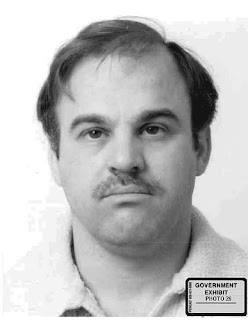
Friends of ours: Frank Calabrese Sr., Angelo "The Hook" LaPietra
Frank Calabrese Jr. says he was just a Holy Cross High School student when his father got him started in the family business by assigning him to help his Uncle Nick make the rounds to collect all the quarters taken in from peep shows at half a dozen adult bookstores.
The bookstores were owned by a guy named Vito, who got the idea the Calabreses were skimming -- which they were -- and decided to paint the quarters to help him get an honest count. Frank Calabrese Jr.'s father, alleged mob hit man Frank Calabrese Sr., didn't appreciate the tactic and confronted Vito, slapping him and telling him "not to worry," Frank Jr. told a federal jury Tuesday.
Soon thereafter, "Vito left and couldn't be found," said Frank Jr., who in short order was helping his "Uncle Joe" run the bookstores.
You hear for years about the big Family Secrets investigation of the Chicago Outfit and how a son helped make the case against his father by secretly tape-recording their conversations. You hear it so long it starts to become background noise, and then the son steps into the courtroom and you suddenly are witness to more real drama than any television show about the mob has ever captured.
Frank Jr. hobbled to the witness stand with the help of a cane in his left hand, necessitated by multiple sclerosis, with which he was diagnosed in 2000.
He is a big man with broad shoulders and a shaved head, imposing despite his illness and eyeglasses. He wore a striped golf shirt, which was untucked. And he is the spitting image of his father, who watched Frank Jr.'s first hour of testimony with seeming bemusement, a thin smile on his face that one could imagine concealed an urge to get up and slap his 47-year-old son. Frank Jr. said that's exactly what Frank Sr. did on more than one occasion after he stole and spent between $600,000 and $800,000 that he took from one of his father's hiding spots in the early 1990s.
Frank Jr. said he invested about $200,000 of the money into opening a restaurant, La Luce at Lake and Ogden, and a lesser amount on the Bella Luna Cafe on Dearborn. But he said he spent most of it on vacations and drugs. "I blew all the money. I just spent it all wildly," he testified, occasionally interrupting to take a swig from a bottle of Ice Mountain water.
His father figured out what had happened and came to Frank Jr.'s home in Elmwood Park to confront him. "He grabbed me by the arm and walked me down the street," Frank Jr. testified, admitting that he started to cry. "When I denied it, he cracked me in the head with an open hand."
After Frank Jr. confessed, his father told him he would have to find a way to pay the money back, because it actually belonged to mob boss Angelo "The Hook" LaPietra.
Soon thereafter, Frank Sr. went to the restaurant to check on his son and found he wasn't there. According to Frank Jr., his father then phoned him and instructed him to meet him outside a White Hen in Elmwood Park.
From there they drove to a garage in Elmwood Park where Frank Jr. said his father kept cars owned in other people's names that he used for his Outfit work.
Once inside the garage, "my father cracked me and started yelling at me," Frank Jr. testified. Then, Frank Jr. said, "He pulled out a gun and stuck it in my face and told me: 'I'd rather have you dead than disobey me.' "
"I started crying and hugging him and kissing him," Frank Jr. told the jury. "Help me. Help me," Frank Jr. said he pleaded. "I want to do the right thing."
His father relented. On the way back to the restaurant, though, Frank Sr. "punched me in the face . . . numerous times," Frank Jr. said.
Assistant U.S. Attorney John Scully cut off the line of questioning at that point and took it another direction, though likely to return to it in the days ahead as the younger Calabrese continues his testimony. Frank Jr. then told stories of the first two times he accompanied his dad on his mob enforcement rounds, including helping with the attempted firebombing of an Elmwood Park garage.
It is in the nature of men to want to bring their sons into the family business, I suppose, and therefore illogical to think it would be any different when the family business is crime. But logic has nothing to do with it.
Thanks to Mark Brown
Mob Archive of Current and Historical Mafia, Organized Crime & Gangster News. Primary focus on Chicago, but will include some national, especially New York, as well as global reports, along with the evolution of organized crime throughout society today. Topics will also include impact on pop culture through book reviews, movies, games and general interest.
Saturday, July 07, 2007
Friday, July 06, 2007
America's Most Wanted and The Chicago Syndicate for 7-7-07
America's Most Wanted and The Chicago Syndicate have partnered on AMW's upcoming episodes for Fox.
Jimmy Trindade Missing: Jimmy Trindade was a “man’s man” who loved taking long fishing trips off the coast of Florida . But last year, during one of his regular voyages—he mysteriously disappeared. Police have offered a number of possibilities as to what could’ve happened—everything from Jimmy falling overboard to a case of modern day pirates. And now, his family and friends have asked for AMW to help. Tune in this week and join the search for Jimmy Trindade.
Riyad Mohamad Hamdan: Riyad Hamdan is a convicted sex offender who police say was apprehended back in 1994. But now, they say he’s violated his parole and could be molesting children again. This week, we need your help tracking him down before anyone else is hurt.
Kevin Murden: Police say an altercation in a Harrisburg , Pa. led to a full-fledged bar brawl. In the midst of which Kevin Murden allegedly shot a man. Now, months later, police are still on his trail.
David Block: According to cops, in 2002, David Block gave a 14-year-old a spiked drink and committed a horrible crime. A friend of the victim’s family, Block accompanied them during a Florida vacation. But while the family was away, Block allegedly raped their teenage daughter. Now, five years later, he’s still on the lam. This week, we hope to put an end to his run.
Elias Urioste: Cops say Elias Urioste committed a brutal crime last winter. He allegedly attacked a New Mexico man; shooting him, forcing him to drink gasoline, and then setting him on fire. Urioste is wanted for first-degree murder and this week, and with your help this week, we can haul him in.
Chanel Petro-Nixon: Do you remember what it was like to be 16? It's supposed to be one of the best years of a girl's life. But last year, Chanel Petro-Nixon's glory days were cut short. She disappeared on June 18th, and four days later, her body was found in a trash bag in the middle of her bustling Brooklyn neighborhood. Now, a year after the murder-- nobody's forgotten and we're not giving up until we find her killer.
Mark Petersimes: Petersimes is on the run after police say he broke off his monitoring device and busted out of a Dallas halfway-house. Considering his past sexual assaults convictions, cops think he has the potential to strike again. This week, we’ll do everything we can to bring him down.
Jennifer Nielsen: 22-year-old Jennifer Nielsen was a paper delivery girl for USA Today. She was also about to give birth to her first born child. But last month, her life came to a tragic end when she was brutally stabbed to death. Police found a knife at the scene but have been unable to identify a suspect. We’re banking on this week being the week somebody comes forward.
Mike Torres: Miguel “Mike” Torres and his girlfriend Barbara seemed like the perfect match. But according to police, Barbara had no idea that Torres was waiting until after they were married to reveal his dark, and violent side.
Jerry Ambrozuk: Ambrozuk spent 24 years on the run after allegedly crashing a rental plane in Montana and leaving his girlfriend to die. America ’s Most Wanted’s longest running fugitive was captured at his home in Texas last year, and now we have the update on his trial and the verdict.
Kelly Nolan: Kelly Nolan disappeared from a Madison , Wis. bar only a few weeks ago. Now family friends have a lot of questions, and this week, we’re going to do our best to give them some answers.
Jimmy Trindade Missing: Jimmy Trindade was a “man’s man” who loved taking long fishing trips off the coast of Florida . But last year, during one of his regular voyages—he mysteriously disappeared. Police have offered a number of possibilities as to what could’ve happened—everything from Jimmy falling overboard to a case of modern day pirates. And now, his family and friends have asked for AMW to help. Tune in this week and join the search for Jimmy Trindade. Riyad Mohamad Hamdan: Riyad Hamdan is a convicted sex offender who police say was apprehended back in 1994. But now, they say he’s violated his parole and could be molesting children again. This week, we need your help tracking him down before anyone else is hurt.
Kevin Murden: Police say an altercation in a Harrisburg , Pa. led to a full-fledged bar brawl. In the midst of which Kevin Murden allegedly shot a man. Now, months later, police are still on his trail.
David Block: According to cops, in 2002, David Block gave a 14-year-old a spiked drink and committed a horrible crime. A friend of the victim’s family, Block accompanied them during a Florida vacation. But while the family was away, Block allegedly raped their teenage daughter. Now, five years later, he’s still on the lam. This week, we hope to put an end to his run.
Elias Urioste: Cops say Elias Urioste committed a brutal crime last winter. He allegedly attacked a New Mexico man; shooting him, forcing him to drink gasoline, and then setting him on fire. Urioste is wanted for first-degree murder and this week, and with your help this week, we can haul him in.
Chanel Petro-Nixon: Do you remember what it was like to be 16? It's supposed to be one of the best years of a girl's life. But last year, Chanel Petro-Nixon's glory days were cut short. She disappeared on June 18th, and four days later, her body was found in a trash bag in the middle of her bustling Brooklyn neighborhood. Now, a year after the murder-- nobody's forgotten and we're not giving up until we find her killer.
Mark Petersimes: Petersimes is on the run after police say he broke off his monitoring device and busted out of a Dallas halfway-house. Considering his past sexual assaults convictions, cops think he has the potential to strike again. This week, we’ll do everything we can to bring him down.
Jennifer Nielsen: 22-year-old Jennifer Nielsen was a paper delivery girl for USA Today. She was also about to give birth to her first born child. But last month, her life came to a tragic end when she was brutally stabbed to death. Police found a knife at the scene but have been unable to identify a suspect. We’re banking on this week being the week somebody comes forward.
Mike Torres: Miguel “Mike” Torres and his girlfriend Barbara seemed like the perfect match. But according to police, Barbara had no idea that Torres was waiting until after they were married to reveal his dark, and violent side.
Jerry Ambrozuk: Ambrozuk spent 24 years on the run after allegedly crashing a rental plane in Montana and leaving his girlfriend to die. America ’s Most Wanted’s longest running fugitive was captured at his home in Texas last year, and now we have the update on his trial and the verdict.
Kelly Nolan: Kelly Nolan disappeared from a Madison , Wis. bar only a few weeks ago. Now family friends have a lot of questions, and this week, we’re going to do our best to give them some answers.
Thursday, July 05, 2007
The Untouchables in Blu-Ray
They don't make movies like The Untouchables any more. Brian De Palma's gripping tale of a Chicago police team trying to take on Al Capone is one of the best crime movies ever made. With stellar writing, superb directing, and an all-star cast, The Untouchables feels both modern and timeless.
Kevin Costner stars as Elliott Ness, a Treasury Department agent tasked with cutting down on alcohol bootlegging (this was during Prohibition, mind you). And Robert De Niro is Al Capone, the man behind the illegal alcohol trade, as well as many other things besides. Ness tries and fails to rally local law enforcement to his cause. It's only when he teams with veteran cop Malone (Sean Connery, in an Oscar-winning role) and forms a small squad of his own, dubbed "the Untouchables" because they are the only people in the city who cannot be bribed by the mob.
The Untouchables is fantastic on many different levels. It all starts with the script, written by famous playwright David Mamet. Mamet is known for his fast-paced, overlapping dialogue and his sharp, memorable lines. Here he eases up on the rat-a-tat rhythm of the dialogue, instead allowing each character to showcase a set of very memorable lines.
Brian De Palma adds another level. De Palma's career jumps from confident and assured (Sisters, Carrie, Mission: Impossible) to downright embarrassing (Snake Eyes, Mission To Mars), but here he knocks the ball right out of the park. He lets the material speak for itself, and then adds a cinematic touch to make the whole piece move. And, of course, he's responsible for the famous Battleship Potemkin homage during the climax that still provides edge of your seat tension to this day.
The cast bring it all to life. Kevin Costner is eager and sincere in this role, playing Ness with his heart on his sleeve. It's a reminder of how good of an actor he used to be. Sean Connery is an incredible presence, world-weary but not without hope. It's one of his most nuanced and brilliant performances. Andy Garcia and Patricia Clarkson are memorable, but don't get enough screen time to really show how talented they are. And then, of course, there's De Niro, playing Capone to the hilt, making himself felt throughout, even when he's not on the screen.
And the final piece of the puzzle is the haunting score by Ennio Morriconne. Morricone, most famous for penning the scores for A Fistful Of Dollars, For A Few Dollars More, and The Good, The Bad, and The Ugly, is one of the world's most versatile composers and provides a tense, lingering soundtrack that perfectly complements the image on the screen.
The Blu-ray Disc:
The Image: Paramount Pictures presents The Untouchables in its original aspect ratio of 2.35:1 in an AVC/MPEG-4 encoded 1080p transfer. I was quite literally shocked to see how good this movie looked in high definition. The film came out in 1988, but I wouldn't be at all surprised if someone told me it had come out in 2007. The colors are rich, bright, and solid. Shadow delineation is excellent. Detail level is off the charts. This is not only the best The Untouchables has ever looked, but it also better-looking than a good majority of HD discs of movies from any time period. The image quality alone demands that this Blu-ray be purchased and enjoyed over and over.
The Audio: Nothing's perfect, and in the case of The Untouchables, it's the Dolby Digital-EX 5.1 and DTS 6.1 mixes. Morricone's score sounds great in the high end, but the bass is lacking. Gunshots are often muted and lacking power, and for a surround mix, there's not much directionality. This is the one aspect of the disc that could use a serious overhaul.
The Supplements: Paramount has ported over all of the special features found on the latest special edition DVD. All but the theatrical trailer are in high definition.
The Script, The Cast: Brian De Palma discusses the origin of the film, mentioning that he took the job to get in good with a studio so he could finance his preferred projects. There was a lot of talk of moving away from the television series and making the movie its own beast. There are also some vintage interviews with the cast.
Production Stories: A look at the film's sets, vehicles, costumes, and designs.
Reinventing The Genre: A discussion of how Brian De Palma's cinematic techniques shaped the film.
The Classic: A wrap-up look at the post-production process and release. Morriconne's score, the film's release, success, and legacy are all highlighted here.
The Men: A short vintage featurette.
Theatrical Trailer: In HD, but not very good-looking.
The Conclusion: The Untouchables is an undeniable classic, and this Blu-ray disc does it justice with reference picture. The sound and extras aren't as good, but still far from bad. This is a must-see movie on a must-own disc. Highly Recommended.
Thanks to Daniel Hirshleifer
Kevin Costner stars as Elliott Ness, a Treasury Department agent tasked with cutting down on alcohol bootlegging (this was during Prohibition, mind you). And Robert De Niro is Al Capone, the man behind the illegal alcohol trade, as well as many other things besides. Ness tries and fails to rally local law enforcement to his cause. It's only when he teams with veteran cop Malone (Sean Connery, in an Oscar-winning role) and forms a small squad of his own, dubbed "the Untouchables" because they are the only people in the city who cannot be bribed by the mob.
The Untouchables is fantastic on many different levels. It all starts with the script, written by famous playwright David Mamet. Mamet is known for his fast-paced, overlapping dialogue and his sharp, memorable lines. Here he eases up on the rat-a-tat rhythm of the dialogue, instead allowing each character to showcase a set of very memorable lines.
Brian De Palma adds another level. De Palma's career jumps from confident and assured (Sisters, Carrie, Mission: Impossible) to downright embarrassing (Snake Eyes, Mission To Mars), but here he knocks the ball right out of the park. He lets the material speak for itself, and then adds a cinematic touch to make the whole piece move. And, of course, he's responsible for the famous Battleship Potemkin homage during the climax that still provides edge of your seat tension to this day.
The cast bring it all to life. Kevin Costner is eager and sincere in this role, playing Ness with his heart on his sleeve. It's a reminder of how good of an actor he used to be. Sean Connery is an incredible presence, world-weary but not without hope. It's one of his most nuanced and brilliant performances. Andy Garcia and Patricia Clarkson are memorable, but don't get enough screen time to really show how talented they are. And then, of course, there's De Niro, playing Capone to the hilt, making himself felt throughout, even when he's not on the screen.
And the final piece of the puzzle is the haunting score by Ennio Morriconne. Morricone, most famous for penning the scores for A Fistful Of Dollars, For A Few Dollars More, and The Good, The Bad, and The Ugly, is one of the world's most versatile composers and provides a tense, lingering soundtrack that perfectly complements the image on the screen.
The Blu-ray Disc:
The Image: Paramount Pictures presents The Untouchables in its original aspect ratio of 2.35:1 in an AVC/MPEG-4 encoded 1080p transfer. I was quite literally shocked to see how good this movie looked in high definition. The film came out in 1988, but I wouldn't be at all surprised if someone told me it had come out in 2007. The colors are rich, bright, and solid. Shadow delineation is excellent. Detail level is off the charts. This is not only the best The Untouchables has ever looked, but it also better-looking than a good majority of HD discs of movies from any time period. The image quality alone demands that this Blu-ray be purchased and enjoyed over and over.
The Audio: Nothing's perfect, and in the case of The Untouchables, it's the Dolby Digital-EX 5.1 and DTS 6.1 mixes. Morricone's score sounds great in the high end, but the bass is lacking. Gunshots are often muted and lacking power, and for a surround mix, there's not much directionality. This is the one aspect of the disc that could use a serious overhaul.
The Supplements: Paramount has ported over all of the special features found on the latest special edition DVD. All but the theatrical trailer are in high definition.
The Script, The Cast: Brian De Palma discusses the origin of the film, mentioning that he took the job to get in good with a studio so he could finance his preferred projects. There was a lot of talk of moving away from the television series and making the movie its own beast. There are also some vintage interviews with the cast.
Production Stories: A look at the film's sets, vehicles, costumes, and designs.
Reinventing The Genre: A discussion of how Brian De Palma's cinematic techniques shaped the film.
The Classic: A wrap-up look at the post-production process and release. Morriconne's score, the film's release, success, and legacy are all highlighted here.
The Men: A short vintage featurette.
Theatrical Trailer: In HD, but not very good-looking.
The Conclusion: The Untouchables is an undeniable classic, and this Blu-ray disc does it justice with reference picture. The sound and extras aren't as good, but still far from bad. This is a must-see movie on a must-own disc. Highly Recommended.
Thanks to Daniel Hirshleifer
Judge Throws Attorney Out of Court at Mob Trial
Robert Cooley was a crooked lawyer with mob connections. Almost 20 years ago, he turned informant and helped send judges, aldermen and mobsters to prison. He showed up Monday at Chicago's current mob trial and was asked to leave. The judge did not explain why he asked Cooley to leave the courtroom but clearly given Cooley's role in past outfit trials he might be a distraction for some witnesses as well as the five defendants.
When Cooley appeared at the federal courthouse Monday afternoon, he had a movie producer in tow. The former federal informant, disbarred attorney and author of a tell-all book about Chicago's mob said the planned film should be his long-awaited financial reward: "Now it is time to reap the harvest," Cooley said. "I worked hard to do what I did and got no credit before. Now I think I will with the movie."
During the 1970's and 80's, Cooley was a self-described mafia "mechanic" or fixer of court cases. He bribed judges, court clerks and cops to keep his outfit clients out of jail. Later, as a federal witness, his testimony anchored as many as nine trials that exposed the mob's stranglehold on Chicago's city hall and the courts.
Cooley caused a stir Monday afternoon when he entered the courtroom where five alleged outfit bosses -- men he knew from the past -- are facing decades-old charges in the "Family Secrets" trial.
"I was never close to think of those," Cooley said. "I knew who they were and they ran in the same circles as I did but they knew who I was and there are no surprises. They pretty much put the mob out of business a while back and I don't think it is running."
Even though his mob connections date back thirty years, Cooley said he was not asked to be a witness in "Family Secrets."
He said the men on trial are not -- as alleged -- the outfit's modern day bosses. That person, he says, remains in the background, but still pulling the strings in Chicago. "There's somebody right now who has been run the city for a long time and I'm not talking about Mayor Daley but hopefully his day will come," Cooley said.
Cooley said he's living in California now and was never hidden by the federal witness protection program.
No word on when the movie based on Cooley's book might be filmed or released. It still in the research stage.
Thanks to Charles Thomas
When Cooley appeared at the federal courthouse Monday afternoon, he had a movie producer in tow. The former federal informant, disbarred attorney and author of a tell-all book about Chicago's mob said the planned film should be his long-awaited financial reward: "Now it is time to reap the harvest," Cooley said. "I worked hard to do what I did and got no credit before. Now I think I will with the movie."
During the 1970's and 80's, Cooley was a self-described mafia "mechanic" or fixer of court cases. He bribed judges, court clerks and cops to keep his outfit clients out of jail. Later, as a federal witness, his testimony anchored as many as nine trials that exposed the mob's stranglehold on Chicago's city hall and the courts.
Cooley caused a stir Monday afternoon when he entered the courtroom where five alleged outfit bosses -- men he knew from the past -- are facing decades-old charges in the "Family Secrets" trial.
"I was never close to think of those," Cooley said. "I knew who they were and they ran in the same circles as I did but they knew who I was and there are no surprises. They pretty much put the mob out of business a while back and I don't think it is running."
Even though his mob connections date back thirty years, Cooley said he was not asked to be a witness in "Family Secrets."
He said the men on trial are not -- as alleged -- the outfit's modern day bosses. That person, he says, remains in the background, but still pulling the strings in Chicago. "There's somebody right now who has been run the city for a long time and I'm not talking about Mayor Daley but hopefully his day will come," Cooley said.
Cooley said he's living in California now and was never hidden by the federal witness protection program.
No word on when the movie based on Cooley's book might be filmed or released. It still in the research stage.
Thanks to Charles Thomas
Wednesday, July 04, 2007
Mobster's Son Testifies Against Dad at Trial
Frank Calabrese Jr. had barely introduced himself and testified that he lettered in football at Holy Cross High School before his father sneered and leaned over to whisper into his lawyer's ear.
The start of his testimony Tuesday was one of the most anticipated moments of the trial -- code named Family Secrets because defendant Frank Calabrese Sr.'s son and brother had done the unthinkable, squealing on a reputed mob brother and blood relative.
The 47-year-old Calabrese Jr., stricken with multiple sclerosis, limped into court on a cane, taking the witness stand a mere 10 yards from his father. Even though Calabrese Sr. swiveled his chair for a direct look at his son, the two did not appear to make eye contact.
He was on the stand for just 45 minutes before jurors were sent home for the holiday, but Assistant U.S. Atty. John Scully led the younger Calabrese through a quick personal history: how he joined the family's mob business as just a high schooler and now operates a pizza joint. He said he's been living near Phoenix running a strip-mall restaurant that serves pizza "Chicago style."
The balding Calabrese testified in a white casual shirt with thin green stripes, his remaining hair buzzed close. He leaned into the microphone to answer each question and occasionally paused to take sips from a water bottle.
Calabrese testified he was a teenager when he joined the 26th Street crew, collecting quarters from peep-show booths in mob-controlled pornography shops with his uncle Nicholas. It is Nicholas Calabrese, Frank Calabrese Sr.'s brother, who is expected later in the trial to implicate his brother in as many as 13 decades-old gangland slayings.
Eventually, Calabrese Jr. said, he graduated to keeping the books -- gambling, juice-loan and street-tax records -- with his father.
Once, Calabrese said, his father took him along when he slapped around an associate nicknamed "Peachy" for spending Outfit gambling money. Another time, his father had him use a flare to ignite kerosene against the garage of someone who wasn't following orders. "He wasn't taking care of his obligations to us," Calabrese said.
The elder Calabrese, 70, sat with a sarcastic smile through much of the testimony, talking repeatedly to his lawyer, Joseph Lopez. His son appeared to focus mostly on the prosecutor asking questions from a few feet away. In the son's brief time Tuesday on the witness stand, no mention was made of the hidden recording device Calabrese wore to secretly tape conversations with his father while the two were imprisoned in Michigan in the 1990s.
That promises to be the highlight of the son's testimony in the trial's coming days. But Calabrese revealed how his relationship with his father soured.
Calabrese said he was moving from job to job and using powder cocaine when he went to one of his father's hiding spots and stole $200,000 in cash to help open a Lake Street restaurant. Later, he went back for hundreds of thousands of dollars more, he said. "I blew all the money," he said. "I just would spend it all wildly."
On discovering the thefts, his father slapped him and threatened him, Calabrese testified. At one point, his father drove him to an Elmwood Park garage where Outfit "work cars" were kept. "He pulled out a gun and stuck it in my face and said, 'I'd rather have you dead than disobey me,'" Calabrese said. "I started crying. I started hugging and kissing him.
"I said, 'Help me. Help me do the right thing,'" he said.
After court Tuesday, Lopez, the elder Calabrese's lawyer, told reporters that his client had not been fazed by the son's testimony. "He's happy to see his son," Lopez said.
Asked why the elder Calabrese appeared to be smiling during parts of his son's testimony, Lopez replied, "He's a happy-go-lucky fellow." But another government witness Tuesday painted a starkly different portrait of the elder Calabrese. James Stolfe, the soft-spoken co-founder of the well-known Connie's Pizza restaurant chain, said he made "extortion payments" to Frank Calabrese Sr. and the Chicago Outfit for 20 years beginning in the 1980s.
Stolfe said he sold his 1962 Oldsmobile Starfire to buy his first Connie's location on West 26th Street near Chinatown, and he operated for nearly two decades before the mob paid a visit. Stolfe said he thought the two men, one large and one small, were salesmen, but he quickly learned differently.
Stolfe didn't have time to talk, he said he told them. "They said, 'Find time,'" he said.
The two demanded $300,000 -- or else, Stolfe testified. "They said that it was no joke, and if I didn't pay that I was gonna get hurt," he said.
Stolfe said he went to Calabrese, whom he knew from the Bridgeport neighborhood where the two had grown up, to intercede on his behalf. Strangely enough, Stolfe said, Calabrese had just been to his office for the first time in years, the only hint in Tuesday's testimony that Calabrese was in on the extortion from the beginning.
Calabrese said he would see what he could do, Stolfe said, and soon said the payment "only" had to be $100,000. Fearing that he could be beaten or his business burned down, Stolfe said, he agreed to pay. He said he handed over the first payment of $50,000 cash to Calabrese.
That prompted the prosecutor to ask Stolfe if he saw Calabrese in the courtroom. Calabrese, in a gray jacket over a black shirt, didn't stand up but stuck up a hand and waved toward the witness stand as Stolfe pointed him out.
The white-haired Stolfe, 67, said he confided in only his close associate, Donald "Captain D" DiFazio, about the payoffs, keeping even his wife in the dark.
Stolfe said he eventually put Calabrese on the payroll as a "spotter," ostensibly to keeptrack of pizza delivery trucks. In reality, it was to hide the monthly payoffs of about $1,000.
Stolfe acknowledged Tuesday that he had lied to a grand jury investigating Calabrese in 1990, concealing the nature of the payoffs to Calabrese and his relationship with the reputed mobster. He told jurors Tuesday that he had been intimidated by Calabrese. Stolfe said Calabrese even invited himself on his family vacations.
On cross-examination, attorney Lopez tried to portray the two as pals. "Did anyone put a gun to your head and say you had to go play handball with him?" Lopez asked.
The attorney pointed out that when Stolfe halted the payoffs in 2002 when the Family Secrets investigation became public, no one burned down a Connie's Pizza restaurant. Prosecutors also called DiFazio to the stand, who testified that he carried the payoffs to the mob for years. For the final payoffs, DiFazio said, he gave the cash-filled envelopes to Frank Calabrese Jr., who was already wearing a wire for the feds.
DiFazio, testifying with a gravelly voice and heavy Chicago accent, said he is still director of special events for Connie's. "I'm supposed to be at Taste of Chicago," he said.
He said he still lives in Bridgeport and described each mob figure he testified about as "another tough guy."
He said he was once confronted by Anthony "Tony the Hatch" Chiaramonti when Connie's sought to open a location in Lyons. Those plans were scrapped, DiFazio said. "The name speaks for itself," he said of Chiaramonti, who was gunned down at a chicken restaurant in the suburb in 2001.
On cross-examination, Lopez sometimes made small talk with DiFazio, who wore an expensive-looking suit. The attorney, who had exchanged his trademark pink socks for red ones Tuesday to match a blazing red tie, said he had heard DiFazio is a sharp dresser.
"You were a tough guy, too, weren't you?" Lopez asked. "The whole neighborhood was filled with tough guys."
DiFazio finally gave in. "Absolutely," he said.
Thanks to Jeff Coen
The start of his testimony Tuesday was one of the most anticipated moments of the trial -- code named Family Secrets because defendant Frank Calabrese Sr.'s son and brother had done the unthinkable, squealing on a reputed mob brother and blood relative.
The 47-year-old Calabrese Jr., stricken with multiple sclerosis, limped into court on a cane, taking the witness stand a mere 10 yards from his father. Even though Calabrese Sr. swiveled his chair for a direct look at his son, the two did not appear to make eye contact.
He was on the stand for just 45 minutes before jurors were sent home for the holiday, but Assistant U.S. Atty. John Scully led the younger Calabrese through a quick personal history: how he joined the family's mob business as just a high schooler and now operates a pizza joint. He said he's been living near Phoenix running a strip-mall restaurant that serves pizza "Chicago style."
The balding Calabrese testified in a white casual shirt with thin green stripes, his remaining hair buzzed close. He leaned into the microphone to answer each question and occasionally paused to take sips from a water bottle.
Calabrese testified he was a teenager when he joined the 26th Street crew, collecting quarters from peep-show booths in mob-controlled pornography shops with his uncle Nicholas. It is Nicholas Calabrese, Frank Calabrese Sr.'s brother, who is expected later in the trial to implicate his brother in as many as 13 decades-old gangland slayings.
Eventually, Calabrese Jr. said, he graduated to keeping the books -- gambling, juice-loan and street-tax records -- with his father.
Once, Calabrese said, his father took him along when he slapped around an associate nicknamed "Peachy" for spending Outfit gambling money. Another time, his father had him use a flare to ignite kerosene against the garage of someone who wasn't following orders. "He wasn't taking care of his obligations to us," Calabrese said.
The elder Calabrese, 70, sat with a sarcastic smile through much of the testimony, talking repeatedly to his lawyer, Joseph Lopez. His son appeared to focus mostly on the prosecutor asking questions from a few feet away. In the son's brief time Tuesday on the witness stand, no mention was made of the hidden recording device Calabrese wore to secretly tape conversations with his father while the two were imprisoned in Michigan in the 1990s.
That promises to be the highlight of the son's testimony in the trial's coming days. But Calabrese revealed how his relationship with his father soured.
Calabrese said he was moving from job to job and using powder cocaine when he went to one of his father's hiding spots and stole $200,000 in cash to help open a Lake Street restaurant. Later, he went back for hundreds of thousands of dollars more, he said. "I blew all the money," he said. "I just would spend it all wildly."
On discovering the thefts, his father slapped him and threatened him, Calabrese testified. At one point, his father drove him to an Elmwood Park garage where Outfit "work cars" were kept. "He pulled out a gun and stuck it in my face and said, 'I'd rather have you dead than disobey me,'" Calabrese said. "I started crying. I started hugging and kissing him.
"I said, 'Help me. Help me do the right thing,'" he said.
After court Tuesday, Lopez, the elder Calabrese's lawyer, told reporters that his client had not been fazed by the son's testimony. "He's happy to see his son," Lopez said.
Asked why the elder Calabrese appeared to be smiling during parts of his son's testimony, Lopez replied, "He's a happy-go-lucky fellow." But another government witness Tuesday painted a starkly different portrait of the elder Calabrese. James Stolfe, the soft-spoken co-founder of the well-known Connie's Pizza restaurant chain, said he made "extortion payments" to Frank Calabrese Sr. and the Chicago Outfit for 20 years beginning in the 1980s.
Stolfe said he sold his 1962 Oldsmobile Starfire to buy his first Connie's location on West 26th Street near Chinatown, and he operated for nearly two decades before the mob paid a visit. Stolfe said he thought the two men, one large and one small, were salesmen, but he quickly learned differently.
Stolfe didn't have time to talk, he said he told them. "They said, 'Find time,'" he said.
The two demanded $300,000 -- or else, Stolfe testified. "They said that it was no joke, and if I didn't pay that I was gonna get hurt," he said.
Stolfe said he went to Calabrese, whom he knew from the Bridgeport neighborhood where the two had grown up, to intercede on his behalf. Strangely enough, Stolfe said, Calabrese had just been to his office for the first time in years, the only hint in Tuesday's testimony that Calabrese was in on the extortion from the beginning.
Calabrese said he would see what he could do, Stolfe said, and soon said the payment "only" had to be $100,000. Fearing that he could be beaten or his business burned down, Stolfe said, he agreed to pay. He said he handed over the first payment of $50,000 cash to Calabrese.
That prompted the prosecutor to ask Stolfe if he saw Calabrese in the courtroom. Calabrese, in a gray jacket over a black shirt, didn't stand up but stuck up a hand and waved toward the witness stand as Stolfe pointed him out.
The white-haired Stolfe, 67, said he confided in only his close associate, Donald "Captain D" DiFazio, about the payoffs, keeping even his wife in the dark.
Stolfe said he eventually put Calabrese on the payroll as a "spotter," ostensibly to keeptrack of pizza delivery trucks. In reality, it was to hide the monthly payoffs of about $1,000.
Stolfe acknowledged Tuesday that he had lied to a grand jury investigating Calabrese in 1990, concealing the nature of the payoffs to Calabrese and his relationship with the reputed mobster. He told jurors Tuesday that he had been intimidated by Calabrese. Stolfe said Calabrese even invited himself on his family vacations.
On cross-examination, attorney Lopez tried to portray the two as pals. "Did anyone put a gun to your head and say you had to go play handball with him?" Lopez asked.
The attorney pointed out that when Stolfe halted the payoffs in 2002 when the Family Secrets investigation became public, no one burned down a Connie's Pizza restaurant. Prosecutors also called DiFazio to the stand, who testified that he carried the payoffs to the mob for years. For the final payoffs, DiFazio said, he gave the cash-filled envelopes to Frank Calabrese Jr., who was already wearing a wire for the feds.
DiFazio, testifying with a gravelly voice and heavy Chicago accent, said he is still director of special events for Connie's. "I'm supposed to be at Taste of Chicago," he said.
He said he still lives in Bridgeport and described each mob figure he testified about as "another tough guy."
He said he was once confronted by Anthony "Tony the Hatch" Chiaramonti when Connie's sought to open a location in Lyons. Those plans were scrapped, DiFazio said. "The name speaks for itself," he said of Chiaramonti, who was gunned down at a chicken restaurant in the suburb in 2001.
On cross-examination, Lopez sometimes made small talk with DiFazio, who wore an expensive-looking suit. The attorney, who had exchanged his trademark pink socks for red ones Tuesday to match a blazing red tie, said he had heard DiFazio is a sharp dresser.
"You were a tough guy, too, weren't you?" Lopez asked. "The whole neighborhood was filled with tough guys."
DiFazio finally gave in. "Absolutely," he said.
Thanks to Jeff Coen
on
7/04/2007
| Reactions: |
Bookie Refuses to Testify in Court Against the Mob
A host of hit men, henchmen, burglars, gamblers and loan sharks who have crossed paths with the Chicago Outfit over the years are scheduled to testify at the Family Secrets mob trial, but at least one career bookie wants to take a pass.
Joel Glickman, 71, was taken into custody late Monday after defying an order from U.S. District Judge James Zagel to testify. Glickman had been slated to tell jurors that he paid between $1,300 and $2,000 a month in "street taxes" to defendant Frank Calabrese Sr. and other reputed mob figures to run his gambling operation.
Zagel reminded Glickman, who wore a black short-sleeve shirt unbuttoned at the neck, that he had been granted immunity from prosecution to talk about his history with the mob, but Glickman was steadfast in his refusal to answer any questions posed by Assistant U.S. Atty. Markus Funk.
"I respectfully refuse to testify," Glickman said calmly several times before Zagel found him in contempt of court and ordered him taken into custody. Zagel warned he would bring Glickman back to the courtroom Tuesday to ask him again whether he wishes to answer questions.
Loraine Ray, Glickman's attorney, declined to comment on her client's reasons to remain mum despite immunity. According to documents filed by prosecutors in the case, Glickman was to testify that he had dozens of gamblers as regular customers in the 1970s and made about $150,000 a year.
If Glickman continues to refuse to testify, Zagel could arguably hold him in custody throughout the expected three-month trial, if not longer, legal experts said.
After court Monday, Calabrese's attorney, Joseph Lopez, said Glickman has "no reason whatsoever" to fear his client. The relationship between the men ended in the 1960s, Lopez said. "I hope he changes his mind and comes to court," Lopez said. "I hate to see the man locked up for this."
Before Glickman's exchange with the judge, jurors did hear from a number of witnesses Monday, all of them testifying against Joey "the Clown" Lombardo, who is among the five defendants being tried on sweeping charges of racketeering conspiracy.
At the heart of the conspiracy case are 18 decades-old gangland slayings. But despite that, the trial isn't expected to produce many "CSI" moments.
Key evidence will come mostly from witnesses and secret government recordings, not the advanced scientific analysis of DNA, ballistics or fiber evidence. Yet jurors looked on Monday as an old-fashioned fingerprint was projected onto a large screen at the front of the courtroom.
It appeared on a copy of a title application for a 1973 Ford LTD, signed for by the generic-sounding ACME Security Service. But under the "Se" in "Service," investigators say, is a print from the left middle finger of Lombardo. And the car in question was one of two allegedly driven from the scene of the murder of federal witness Daniel Seifert. The shotgun slaying in front of Seifert's wife and young son is the lone murder with which the reputed Outfit leader has been charged.
The FBI agent who found the print more than three decades ago was on the stand. He's now a thin, retired, white-haired man who keeps busy with "a little bit of farming."
Roy McDaniel told jurors he is a former supervising fingerprint specialist with the FBI who has made "several million" comparisons. He said he had 40 years of experience, testified in court nearly 100 times and even played a role on the FBI's disaster team that processes prints at the scenes of plane crashes and other disasters.
McDaniel testified about his work with a hint of a Southern accent. "You have [fingerprints] before you were born, and you will have them until you decompose after death," he said.
McDaniel said he took control of more than a dozen documents related to the Ford LTD that were retrieved from the Illinois secretary of state's office in Springfield and sent to Washington D.C. It was October 1974, about a month after Seifert had been ambushed and gunned down outside his Bensenville plastics business. Seifert had agreed to testify against Lombardo and others in a pension fraud case months before he was killed.
McDaniel told the jury how he sprayed the title application with a solution, dried it and then steamed it to make latent prints visible. The marks left on the document by a finger's friction ridges matched a finger on FBI fingerprint card 673515E, the one carrying the prints of Lombardo, McDaniel said.
"Only that one finger, of everybody in the world, could've made that particular print," McDaniel said as jurors watched the overhead screen or on their own TV screens near their seats.
On cross-examination McDaniel acknowledged that he had only attempted to match the print to the defendants in the case who Seifert was set to testify against.
Lombardo leaned back in his chair most of the day, occasionally standing so witnesses could identify him. To some he returned a nod or even a hand wave as he sat back down.
Others who testified included several former employees of a North Side CB radio store who told jurors that in the months after Seifert's death, they told authorities that Lombardo had routinely bought police scanners from them before the murder. A scanner was found in the Ford after the gunmen abandoned it at a car dealership.
Thanks to Jeff Coen
Joel Glickman, 71, was taken into custody late Monday after defying an order from U.S. District Judge James Zagel to testify. Glickman had been slated to tell jurors that he paid between $1,300 and $2,000 a month in "street taxes" to defendant Frank Calabrese Sr. and other reputed mob figures to run his gambling operation.
Zagel reminded Glickman, who wore a black short-sleeve shirt unbuttoned at the neck, that he had been granted immunity from prosecution to talk about his history with the mob, but Glickman was steadfast in his refusal to answer any questions posed by Assistant U.S. Atty. Markus Funk.
"I respectfully refuse to testify," Glickman said calmly several times before Zagel found him in contempt of court and ordered him taken into custody. Zagel warned he would bring Glickman back to the courtroom Tuesday to ask him again whether he wishes to answer questions.
Loraine Ray, Glickman's attorney, declined to comment on her client's reasons to remain mum despite immunity. According to documents filed by prosecutors in the case, Glickman was to testify that he had dozens of gamblers as regular customers in the 1970s and made about $150,000 a year.
If Glickman continues to refuse to testify, Zagel could arguably hold him in custody throughout the expected three-month trial, if not longer, legal experts said.
After court Monday, Calabrese's attorney, Joseph Lopez, said Glickman has "no reason whatsoever" to fear his client. The relationship between the men ended in the 1960s, Lopez said. "I hope he changes his mind and comes to court," Lopez said. "I hate to see the man locked up for this."
Before Glickman's exchange with the judge, jurors did hear from a number of witnesses Monday, all of them testifying against Joey "the Clown" Lombardo, who is among the five defendants being tried on sweeping charges of racketeering conspiracy.
At the heart of the conspiracy case are 18 decades-old gangland slayings. But despite that, the trial isn't expected to produce many "CSI" moments.
Key evidence will come mostly from witnesses and secret government recordings, not the advanced scientific analysis of DNA, ballistics or fiber evidence. Yet jurors looked on Monday as an old-fashioned fingerprint was projected onto a large screen at the front of the courtroom.
It appeared on a copy of a title application for a 1973 Ford LTD, signed for by the generic-sounding ACME Security Service. But under the "Se" in "Service," investigators say, is a print from the left middle finger of Lombardo. And the car in question was one of two allegedly driven from the scene of the murder of federal witness Daniel Seifert. The shotgun slaying in front of Seifert's wife and young son is the lone murder with which the reputed Outfit leader has been charged.
The FBI agent who found the print more than three decades ago was on the stand. He's now a thin, retired, white-haired man who keeps busy with "a little bit of farming."
Roy McDaniel told jurors he is a former supervising fingerprint specialist with the FBI who has made "several million" comparisons. He said he had 40 years of experience, testified in court nearly 100 times and even played a role on the FBI's disaster team that processes prints at the scenes of plane crashes and other disasters.
McDaniel testified about his work with a hint of a Southern accent. "You have [fingerprints] before you were born, and you will have them until you decompose after death," he said.
McDaniel said he took control of more than a dozen documents related to the Ford LTD that were retrieved from the Illinois secretary of state's office in Springfield and sent to Washington D.C. It was October 1974, about a month after Seifert had been ambushed and gunned down outside his Bensenville plastics business. Seifert had agreed to testify against Lombardo and others in a pension fraud case months before he was killed.
McDaniel told the jury how he sprayed the title application with a solution, dried it and then steamed it to make latent prints visible. The marks left on the document by a finger's friction ridges matched a finger on FBI fingerprint card 673515E, the one carrying the prints of Lombardo, McDaniel said.
"Only that one finger, of everybody in the world, could've made that particular print," McDaniel said as jurors watched the overhead screen or on their own TV screens near their seats.
On cross-examination McDaniel acknowledged that he had only attempted to match the print to the defendants in the case who Seifert was set to testify against.
Lombardo leaned back in his chair most of the day, occasionally standing so witnesses could identify him. To some he returned a nod or even a hand wave as he sat back down.
Others who testified included several former employees of a North Side CB radio store who told jurors that in the months after Seifert's death, they told authorities that Lombardo had routinely bought police scanners from them before the murder. A scanner was found in the Ford after the gunmen abandoned it at a car dealership.
Thanks to Jeff Coen
Monday, July 02, 2007
Mobster's Fingerprints Matched By FBI
Friends of ours: Joseph “Joey the Clown” Lombardo
A retired FBI fingerprint analyst testified today that a fingerprint from reputed top Chicago mobster Joseph “Joey the Clown” Lombardo appeared on an application for a car title for a Ford LTD that was used by the killers in the 1974 murder of government witness Daniel Seifert.
Roy L. McDaniel, a 40-year veteran of the FBI laboratory, told jurors in the Operation Family Secrets mob trial that he identified a fingerprint that matched the left middle finger of Lombardo after he received the material in October 1974.
Police recovered the car after the Sept. 27, 1974, murder of Seifert, who was to be a witness at a federal criminal trial against Lombardo, his former close friend.
Lombardo was accused of helping rip off a Teamster pension fund, and prosecutors say Seifert was the only witness who could link him to two checks they said were part of the scheme. When Seifert was killed, the case against Lombardo was dropped.
The brown Ford LTD was recovered at an Elmhurst car dealership where prosecutors say the hit team met after killing Seifert. It had been outfitted as a so-called Chicago Outfit “work car,” equipped with four switches under the dashboard that let the driver turn off all exterior lights of the car, so it could be driven completely dark at night. The license-plate holders were on spring-loaded flip brackets, so the plates could be quickly switched, according to prosecutors.
The owner of the car, listed on the title application as Acme Security Service, turned out to be fake. But there were other prints on documents related to the purchase of the car that were examined by the FBI that did not match Lombardo’s prints or those of anyone else the FBI was looking at.
Lombardo’s attorney, Rick Halprin, elicited that information during his questioning, apparently in an effort to show that other people handled the documents besides Lombardo and that the FBI doesn’t know who they are.
Thanks to Steve Warmbir
A retired FBI fingerprint analyst testified today that a fingerprint from reputed top Chicago mobster Joseph “Joey the Clown” Lombardo appeared on an application for a car title for a Ford LTD that was used by the killers in the 1974 murder of government witness Daniel Seifert.
Roy L. McDaniel, a 40-year veteran of the FBI laboratory, told jurors in the Operation Family Secrets mob trial that he identified a fingerprint that matched the left middle finger of Lombardo after he received the material in October 1974.
Police recovered the car after the Sept. 27, 1974, murder of Seifert, who was to be a witness at a federal criminal trial against Lombardo, his former close friend.
Lombardo was accused of helping rip off a Teamster pension fund, and prosecutors say Seifert was the only witness who could link him to two checks they said were part of the scheme. When Seifert was killed, the case against Lombardo was dropped.
The brown Ford LTD was recovered at an Elmhurst car dealership where prosecutors say the hit team met after killing Seifert. It had been outfitted as a so-called Chicago Outfit “work car,” equipped with four switches under the dashboard that let the driver turn off all exterior lights of the car, so it could be driven completely dark at night. The license-plate holders were on spring-loaded flip brackets, so the plates could be quickly switched, according to prosecutors.
The owner of the car, listed on the title application as Acme Security Service, turned out to be fake. But there were other prints on documents related to the purchase of the car that were examined by the FBI that did not match Lombardo’s prints or those of anyone else the FBI was looking at.
Lombardo’s attorney, Rick Halprin, elicited that information during his questioning, apparently in an effort to show that other people handled the documents besides Lombardo and that the FBI doesn’t know who they are.
Thanks to Steve Warmbir
Sunday, July 01, 2007
How Much Power Does the Chicago Outfit Posess?
The "Family Secrets" trial of a group of alleged Chicago mobsters has drawn attention to the Windy City's gangland heritage and raises questions about the strength of today's "Outfit."
Is the shadowy organization - the modern-day legacy of Al Capone - on its last legs, or is it as strong as ever? Observers disagree.
Retired reporter John Drummond, who chronicled organized crime for WBBM-TV for decades, said the Outfit has been weakened through recent federal crackdowns and the aging of kingpins. Reputed mob boss Joseph "the Clown" Lombardo, one of the Family Secrets defendants, is in his late 70s. "I think they are pretty much in disarray," Drummond said. "Nobody wants to take over the mantle of leadership because of the scrutiny that they'd be under."
Jim Wagner, president of the Chicago Crime Commission, was less optimistic. The former FBI agent said the mob's influence remains as pervasive as ever and includes illegal activities such as gambling and prostitution as well as legitimate white-collar businesses that launder dirty money. "My concern is that people have the misunderstanding that this trial, as important as it is, represents an end of the Outfit, and nothing could be further from the truth," Wagner said. "The money's still there, and therefore the influence is still there."
All Illinoisans are affected by organized crime, Wagner said, because the crime syndicate's participation in any enterprise adds a layer of cost that is passed on to taxpayers or consumers.
The Illinois Gaming Board's 2001 decision to block a casino from being built in Rosemont centered on allegations that the project was tainted by mob influence. Late Rosemont mayor Donald Stephens was dogged for years by allegations that he had associated with Chicago mob chief Sam Giancana, but Stephens denied any connection beyond purchasing property from him in the early-1960s.
The sweeping Family Secrets trial that began in June in U.S. District Court is expected to offer an insider's view into the Chicago Outfit's past misdeeds. The alleged racketeering conspiracy at the heart of the case includes 18 long-unsolved murders and a myriad of crimes ranging from extorting "street taxes" from businesses to making "juice loans," or loan-sharking.
Probably the most notorious killing is that of Anthony Spilotro, who was found buried with his brother in an Indiana cornfield in 1986. In the 1995 movie "Casino," Joe Pesci's character - and his grisly end - is based on Spilotro.
Such displays of brutality generally are a thing of the past for organized crime, author and crime historian Richard Lindberg said. He said that's because mob hits tend to attract law enforcement attention. "The lesson that (mobsters) learned is that violence is bad for business," he said. "Once you stop seeing bodies being found in trunks at the airport or in ditches on the side of country highways, then the mob becomes invisible."
Even if the traditional Italian-American mob may be waning, experts say other kinds of gangs have moved into the Chicago region, possibly with the old syndicate's blessing. They include ethnic crime organizations from Eastern Europe and Asia. The new gangs are even more discreet, Lindberg said.
"What's happened, some people will tell you, is that the government has put too much priority on the traditional mobs, and the other ethnic groups are probably doing very well for themselves," Drummond, the retired reporter, said.
Chicago cannot shake its underworld history, particularly the image of Capone (1899-1947), whose bootlegging empire was the precursor to today's mob. Image-conscious city officials have tried to downplay that era, but it refuses to die.
Few Capone-related sites even survive today, but Don Fielding said his "Untouchables" bus tour continues to thrive. He said guides hit the highlights of Scarface's career. "I hope the trial goes on for years," Fielding said. "It gives people this little sense of intrigue."
In its central exhibit about the city's origins, the Chicago History Museum acknowledges the power that Capone wielded but frames him in a negative context. The display includes a graphic photograph of the 1929 St. Valentine's Day Massacre, in which several of Capone's rival gang members were sprayed by machine-gun fire. "Part of what the museum is about is to promote a fuller understanding of the history of Chicago," museum historian Sarah Marcus said. "If you are choosing to erase portions of history, first of all, people are going to know you're doing it. And second of all, you have a responsibility to confront some of the less pleasant and disturbing aspects. ... It's not all sunshine and roses."
Thanks to Mike Ramsey
Is the shadowy organization - the modern-day legacy of Al Capone - on its last legs, or is it as strong as ever? Observers disagree.
Retired reporter John Drummond, who chronicled organized crime for WBBM-TV for decades, said the Outfit has been weakened through recent federal crackdowns and the aging of kingpins. Reputed mob boss Joseph "the Clown" Lombardo, one of the Family Secrets defendants, is in his late 70s. "I think they are pretty much in disarray," Drummond said. "Nobody wants to take over the mantle of leadership because of the scrutiny that they'd be under."
Jim Wagner, president of the Chicago Crime Commission, was less optimistic. The former FBI agent said the mob's influence remains as pervasive as ever and includes illegal activities such as gambling and prostitution as well as legitimate white-collar businesses that launder dirty money. "My concern is that people have the misunderstanding that this trial, as important as it is, represents an end of the Outfit, and nothing could be further from the truth," Wagner said. "The money's still there, and therefore the influence is still there."
All Illinoisans are affected by organized crime, Wagner said, because the crime syndicate's participation in any enterprise adds a layer of cost that is passed on to taxpayers or consumers.
The Illinois Gaming Board's 2001 decision to block a casino from being built in Rosemont centered on allegations that the project was tainted by mob influence. Late Rosemont mayor Donald Stephens was dogged for years by allegations that he had associated with Chicago mob chief Sam Giancana, but Stephens denied any connection beyond purchasing property from him in the early-1960s.
The sweeping Family Secrets trial that began in June in U.S. District Court is expected to offer an insider's view into the Chicago Outfit's past misdeeds. The alleged racketeering conspiracy at the heart of the case includes 18 long-unsolved murders and a myriad of crimes ranging from extorting "street taxes" from businesses to making "juice loans," or loan-sharking.
Probably the most notorious killing is that of Anthony Spilotro, who was found buried with his brother in an Indiana cornfield in 1986. In the 1995 movie "Casino," Joe Pesci's character - and his grisly end - is based on Spilotro.
Such displays of brutality generally are a thing of the past for organized crime, author and crime historian Richard Lindberg said. He said that's because mob hits tend to attract law enforcement attention. "The lesson that (mobsters) learned is that violence is bad for business," he said. "Once you stop seeing bodies being found in trunks at the airport or in ditches on the side of country highways, then the mob becomes invisible."
Even if the traditional Italian-American mob may be waning, experts say other kinds of gangs have moved into the Chicago region, possibly with the old syndicate's blessing. They include ethnic crime organizations from Eastern Europe and Asia. The new gangs are even more discreet, Lindberg said.
"What's happened, some people will tell you, is that the government has put too much priority on the traditional mobs, and the other ethnic groups are probably doing very well for themselves," Drummond, the retired reporter, said.
Chicago cannot shake its underworld history, particularly the image of Capone (1899-1947), whose bootlegging empire was the precursor to today's mob. Image-conscious city officials have tried to downplay that era, but it refuses to die.
Few Capone-related sites even survive today, but Don Fielding said his "Untouchables" bus tour continues to thrive. He said guides hit the highlights of Scarface's career. "I hope the trial goes on for years," Fielding said. "It gives people this little sense of intrigue."
In its central exhibit about the city's origins, the Chicago History Museum acknowledges the power that Capone wielded but frames him in a negative context. The display includes a graphic photograph of the 1929 St. Valentine's Day Massacre, in which several of Capone's rival gang members were sprayed by machine-gun fire. "Part of what the museum is about is to promote a fuller understanding of the history of Chicago," museum historian Sarah Marcus said. "If you are choosing to erase portions of history, first of all, people are going to know you're doing it. And second of all, you have a responsibility to confront some of the less pleasant and disturbing aspects. ... It's not all sunshine and roses."
Thanks to Mike Ramsey
on
7/01/2007
| Reactions: |
Replacement for "The Sopranos" Found
The Hollywood Reporter said Wednesday a four-part movie about Saddam Hussein's life will air on HBO. It makes perfect sense that the cable network would buy a mini-series about Iraq. There's nothing HBO likes better than a shoot-'em-up with no ending.
Subscribe to:
Posts (Atom)